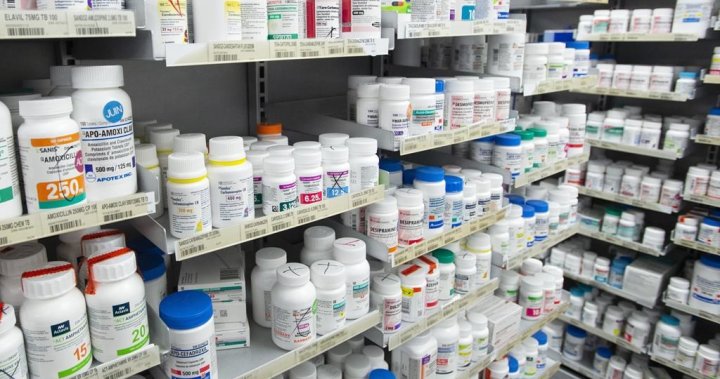
Nearly 1 in 4 Canadians skipping pills, not renewing prescriptions due to cost: poll
Global News
The poll, which surveyed 2,048 adults in Canada, show 22 per cent reported splitting pills, skipping doses or deciding not to fill or renew a prescription due to cost.
Nearly one in four Canadians are struggling to pay for prescription medications and are skipping pills or foregoing refills, a new poll has found.
The poll, commissioned from Leger by Heart and Stroke and the Canadian Cancer Society between Jan. 24-29 found of the 2,048 adults surveyed, 22 per cent reported splitting pills, skipping doses or deciding not to fill or renew a prescription due to cost.
“I think that one of the challenges we have is that we have a universal health-care system, and yet we’re the only country with that universal health-care system that doesn’t have a pharmacare program,” Stuart Edmonds, executive vice-president of mission research and advocacy with the Canadian Cancer Society, said in an interview with Global News.
He said it was “shocking” that the polling found one in 10 Canadians with chronic conditions have ended up in the emergency room due to worsening health because they were unable to afford a prescription.
When a person is diagnosed with cancer or a chronic disease, Edmonds said financial hardship is the “last thing” people want to deal with. He acknowledged that there are still health-care-related costs like travel, parking and even childcare when trying to attend appointments, but a prescription for medication shouldn’t be one of them.
It’s a story 59-year-old Heather Evans of Calgary knows too well.
Since suffering two heart attacks when she was 39, she has been on various medications — taking 23 pills and two needles a day. But before getting her job with Goodlife Fitness in 2010, she struggled to afford medication. With the need to eat healthy food given her heart disease, the cost of food as a single mother was an added financial burden.
“With a heart condition a lot of it is mental, you’re afraid, and you’ve got to kind of plan out things and so you go to sleep at night wondering what’s going to happen to you if you don’t have the medication,” she told Global News.


Dashcam video shows the wild scene as a vehicle crashed into two parked cars at a high speed on Shaunslieve Drive in Bedford.

City of Wetaskiwin officials have issued a statement on the decision to ban Mayor Joe Branco from city hall — but it does little to clarify the ongoing situation.

An Abbotsford woman who was sexually abused as a child is speaking out after suffering years of abuse at the hands of her stepfather, starting at the age of just 12 years old.

Technology Minister Nate Glubish says such images, known as deepfakes, can cause people serious harm and that changing the law should create a new layer of protection.

Renters in Quebec may soon have final say over whether they're allowed to keep pets in their homes following a legal ruling that no-pet clauses in leases violate Charter rights.

Alberta RCMP say they have located a Grey 2022 Ford F-150 involved in the fatal highway shooting of an Edmonton man earlier this month. The suspect remains at large.

Education Minister Paul Calandra, however, said he won't use the notwithstanding clause if he moves to eliminate trustees in Ontario.

U.S. President Donald Trump said on Sunday that he would order federal immigration agents to airports to assist TSA. Canadians landing the U.S. should be prepared.

Three overpasses in Saskatoon have been hit in the past three weeks, with charges announced against the driver in the first incident.

Auditor General Karen Hogan says there are critical weaknesses in the integrity controls for the International Student Program.

Return trips by Canadian residents from the U.S. fell 22 per cent in January compared with a year earlier, according to the latest data.

Three byelections are being held on April 13 and the results could have an impact on both the makeup of Parliament and how long it lasts.

Ontario's provincial members of parliament are heading back to Queen's Park Monday, as the legislature sits for the first time since December.