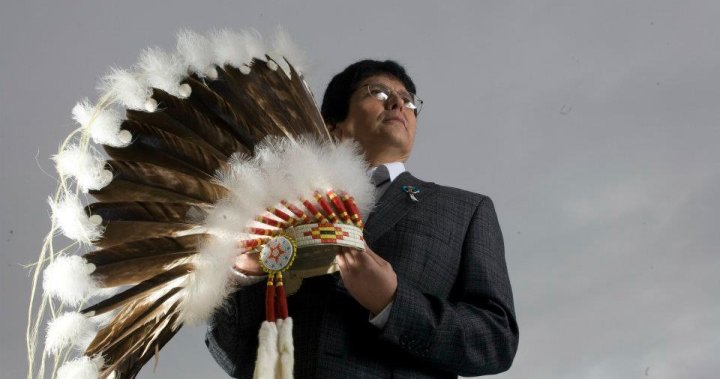
National Truth and Reconciliation Day is not a holiday, Okanagan Indigenous leaders caution
Global News
"To the average Canadian it’s ‘Wow, I get a holiday, clap my hands, I get to sleep in or I’ll get to go golfing or go shopping or whatever I do on normal holidays.’”
WARNING: This story contains details that readers may find disturbing. Discretion is advised.
“Never again.”
Those two words are on a memorial in the South Okanagan, marking where local Indigenous children were once loaded into cattle trucks before being taken to residential schools in Kamloops and Cranbrook.
They’re also the two words one of the men who survived being taken from his family in that very spot and all the traumas that followed will reflect on Sept. 30, the first Truth and Reconciliation Day.
The new federal statutory holiday was approved last year by Parliament, and is intended to offer a moment for reflection. But Jack Kruger, a residential school survivor living in Syilx territory, is among those who are dubious of the messaging.
“What are we reconciling? I would like to know. I cannot celebrate that day,” Kruger said. “I can’t celebrate when I’m alive and they’re dead.”
Kruger speaks frankly and regularly about the friends he lost and the horrors he experienced while in the residential school system. He alleges he saw sexual abuse and violence, knows of children who died at the hands of those who were supposed to care for them. He talks about it all so he can be the voice of those who didn’t survive.
It’s not easy to do, but he wants to make sure nobody loses sight of what happened to so many boys and girls, just like him, in those years.


An aviation expert says Canada is losing more air traffic controllers to retirement than it is hiring, despite efforts to ramp up recruitment.

Nova Scotia Power is seeking a 3.8 per cent power rate bump retroactive to Jan. 1, and a 4.1 per cent hike that would come into effect Jan. 1, 2027.

It’s the fourth time in less than a month that a large vehicle has collided with an overpass in Saskatchewan. Three of those incidents have been reported in Saskatoon.

As part of its upcoming budget, the province is planning to ban people from reselling tickets to sports matches and concerts for more than their face value.

The company, White Wilderness Heliskiing, issued a statement on Tuesday saying the avalanche happened near Mt Knauss on the ski run Iridium Shoulder.

Three of the organization's service vehicles were badly damaged in a vandalism incident that happened sometime between midnight Friday and Saturday morning.

As the winter weather approaches, Saskatchewan residents react to the incoming inclement weather. Many are done with the winter, but a handful of businesses will benefit.

Prairie Harm Reduction said its investigation into the shortfall has just begun, but added it does not believe there is evidence of fraud, theft or personal misuse of funds.

A new poll finds there is growing support for a proposal to lower an Old Age Security (OAS) threshold for some Canadians in order to help reduce the federal government's deficit.

Canadian and American government officials discussed a proposed revival of the canceled Keystone XL oil pipeline during a meeting in Houston, Tx. this week.

This will apply to all workers in federally regulated industries such as air transportation, banking, most federal Crown corporations, ports and telecommunication, among others.

International immigration to Canada is slowing but newcomers still helped six Atlantic cities grow more than the national average last year.

Rising fuel costs stemming from the Iran war are starting to impact small and medium-sized businesses in Canada, according to the latest survey findings.