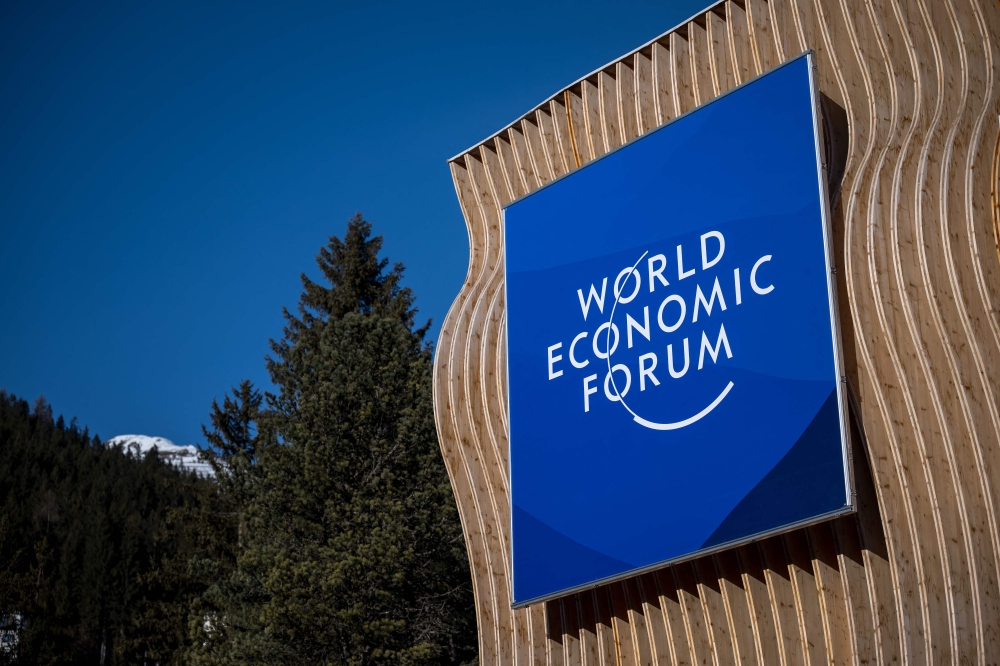
National Planning Council participates in World Economic Forum
The Peninsula
Davos: As part of its participation in the 56th Annual Meeting of the World Economic Forum in Davos, Switzerland, the National Planning Council (NPC)...
Davos: As part of its participation in the 56th Annual Meeting of the World Economic Forum in Davos, Switzerland, the National Planning Council (NPC) hosted a panel discussion at the Qatar Pavilion. Organized by the Investment Promotion Agency Qatar (Invest Qatar), the session delved into the theme: “Governance with Foresight: Designing Institutions for the Next Decades.”
The panel brought together distinguished speakers, including Assistant Secretary-General for the Center for Future Foresight and National Visions at NPC Bassam Issa Al Mannai, Senior Counsellor for Strategic Foresight and Head of the Strategic Foresight Unit at the Organization for Economic Co-operation and Development (OECD) Rafał Kierzenkowski, and Executive Director of the Government Outcomes Lab at the University of Oxford Andrea Anastasiou.
The discussion focused on pathways for shaping institutional models that remain effective and sustainable amid rapidly shifting global dynamics. It also underscored the robustness of Qatar's planning ecosystem, highlighting its capacity to embed foresight methodologies and data-driven tools into the national planning framework. This approach serves to guide strategic development and enable informed, long-term decision-making.
During the panel, speakers explored avenues to institutionalize foresight as an effective and actionable instrument within government operations to support decision-making. This approach helps identify opportunities and risks early while improving coordination across government institutions. Furthermore, they noted that integrating data-driven and future-oriented analytics into core daily operations helps governments shift from a reactive approach to a proactive, coherent mode of action.
The discussion also highlighted the critical role of anticipatory planning in enhancing the reliability and predictability of public trends, particularly in a global environment marked by geopolitical fragmentation, rapid technological change, and shifting patterns of capital flows. Panelists underscored that clear and consistent national strategic directions are crucial for reinforcing investor confidence. Such alignment not only helps the business sector make long-term investment decisions but also empowers governments to maintain the agility required to adapt policies in response to emerging developments.


Doha, Qatar: The Qatar Meteorology Department has warned of rain accompanied by thunder and strong winds across the country this weekend. In its la...

Doha, Qatar: The Qatar Meteorology Department has warned of rain accompanied by thunder and strong winds across the country this weekend. In its la...

Doha, Qatar: Qatar Airways has issued a warning to travellers about fake social media accounts impersonating the airline online. The airline said t...

Doha, Qatar: Qatar Airways has issued a warning to travellers about fake social media accounts impersonating the airline online. The airline said t...

Sydney, Australia: Australia will adjust fuel quality standards to allow higher sulfur levels for around two months in a move that will release 100 mi...

Doha, Qatar: The Al Sailiya Central Market is operating smoothly with abundant supplies of agricultural produce, while authorities from the Ministry o...

Doha, Qatar: The Al Sailiya Central Market is operating smoothly with abundant supplies of agricultural produce, while authorities from the Ministry o...

Doha, Qatar: Qatar s Government Communications Office, GCO, has renewed warnings against filming or approaching sites of security incidents, stressing...

Doha, Qatar: Minister of Commerce and Industry H E Sheikh Faisal bin Thani bin Faisal Al Thani, conducted a field visit to a number of retail outlets...

Indian Wells, United States: Novak Djokovic was ousted by Jack Draper in a slugfest Wednesday as the defending champion won 4 6, 6 4, 7 6 (7/5) to rea...

Doha, Qatar: Sweden has reaffirmed its strong support for and solidarity with Qatar amid the evolving geopolitical situation in the region, with senio...

Doha, Qatar: Sweden has reaffirmed its strong support for and solidarity with Qatar amid the evolving geopolitical situation in the region, with senio...

Doha, Qatar: Minister of State at the Ministry of Foreign Affairs H E Dr. Mohammed bin Abdulaziz bin Saleh Al Khulaifi has affirmed that Qatar has bee...