National aquifer mapping programme to be completed in a year, Jal Shakti Ministry official says
The Hindu
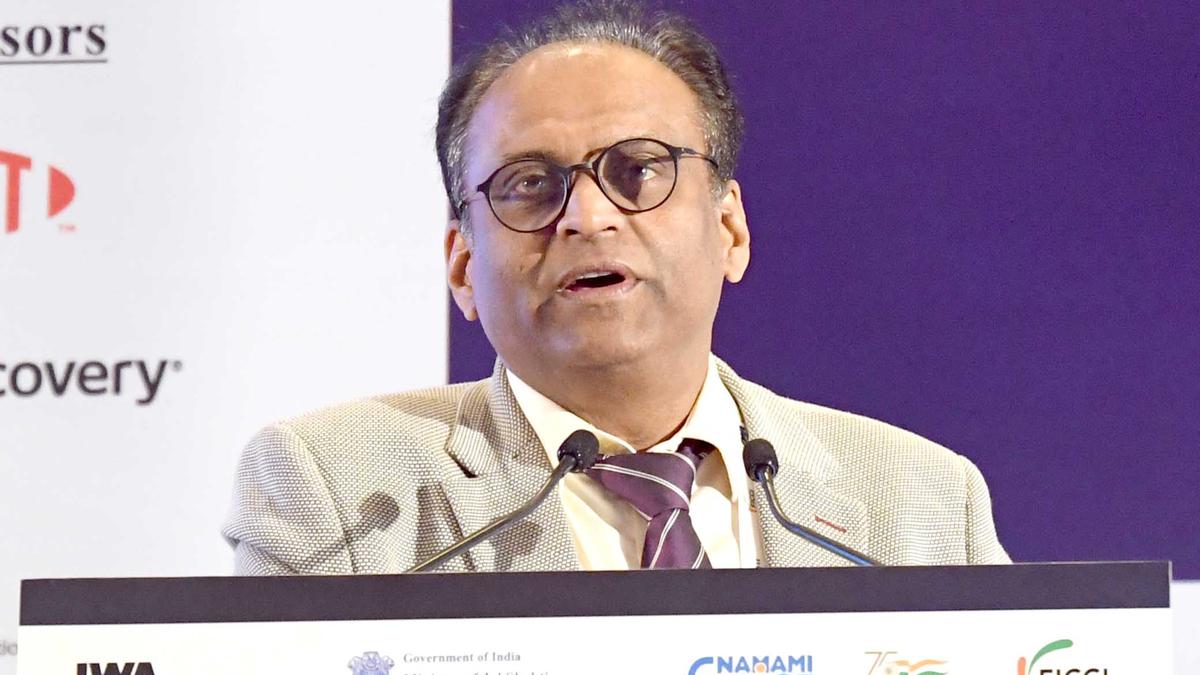
G. Asok Kumar, Director General, National Mission for Clean Ganga, who spoke at a conference in Chennai on Monday, said the aquifer programme would help develop plans for groundwater management; other experts at the event noted that Chennai is fast-emerging as a manufactured water capital in the country
The National Aquifer Mapping and Management programme, which is aimed at delineating aquifer and water availability, is set to be completed in one year, G. Asok Kumar, Director General, National Mission for Clean Ganga, Union Ministry of Jal Shakti, said in Chennai on Monday.
Mr. Kumar inaugurated a three-day conference on ‘Water Reclamation and Reuse’ organised by the Federation of Indian Chambers of Commerce and Industry (FICCI) and the International Water Association (IWA) in the city on Monday.
Elaborating on the Central government’s initiatives to resolve issues of water management and water governance, Mr. Kumar said the aquifer mapping would help in developing plans for groundwater management. Noting that the policy on reusing of treated wastewater has found resonance in many States, Mr. Kumar said the Central government’s emphasis was on wastewater as a resource rather than as waste, and would work towards banning freshwater use for non-potable purposes.
Pointing to the national framework for safe reuse of treated water, he said the prime focus now is on reuse and recycling of wastewater and monetisation of sludge and treated sewage. He also spoke about the Jal Jeevan Mission to provide tap connections to all households by 2025 and the Namami Gange programme that aims at a cleaner Ganga and enhanced sewage treatment capacities.
Experts also spoke about how Chennai was fast-emerging as a manufactured water capital in the country, with its recent wastewater reuse initiatives.
Rajiv Mittal, CMD and Group CEO, VA Tech Wabag Ltd., a company that has executed desalination and tertiary treatment projects for Chennai, said besides adding desalination plants with treatment capacities of 550 million litres a day, projects are being planned for the optimum supply of recycled water and use of tertiary treated water for indirect potable use through the recharge of lakes.
Wastewater must be treated as an asset and incentives like carbon credits must be provided for reuse and recycling of wastewater. Reclaimed water would ensure drought-proof water availability, food security and sustainable socio-economic development, Mr. Mittal added.


First tranche of Rythu Bharosa released by CM Revanth

Collectors in Kanniyakumari and Thoothukudi inspect polling stations to ensure election preparedness ahead of Tamil Nadu's assembly elections.

The Vice-Chancellor of Rajiv Gandhi University of Health Sciences (RGUHS) B. C. Bhagavan said on Sunday that the university will soon open a research centre on Yoga and Naturopathy on 60-acre land in Bengaluru.

Parliamentary committee urges swift action to fully operationalise Lokpal's inquiry and prosecution wings amid rising corruption complaints.

Hyderabad paediatrician Dr. Sivaranjani Santosh faces legal action from pharma firms over her remarks on ORS labelling reforms.

Palla urges NDA leaders to unite for grassroots outreach, enhancing public trust through balanced welfare and development initiatives.

DRI seizes ₹8.3 crore in drugs and arrests three in Bengaluru, disrupting a major trafficking operation.

Jeevan Reddy announces his decision to part ways with Congress party

Yercaud's garbage to be processed through biomining, addressing waste management issues in the tourist town and surrounding panchayats.

India's gem and jewellery sector aims for a 15% boost in domestic sales by 2026 to counter export challenges amid war impacts.

Tamil Nadu's Fisheries Department will install 26,000 artificial reefs in Rameswaram to protect rare marine species and enhance fish breeding.

Deputy CM visits fire mishap site in Khammam district, vows proper compensation

Over 750 wheelchairs are prepared in Thoothukudi for accessible voting, ensuring convenience for differently abled and elderly voters.