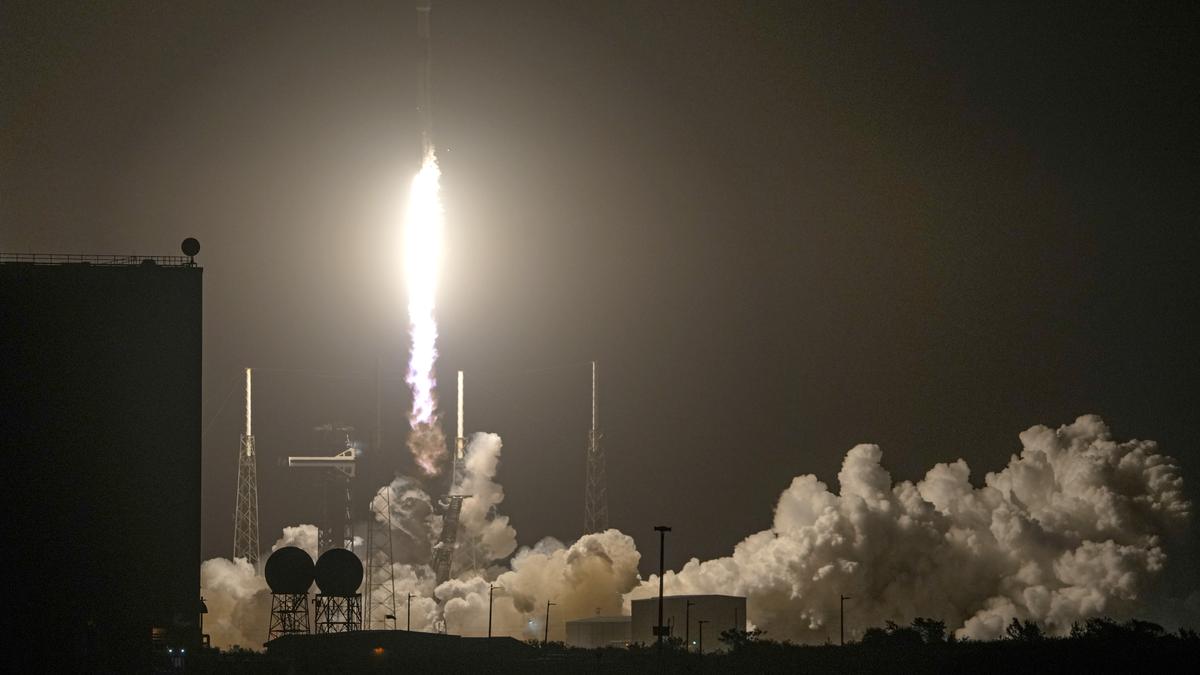
NASA climate satellite blasts off to survey oceans and atmosphere of a warming Earth
The Hindu
The satellite will spend at least three years studying the oceans from 420 miles (676 kilometers) up, as well as the atmosphere.
NASA’s newest climate satellite rocketed into orbit Thursday to survey the world’s oceans and atmosphere in never-before-seen detail.
SpaceX launched the Pace satellite on its $948 million mission before dawn, with the Falcon rocket heading south over the Atlantic to achieve a rare polar orbit.
The satellite will spend at least three years studying the oceans from 420 miles (676 kilometers) up, as well as the atmosphere. It will scan the globe daily with two of the science instruments. A third instrument will take monthly measurements.
“It’s going to be an unprecedented view of our home planet," said project scientist Jeremy Werdell.
The observations will help scientists improve hurricane and other severe weather forecasts, detail Earth's changes as temperatures rise and better predict when harmful algae blooms will happen.
NASA already has more than two dozen Earth-observing satellites and instruments in orbit. But Pace should give better insights into how atmospheric aerosols like pollutants and volcanic ash and sea life like algae and plankton interact with each other.
“Pace will give us another dimension” to what other satellites observe, said NASA’s director of Earth science, Karen St. Germain.


The fifth anniversary of January 6 highlights ongoing political divisions and contrasting memorials, with no official commemoration planned.

Ukraine's security talks in Paris face uncertainty as U.S. focus shifts to Venezuela, complicating potential ceasefire commitments.

CIA assessment suggests Maduro loyalists, including Delcy Rodriguez, are best positioned to lead Venezuela post-Maduro, sources reveal.

A 6.2 magnitude earthquake struck western Japan's Shimane prefecture, causing no tsunami risk or reported damage, officials confirm.

BCB president expresses security concerns over sending the national team to India for T20 World Cup, awaiting ICC's response.

At least nine Nigerian soldiers killed in a landmine ambush by militants in Borno State, highlighting ongoing regional conflict.

The U.S. ends universal childhood vaccine recommendations for flu and three diseases, raising public health concerns.

Greenland reassures citizens of its autonomy amid U.S. takeover concerns, emphasizing democratic rights and support from European allies.

Nearly 200 U.S. troops captured Venezuelan leader Maduro in Caracas, ending his authoritarian rule, Pentagon chief Hegseth confirms.

Trump claims U.S. will receive $600 billion in tariffs, strengthening national security and financial respect amid media criticism.

Iran's judiciary vows no leniency for 'rioters' amid ongoing protests, distinguishing between peaceful demonstrators and violent unrest.

A Bangladesh court has set January 21 to frame charges in a sedition case against Sheikh Hasina and 285 others.

Shorts News:Maduro arrives for first U.S. court appearance after capture