Nanoplastics can make E. coli infections worse: study Premium
The Hindu
New research shows nanoplastics increase pathogen risk, affecting E. coli virulence and gene transfer, posing health hazards.
Nanoplastics are bad news even though each one is only as small as a smoke particle. Research has shown that micro- and nano-plastics are present at the top of the tallest mountains, at the bottom of the deepest trenches, and even in our bloodstream, tissues, and in newborns as well. Their build-up has many toxic effects, including damage to cells and the genetic material inside.
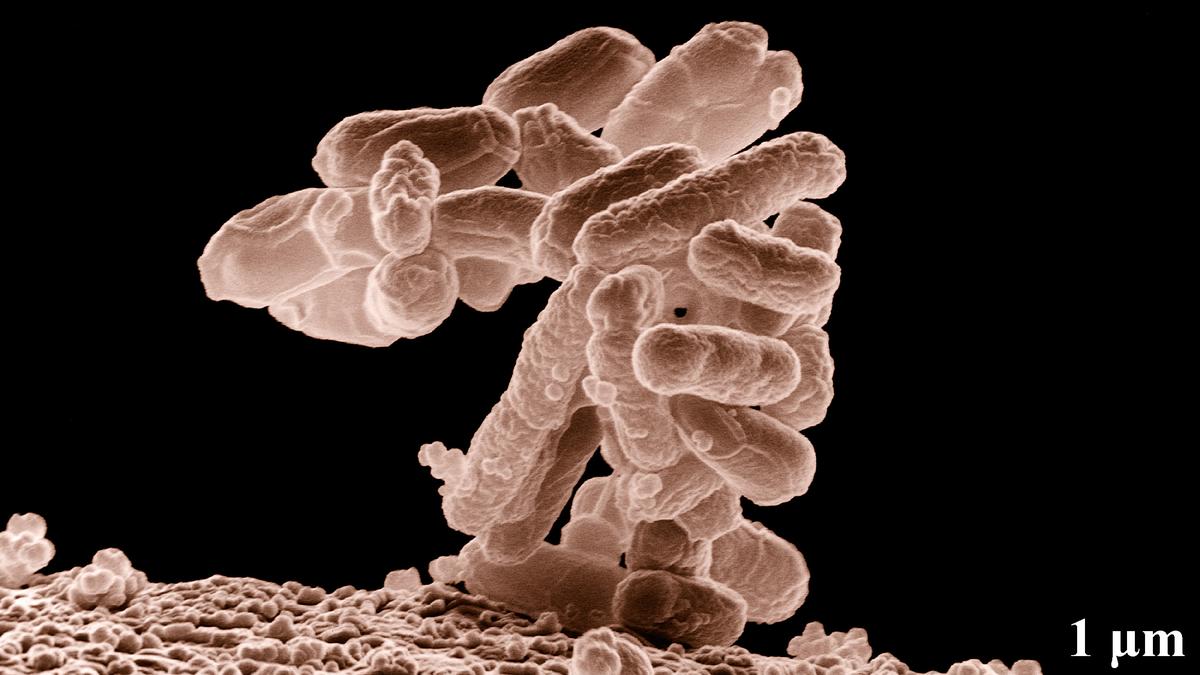
Now, a new study from researchers at the University of Illinois, Urbana-Champaign, has revealed that nanoplastics aren’t just risky on their own: they also increase the risk from pathogens. The researchers found that nanoplastics with positively charged surfaces could make Escherichia coli, a foodborne pathogen, more virulent.
The findings were published in the Journal of Nanobiotechnology.
E. coli bacteria have a negative charge on their outer membranes. This can attract positively charged nanoplastics and increase the stress on the bacterium, making it produce more Shiga-like toxins. These are the proteins E. coli secrete and which cause disease.
In older studies, scientists have looked at the impact of charged surfaces on non-pathogenic bacteria. The new study examined how charged surfaces affected a particular strain of E. coli. Similarly, while previous studies focused primarily on free-floating cells, the new one studied both free-floating cells and biofilms — a community of bacteria sticking to each other over a surface. Biofilms are hotspots where bacteria exchange genetic material with their neighbours.
The team members used a pathogenic E. coli strain that was resistant to the antibiotic rifampicin. They cultured the strain on agar plates and a nutrient-rich liquid medium called LB broth. Then they exposed the bacteria to polystyrene-based nanoplastics with three kinds of charges: positive, negative, and neutral.
The team also cultured a second set of E. coli cells in LB broth for use as a control. This group wasn’t exposed to nanoparticles.


Set between the Siwalik hills and the plains, Butwal offers travellers a mix of regional cuisine, pilgrimage trails to Lumbini and the comfort of Hyatt’s new hospitality landmark

Explore 2026's wallpaper trends in India, highlighting botanicals and handmade designs that enhance modern homes with nature-inspired aesthetics.

Mercedes-Benz CLA 250+ with EQ Technology review: design, performance, range and features explained. Discover how the new electric CLA combines advanced AI, long range, fast charging and futuristic styling for the next generation of luxury EVs.

AI tool for sparrow conservation

BTS’s comeback with ‘Arirang’ marks a major global music event. When does the album release, and where can you watch their concert live stream? We have all the details

The 2026 U.S. cholesterol guidelines urge starting screening and treatment at 30 to prevent cardiovascular disease effectively.

Olam Festival 2026 in Thiruvananthapuram returns March 27-29 with 120+ vendors, music, art, and cultural zones.

A few storytellers in Thiruvananthapuram share their journeys, challenges, and evolving methods on World Storytelling Day, inspiring young minds.

76-year-old Kurian Jacob from Kerala triumphs with seven medals, including five golds, at the Open Masters Games in Abu Dhabi.

Explore the nature of the human mind as an emergent property of brain activity and complex neural interactions.

CERN's Large Hadron Collider discovers the Xi-cc-plus particle, enhancing understanding of quantum mechanics and baryon behavior.

Vibha Batra’s latest book, Spotless (Hachette India) is a novel in verse for young adults

In its first edition, the Madras Art Salon spotlights the works of journalist and artist Narayan Lakshman at The Botanical Club, a social space in the British Deputy High Commission, Chennai