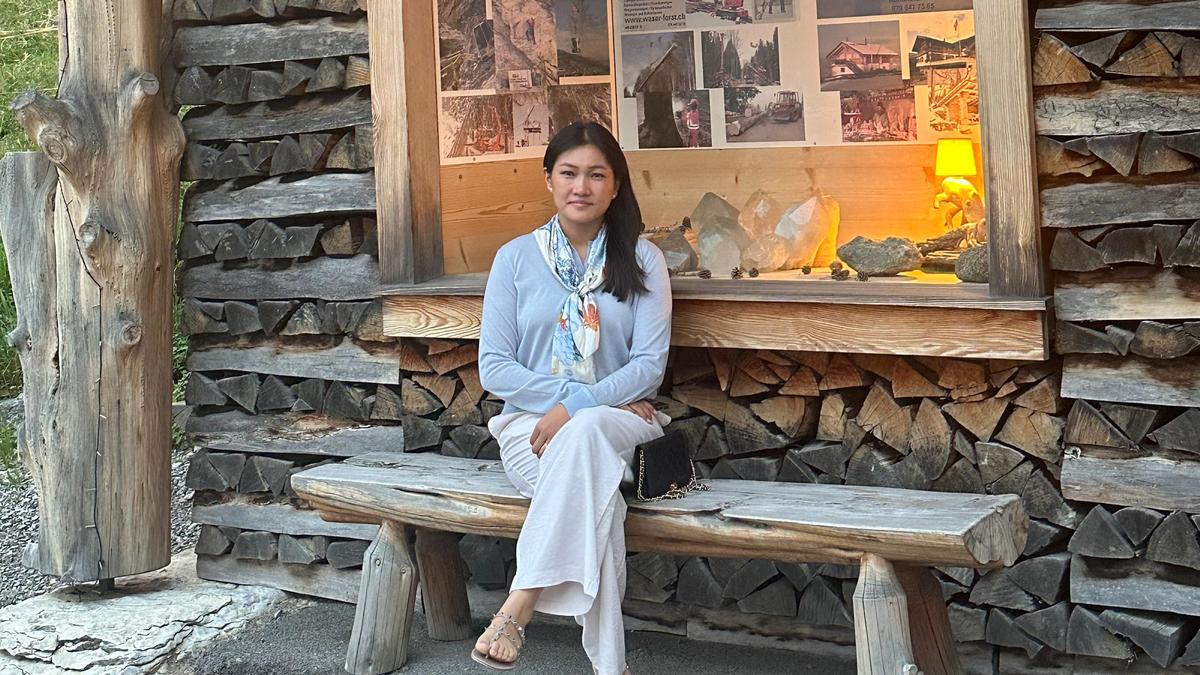
Nagaland | Interview with Viketuno Rio, director of The White Owl Literature Festival & Book Fair
The Hindu
Nagaland's White Owl Literature Festival and Book Fair in Chümoukedima showcases local and global voices, fostering cultural exchanges and literary growth, says festival director Viketuno Rio in this interview
In the season of literary festivals, Nagaland is holding its own, The White Owl Literature Festival and Book Fair, on February 9-10 in the picturesque town of Chümoukedima en route to capital Kohima. Called ‘Echoes of Narratives’ — Nagaland has 16 tribes each with its distinct identity, and hence there are many stories to tell — it is a collaboration between The White Owl Book Lounge, Penguin Random House India, and Cambridge University Press. A host of writers, including Vivek Shanbagh, Taslima Nasrin, Sarnath Banerjee, Avinuo Kire and Mmhonlumo Kikon, are attending the meet. We speak to Viketuno Rio, Festival Director and proprietor of The White Owl. Edited excerpts:
This event holds great significance for the State as it not only showcases the vibrant literary culture but also provides a platform for local and global voices to converge. The festival can foster a sense of community, promote cultural exchanges, and contribute to the overall intellectual and artistic enrichment of Nagaland. It marks a significant milestone in the cultural landscape of the State and has the potential to inspire and engage individuals in the world of literature and ideas.
Over the past decade, the literary landscape in Nagaland has experienced growth, albeit gradually. There’s a resurgence in the culture of reading, contributing to the expansion of literature in the region. Initiatives like the Nagaland Literature Festival, hosted by the Writer’s Collective during the Hornbill Festival, have played a pivotal role in fostering the literary community’s development. We have Mmhonlümo Kikon, Theyiesinuo Keditsu and many more authors from the Northeast debuting at The White Owl festival.
Naga and Northeastern writers faced challenges in the 1980s and ’90 with publishers, who predominantly sought stories centred around political conflict. However, the landscape has evolved since then. Naga writers have successfully asserted their autonomy, deciding on the themes they wish to explore. Hence, I would assert that the challenges of the past have been overcome, and writers are now progressing confidently with themes of their choosing.
Certainly. Nagaland’s rich oral tradition, encompassing the diverse identities of its 16 tribes, is a valuable cultural heritage. Writers play a crucial role in preserving and chronicling this journey, ensuring that the unique narratives, folklore, and traditions are documented for future generations. By delving into the oral history of each tribe, writers can contribute to a more comprehensive understanding of Nagaland’s cultural tapestry. This effort not only adds depth to the literary landscape but also serves as a means of cultural preservation, fostering appreciation and awareness of the distinct identities within the State.
For our first-ever festival, we have chosen the theme ‘Echoes of Narratives’ with the explicit aim of fostering a festival ambience where the reverberations of both oral and written narratives converge into a symphony of diverse voices. This theme emphasises the universal power of storytelling and seeks to create an atmosphere resonant with the richness of various storytelling forms.
Chümoukedima is an emerging town with significant potential. However, the festival’s venue was selected due to its strategic location. Situated just 10 minutes away from the sole airport in Nagaland and positioned on the main highway connecting Kohima and Dimapur, it offers convenient accessibility for attendees travelling from both Kohima and beyond, as well as those journeying from Dimapur and surrounding areas.


Ernakulam district will soon welcome three new police chiefs following a significant reshuffle in top IPS positions.

Displaced families protest Hubballi Airport expansion, demanding timely allotment of alternative sites and fair compensation.

Delhi-NCR enforces GRAP-4 restrictions amid severe air quality, shifting school classes to hybrid mode and banning non-essential truck traffic.

GCC’s Saturday drive for collecting old sofas, clothes and other unwanted items is 14 editions old and still going strong

A.P. Food Safety department plans to tighten regulations on cotton candy sales due to harmful coloring agents in Vijayawada.

The Lokayukta Police on Saturday arrested senior officials of the Excise Department for allegedly demanding and accepting a hefty bribe to clear liquor-related licences.

The Munneru-Palair Link Scheme aims to stabilize irrigation, mitigate floods, and save power costs in three districts.

Enter the Arena Appupen and Perumal Murugan in conversation with Ramya Kannan (Bilingual)

Authorities in ASR district launch a special drive against illegal medical practitioners following a student's tragic death from unauthorized treatment.

Man arrested for cultivating ganja in Vikarabad district

Karnataka secures ₹1.53 lakh crore in new investments post-GIM, boosting key sectors ahead of the World Economic Forum.

T.N. government faces setback as Defence Ministry rejects Hosur airport proposal, citing airspace needs of Hindustan Aeronautics Limited.

GCC official dispels a notion that complaints from residents’ groups that “lovebirds” hog the tower led to the closure; he points out the process of getting a contractor is on target and the minor cracks on the second floor should be fixed in 10 to 15 days