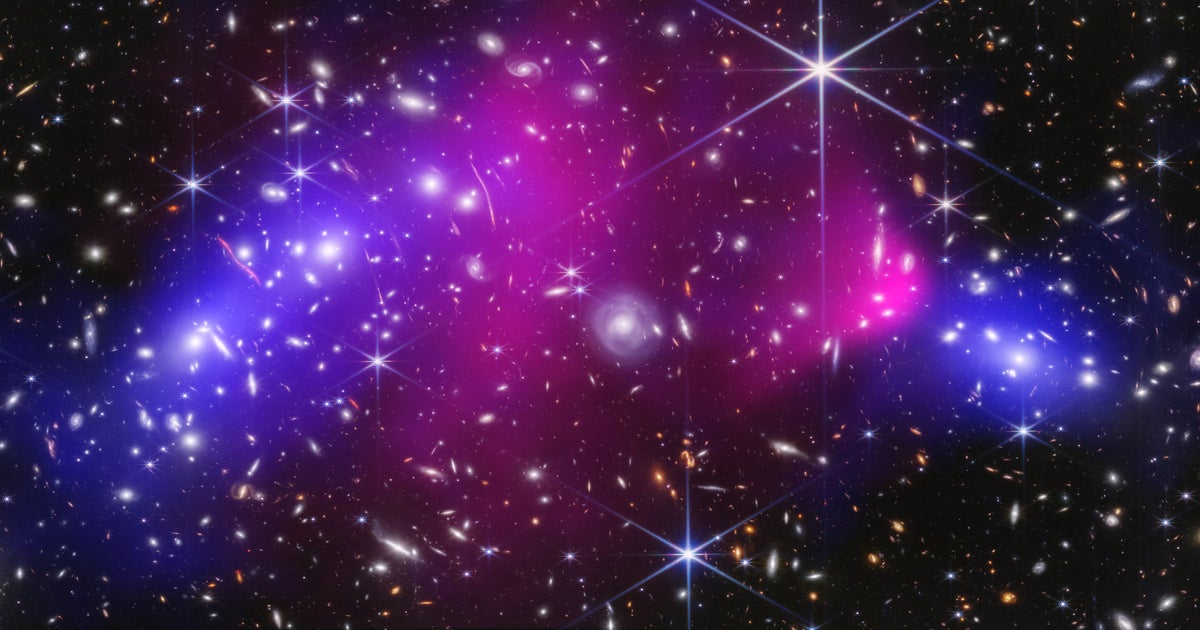
Mysterious dark matter seen in new high-resolution map of distant galaxies
CBSN
A new high-resolution map of distant galaxies may help scientists understand a mysterious invisible substance that helps hold the universe together. In:
A new high-resolution map of distant galaxies may help scientists understand a mysterious invisible substance that helps hold the universe together.
The ordinary matter all around us — stars, planets and people — makes up just 5% of the universe. For decades, researchers have hoped to demystify what's known as dark matter, a material that comprises just over a quarter of our universe. Another equally mysterious force called dark energy makes up the rest.
Dark matter doesn't absorb or give off light so scientists can't study it directly. But they can observe how its gravity warps and bends the star stuff around it — for example, the light from distant galaxies. By studying these distortions across large swathes of the universe, scientists can get closer to unmasking dark matter and its various hiding places.
The latest map, created with images from NASA's James Webb Space Telescope, is the most detailed yet over such a large patch of sky. The Webb telescope identified nearly 800,000 galaxies, some of which were detected for the first time, NASA said.
The map has twice the resolution of previous attempts using the Hubble Space Telescope and captures hundreds of thousands of galaxies over the past 10 billion years.
