Musings from Margazhi season
The Hindu
On putting up with live tweeting, canteen menu discussions, and seeing youngsters in the audience
Prabha Sridevan
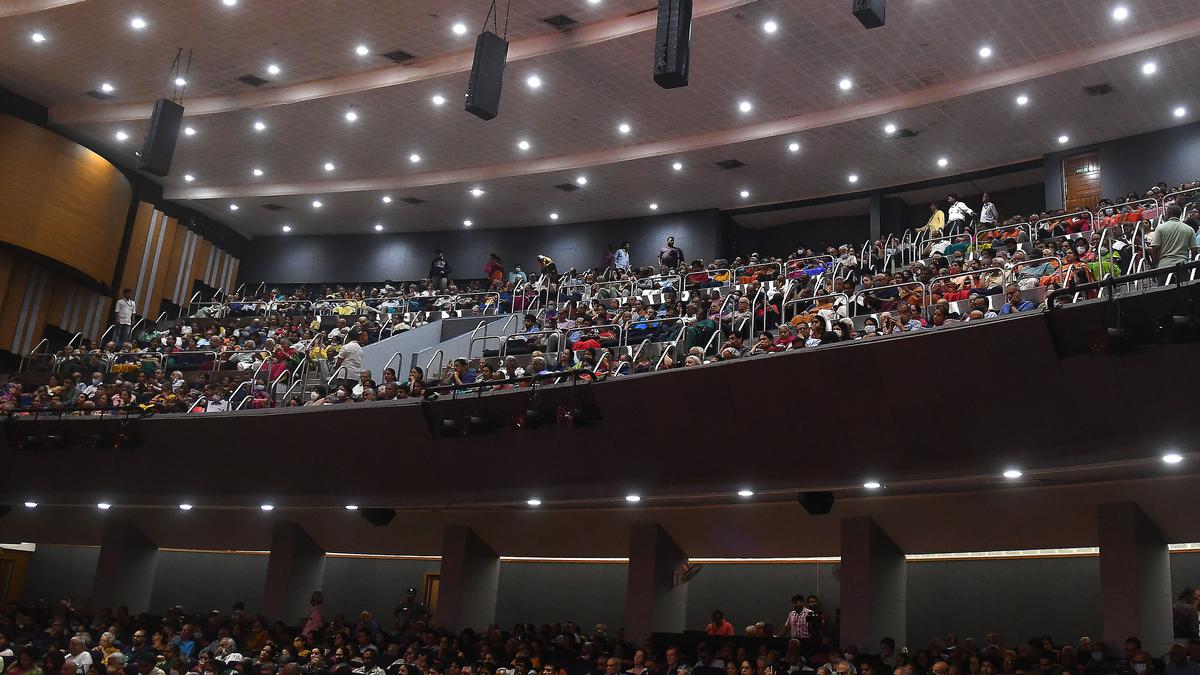
The Season is over. Some random thoughts struck me as I watched the scenes run before me. Time was when the women who came to the Music Academy were generally attired in Kanchipuram pattu and wore diamonds. It was like they were attending a wedding or a Navaratri kolu.
Not anymore. The variety now is striking. There may be the odd silk and diamond here and there, but they are not mandatory. The studiously disarrayed top-knot, jeans … anything goes.
The music season has also become the canteen season. There are even rankings among them. Was this menu better than that — actually, for tiffin you go here, but for elai sappadu go there. At one concert, the couple that sat near me discussed the merits and demerits of Asoka halwa. I bore it for a while, then bent towards them and said: “Please, konjam kutcheri kekkalaama?” (Please, can we listen to the concert a bit?)
The audience made me weep, at times. At one concert, a rasika near me insisted on singing along, and she was not in sync. My neighbour at another concert tapped the talam on her thigh, and she was clearly hearing a different beat. There were two persons in front of me who looked very much like visitors from overseas. I doubt if they listened to the vidwan singing . They were more interested in live Tweeting or Instagramming to let everybody know that they were there. “The board says don’t record video or audio. The volunteers come and tell you. still…why?” I asked. They glared, and put the devices away.
At a lec-dem, I requested for the mike, and said: “The vidwan is sharing his knowledge and art so generously, it is almost spiritual. And, can you only think of posting it on social media?” Many, including the artistes, thanked me later. But I am sure there were many glares. If sabhas had kept a box to vote for the most abrasive member of the audience, I might have actually won.
But I am being unfair. There were others who were different too. A young man and a woman at a morning free concert, moved me. They did not look like sabha regulars. She had vision problems, but could hear. They were immensely happy recognising the ragas. After the main raga she had to leave. He stayed back. The concert had come to the thillana stage. He took out a clutch of papers. He had marked all the free concerts at different sabhas. He checked out where he should go next.


Khalid Rahman is reuniting with Malayalam superstar Mammootty after Unda (2019). The Thallumaala director has teamed up with the veteran for Mattancherry Mafia.

Bollywood actor Akshay Kumar paid tribute to the martial arts grandmaster and Hollywood’s action star, Chuck Norris, who passed away on Thursday, March 19, 2026.

Renowned Odissi dancer Madhumita Raut, aged 59, dies of cardiac arrest, leaving behind a legacy of artistic achievements.

Chuck Norris, iconic martial arts master and actor, dies at 86, leaving behind a legendary legacy and internet memes.

South African naturalist Steve Boyes speaks on ghost elephants, ancestral tracking, and Werner Herzog’s documentary exploring Angola’s elusive highland giants

Actor-director Amol Palekar will receive META's Lifetime Achievement award for 2026 on March 25 in New Delhi.

India's artists unite against rising censorship, advocating for creative freedom and support for marginalized voices in the arts.

Written and directed by Kunal, the film also stars Sparsh Shrivastava and Vanshika Dhir

This year, Bharatnatyam artistes will present the Tyagaraja Aradhane as a dance performance

This year, Bharatnatyam artistes will present the Tyagaraja Aradhane as a dance performance

The actor, along with director Sushant Shah, speak about their upcoming series ‘Chiraiya’, Divya’s process of working on the dialect, Sushant’s approach to telling a story about women, and more

An independent video, ‘Feel the Spark’ by Raleigh Rajan with vocals by Ciera Dumas that celebrates Tamil literary giants, garnered 1.4 million views in less than 36 hours.

In ‘Jack Ryan: Ghost War’, John Krasinski is back as the savvy CIA analyst, diving headfirst into a high-stakes mission that unravels a deadly conspiracy and pits him against a rogue black-ops unit