‘Murky’ water and a health crisis
The Hindu
The death of a 17-year-old girl and hospitalisation of over 120 people due to suspected water contamination last week has turned the focus on lack of access to clean water and sanitation in several parts of Guntur city.
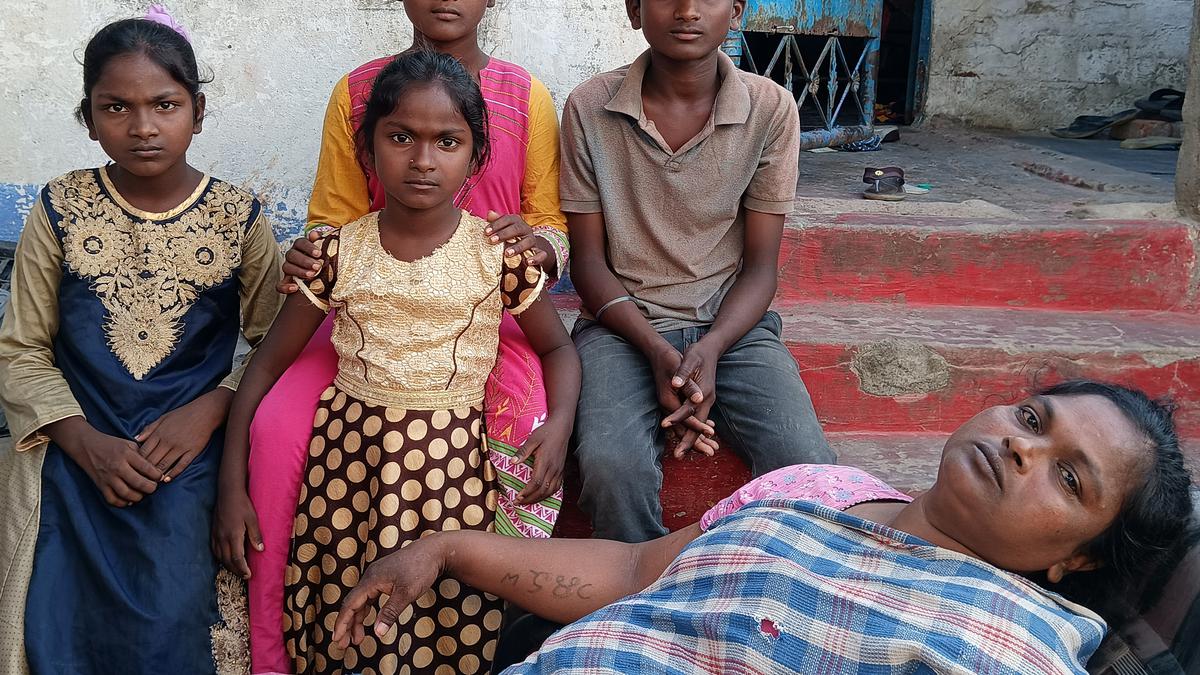
After the death of her father two months ago due to a stroke, 17-year-old Maddela Padma bravely stepped into the role of breadwinner, working as a daily wage labourer to support her mother and five younger siblings in Sarada Colony, a densely populated slum in Guntur city of Andhra Pradesh. On February 10, the teenager developed sudden health complications. “For two days she had terrible motions and vomiting,” says Katamma Maddela, Padma’s mother, who thought her daughter would feel better eventually. Herself bedridden for the past two months after a spinal surgery, Katamma could not do much to help her daughter. On February 10 in the morning, her condition deteriorated. “We shifted her to the Government General Hospital (GGH) with the help of our neighbours,” she recalls. Within hours, Padma died.
With Padma’s passing, Katamma, who is in her 40s, finds herself at the intersection of grief and uncertainty. After her husband’s death, her daughter took on two jobs: cutting the stalks of dried red chillies before they went to the mill to be pounded, and a cleaning job in the Railways, working for a third-party service provider. She now faces the daunting challenge of earning just for her family to survive. Two of her younger daughters are still in school, studying in Class 1 and 5, while the other three — another girl and two sons, all below 15 years — have dropped out of the education system. The ₹5 lakh ex-gratia that she received from the government following Padma’s death will tide her over for a while.
Between February 10 and 13, as many as 120 people from different parts of the city, including Sarada Colony, were admitted at GGH-Guntur. Hospital superintendent Y. Kiran Kumar says eight were in critical. As the number of patients mounted, the hospital dedicated an ICU and a ward for them. “Since the incident happened over the weekend, some of the doctors were not available and the existing staff provided treatment to them,” says Kiran Kumar.
He does wish that Padma had been brought in earlier though: “We may have been able to save her life,” he says, adding that an autopsy report would confirm the reasons for her death.
Acknowledging that the situation could deteriorate, the administration set up emergency health camps. Scores of people — officials did not disclose the exact number — received treatment here and at health centres and private hospitals. All treatment was government-funded.
Like most slums, the one in Sarada Colony, inhabited by about 1,500 people, is characterised by congested houses, narrow roads, and a poor sewage and garbage disposal system. Outside Katamma’s ₹2,000-per-month rented dwelling, the residents collect municipal water from a tap above a drain. They have set up a plastic drum by the roadside, using an extension pipe to collect water.
Shaikh Nasar Vali, a resident of Mallikharjuna Pet in the city, says that his 73-year-old grandmother was admitted to GGH-Guntur around 3 a.m. of February 12 following vomiting and diarrhoea. She has been receiving intravenous drips since. Other members of his family were also showing similar symptoms, he says. “Several others from my colony have also been admitted to hospital,” he says of the area that badly needs a sanitation upgrade. “But the doctors are not responding adequately to the situation,” he says, alleging that doctors and nurses were not giving relatives enough information about the illness.


A data jam on March 28 by OpenCity will have participants studying how the Assembly constituencies in and around Chennai are faring on a set of parameters

Matheesha Pathirana will miss the start of IPL 2026, while Harshit Rana's participation remains uncertain for KKR.

Shashi Tharoor advocates for peace in the West Asia conflict, emphasizing the urgent need for de-escalation and international cooperation.

Assembly polls 2026: Follow updates from The Hindu on the upcoming elections in five States, on March 21, 2026

Maharashtra women's panel chief resigns amid controversy over ties to rape-accused godman, facing political pressure and public backlash.

India's Iran policy could be shaped by the evolving dynamics of the U.S.–Israel war

Will G. Sudhakaran's independent run disrupt the Left's stronghold in Ambalappuzha and reshape Kerala's political landscape?

The Hindu Morning Digest gives a select list of stories to start the day. Read the top news today on March 21, 2026

Manjeswaram gears up for a tightly contested Kerala Assembly election in 2026, featuring key candidates from UDF, NDA, and LDF.

Thirty-three detained Bangladeshi nationals from Tamil Nadu are being deported to Bangladesh via West Bengal with police escort.

Tree felling for a flyover and underpass on the Manikonda-Hitech City stretch sparks outrage as Hyderabad’s road expansion drives another green loss.

Residents of Velachery express concerns over flooding and development issues, while welcoming the MRTS extension.

Seeman advocates for a benevolent authoritarianism and an agriculture-centered economy to ensure discipline and self-sufficiency in Tamil Nadu.