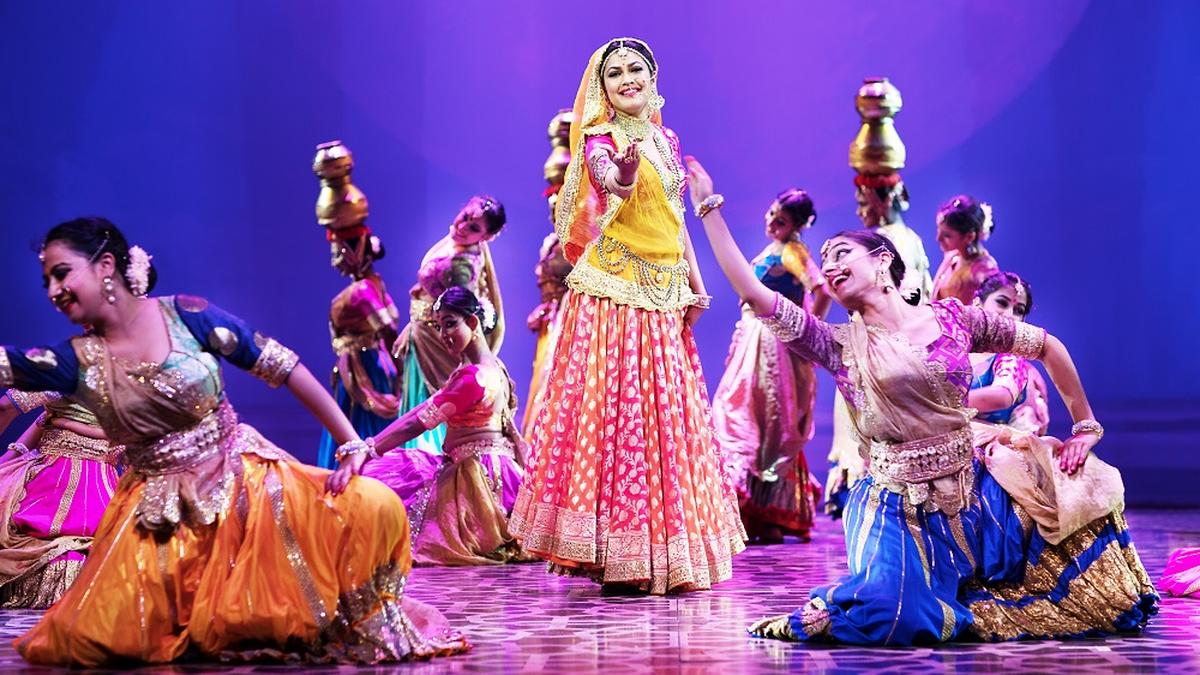
‘Mughal-e-Azam’s genesis is in theatre’: Feroz Abbas Khan on the grand spectacle’s return to Delhi
The Hindu
As Mughal-e-Azam returns to charm the Capital for one last time, director Feroz Abbas Khan lays bare the emotional and aesthetic nuts and bolts of the grand spectacle
The biggest challenge in performing arts is to reimagine a classic without alienating any section of the audience or actors that drive the story. By freeing the spirit of Anarkali from the iron grip of K Asif’s Mughal-e-Azam, director Feroz Abbas Khan has achieved the impossible. As India’s first Broadway-style musical returns to Delhi this Valentine’s week to complete a triple century, Khan says he didn’t fall for the “corporate cliches of monetising a film” but sought to “bring the tale back to the stage it belonged with a modern sensibility.
“For me, Mughal-e-Azam’s genesis is in theatre,” avers the master storyteller.
Inspired by Imtiaz Ali Taj’s play Anarkali, Mughal-e-Azam tells the legend of the beautiful courtesan who falls in love with Prince Salim only to be chained by Akbar, the emperor-father. Khan says that Asif chose to see the story from Akbar’s point of view because he had to sell the idea to a big producer who could bankroll his magnum opus. “The route to find finance for art can lead to fine creative choices. It is said that producer Shapoorji Mistry was a great fan of the emperor and the Persian language. So, Asif sahab told him he would make a film on Akbar. Hence the title, but he found ways to give Salim and Anarkali a voice.”
Khan has given it shape to suit the sensibilities of a new generation, which he feels, connects with the subject in a different way. “While the film is masculine in its tenor, the play is very feminine in its approach. Be it Anarkali, Jodha, or Bahar, the female voice resonates as they don’t hold themselves back. In the film, Jodha is more perfunctory; here it is hard to forget her part. She doesn’t plead, she talks to Akbar. That is why our female fan base is bigger.”
As the 1960 film has become fodder for memes, another challenge for Khan was to turn its declamatory style of performances into a more intimate one. “I conducted a two-week workshop to ‘de-Mughal-e-Azam-ise’ the actors to prevent them from putting imitation of Prithviraj Kapoor and Dilip Kumar on stage.” Written in the form of Parsi theatre, Khan says, it was not easy to take away “the over-the-top-ness” but still retain the “intensity and power” of the spoken word. “Razzmatazz cannot make a show last this long unless the actors and audience are not attached to the story,” he muses.
For Khan, the play’s success reinforces his belief that if you give something of value and quality, people accept it. “It answers those who say the audience has changed. The language is not easy and the play is a bit languid for things don’t explode from the start. Still, audiences have been able to appreciate its beauty and aesthetics.”
Excerpts from an interview:


U.S.-Israeli war on Iran LIVE: Iran faces deadline of US President Donald Trump warning to open Strait of Hormuz. Follow The Hindu for more LIVE updates on March 23 2026 on Iran-Israel war.

KPCC chief Sunny Joseph emphasizes UDF's focus on Sabarimala and corruption while expressing confidence in winning Kerala's upcoming Assembly elections.

A military plane crash in Colombia leaves 125 aboard, with at least 48 survivors rescued amid ongoing recovery efforts.

‘Symposium’, a new platform to promote lifelong learning and counter misinformation among youth, was launched in Hyderabad.

By using TB as an entry point, integrated healthcare delivery can optimise and improve public health efficiency

Residents of Chettichavadi express concerns over deteriorating groundwater quality due to long-standing garbage dumping issues in Salem West.

Community Health Officers in Vijayawada protest for reduced workload and continued incentives amid growing dissatisfaction over salary changes.

Telangana faces 13,929 healthcare vacancies, primarily in doctors and nurses, as recruitment efforts aim to address the shortage.

For most patients with TB who are severely underweight, nutritional support is an essential and not optional part of treatment

Family of custodial death victims demands harsh punishment for nine convicted policemen to prevent future abuses of power.

Rajinikanth refutes TVK leader's claims about DMK threats preventing his political entry, expressing gratitude to supportive political figures.

CM announces Cabinet Sub-Committee on Musi rejuvenation; rehabilitation for all displaced

Ramanathapuram identifies 145 polling stations as sensitive, ensuring security with paramilitary forces ahead of assembly elections, says DEO.