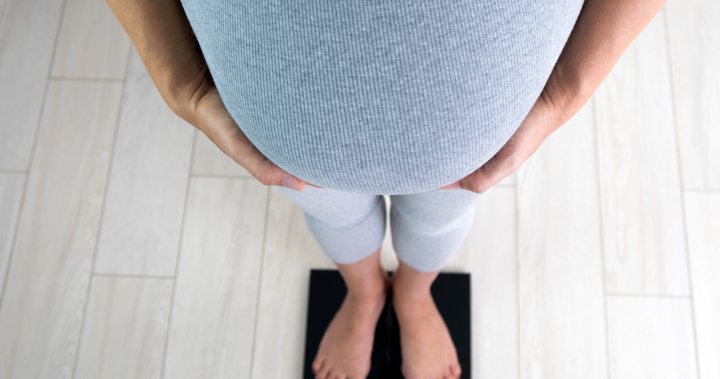
Mothers with obesity at greater risk of stillbirth: Canadian study
Global News
A new CMAJ study suggests there is a higher risk of stillbirth in mothers with obesity, with experts saying early delivery could help minimize those risks.
With obesity rates rising in Canada and globally, new research suggests there is a higher risk of stillbirth in mothers with obesity. Experts say early delivery could help minimize those risks.
The study published in the Canadian Medical Association Journal (CMAJ) Monday found that maternal obesity on its own and along with other risk factors, like diabetes, high blood pressure, smoking, substance use and chronic hypertension, was associated with an increased likelihood of fetal death occurring after 20 weeks of gestation or at a birth weight of at least 500 grams.
Researchers at Dalhousie University, The Ottawa Hospital and Queen’s University analyzed data of roughly 700,000 births, out of which almost 2,000 were stillbirths, in Ontario between April 1, 2012 and December 31, 2018.
They concluded that pregnant people in the highest obesity classes II and III – with a body mass index (BMI) of more than 35.0 – have a greater overall risk of stillbirth than those with a normal BMI of 18.5–24.9. The BMI for class I obesity is in the 30.0 -34.9 range, meaning a woman of an average height weighing 200 pounds.
“What we found is that there are higher risks of stillbirth in people with obesity, especially in the higher classes and especially at term,” said Dr. Naila Ramji, a maternal-fetal medicine specialist in Fredericton, N.B., and assistant professor at Dalhousie University.
The risk of stillbirth in obese pregnancies increases with the gestational age, especially beyond 37 weeks, Ramji, who was the lead study author, told Global News.
At around 38 weeks, the risk of stillbirth for pregnant people with obesity was roughly double to 2.5 times, compared to someone with a normal BMI and the risk was four to 4.5 times closer to 40 weeks, which is the due date, she said.
“That timing of delivery can really reduce that risk because the risk is not as high when you deliver a little bit earlier,” Ramji said.


Dillon Whitehawk has been found guilty of first degree murder in killing of Keenan Toto, but not guilty in killing of Jordan Denton.

Waterloo’s police chief says snipers may continue to be used at large events as needed, following their deployment during a St. Patrick’s Day street party.

Parents and students in Nova Scotia and Manitoba are dealing with the aftermath of what could have been two deadly school attacks, after FBI intel leads to arrests.

The Toronto Police Association and Ontario Premier Doug Ford both called on the judge who suggested police witnesses may have colluded to apologize.

Most Canadians want the government to ban or regulate the use of algorithms to set prices, a new poll suggests — with half of respondents saying the practice is unfair.

Two Quebec men accused of fathering hundreds of kids have been banned from donating sperm in the province while a court case against them unfolds.

While 40 departments will collectively spend $23 billion more next year, another 85 departments will spend $31 billion less in 2026-27.

The policy is in its early stages, with officials reaching out to businesses in Ontario to understand who might be interested in bidding on the proposal in the future.

The agency says there are 45 of these boxes still operating across the country where Canadians can drop off tax returns, payments and other documents.

While the episode has not been released yet, Poilievre hinted that the discussion revolved around U.S. President Donald Trump’s tariffs against Canada.

The chances that pigeons are the source behind several complaints of defecation in the backyards of one Ontario city are low, city staff say.

Canada ranked 18th last year, finishing behind the 23rd-ranked United States, also finding that life evaluations for Canadians under 25 years old have dropped significantly.

Ontario is giving seven defunded consumption sites time to transition to its abstinence-based model — homelessness and addiction recovery treatment, or HART, hubs.