More flexibility could be added to anti-Taliban law to help Afghans: minister
Global News
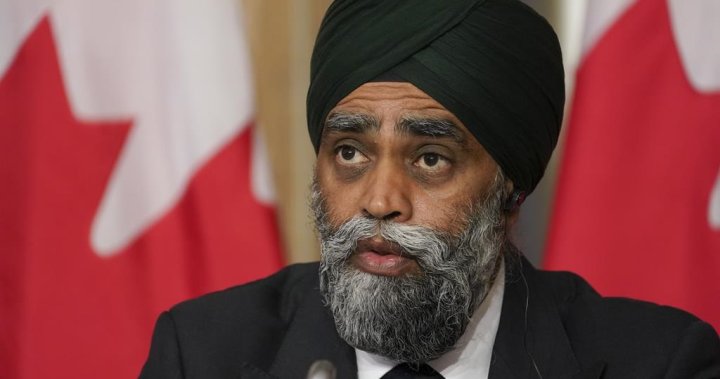
International Development Minister Harjit Sajjan said Canada's anti-Taliban law was preventing aid work that involves in development projects which requires government's approval.
A law outlawing any dealings with the Taliban, which charities complain is impeding their ability to help needy Afghans, could be adjusted by the federal government to give more flexibility to aid agencies.
International Development Minister Harjit Sajjan said the government is looking at making changes to the law to create “flexibility” to make humanitarian help easier.
But, in an interview with The Canadian Press, he insisted Canada would not lift the Taliban’s designation as a prescribed terrorist organization.
“We are looking at options on what we can do to create that flexibility that other countries have,” he said. “The U.S. currently can do more work than us, at least have the options to do more things there. We are looking at similar exemptions we can create as long as we can keep up the pressure on the Taliban, as it is a terrorist entity.”
A law listing the Taliban as a terrorist organization was passed in 2013, before the allies withdrew and the Taliban seized control of Kabul and formed a de facto government last year.
Under the anti-terrorist legislation, Canadians could face up to 10 years in prison if they, directly or indirectly, make available property or finances to the Taliban.
Canadian aid agencies working in Afghanistan complain the law is impeding their work because they cannot help anyone who may have official dealings with the Afghan government, including people paying rent or taxes.
They have also criticized Canada for not adjusting its regulations following a December 2021 UN Security Council resolution which said “humanitarian assistance and other activities that support basic human needs in Afghanistan” would not violate the council’s sanctions regime.


Dashcam video shows the wild scene as a vehicle crashed into two parked cars at a high speed on Shaunslieve Drive in Bedford.

City of Wetaskiwin officials have issued a statement on the decision to ban Mayor Joe Branco from city hall — but it does little to clarify the ongoing situation.

An Abbotsford woman who was sexually abused as a child is speaking out after suffering years of abuse at the hands of her stepfather, starting at the age of just 12 years old.

Technology Minister Nate Glubish says such images, known as deepfakes, can cause people serious harm and that changing the law should create a new layer of protection.

Renters in Quebec may soon have final say over whether they're allowed to keep pets in their homes following a legal ruling that no-pet clauses in leases violate Charter rights.

Alberta RCMP say they have located a Grey 2022 Ford F-150 involved in the fatal highway shooting of an Edmonton man earlier this month. The suspect remains at large.

Education Minister Paul Calandra, however, said he won't use the notwithstanding clause if he moves to eliminate trustees in Ontario.

U.S. President Donald Trump said on Sunday that he would order federal immigration agents to airports to assist TSA. Canadians landing the U.S. should be prepared.

Three overpasses in Saskatoon have been hit in the past three weeks, with charges announced against the driver in the first incident.

Auditor General Karen Hogan says there are critical weaknesses in the integrity controls for the International Student Program.

Return trips by Canadian residents from the U.S. fell 22 per cent in January compared with a year earlier, according to the latest data.

Three byelections are being held on April 13 and the results could have an impact on both the makeup of Parliament and how long it lasts.

Ontario's provincial members of parliament are heading back to Queen's Park Monday, as the legislature sits for the first time since December.