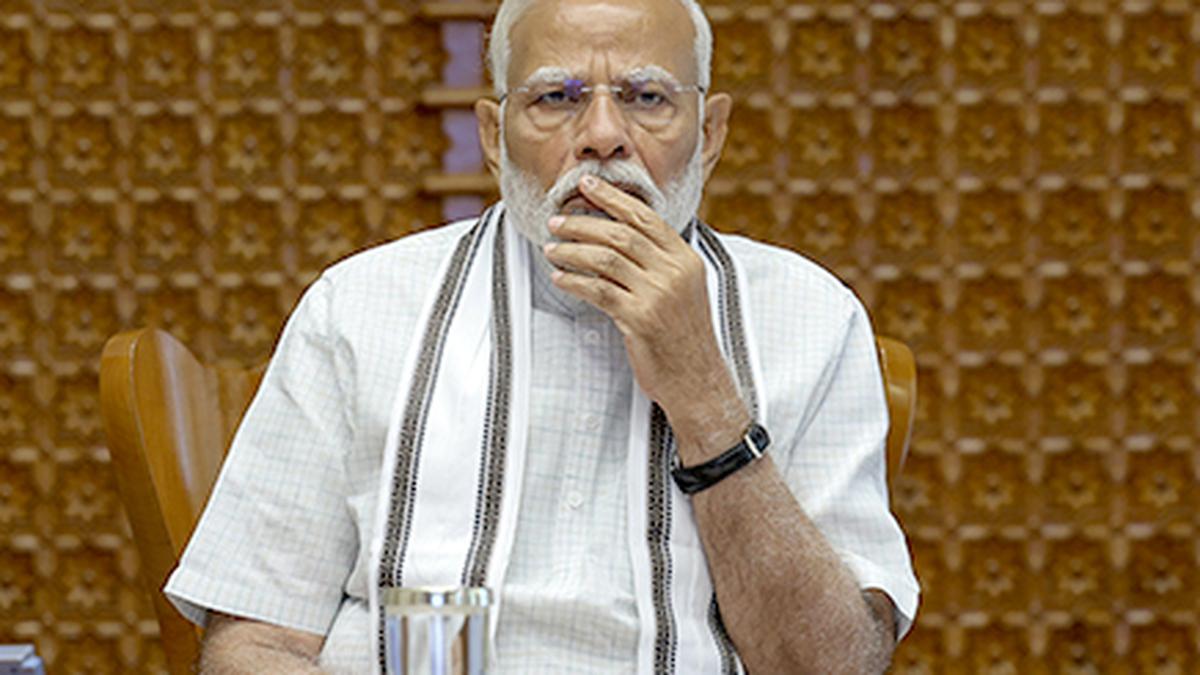
Modi 3.0 likely to focus on economic reforms
The Hindu
Modi plans business-friendly measures to boost manufacturing in India, including labor reforms and reduced import taxes.
Indian Prime Minister Narendra Modi plans a raft of business-friendly measures if he wins a third term this week, including pushing through regulations making it easier to hire and fire workers, according to two government officials familiar with the matter.
As part of an election pledge to transform India into a global manufacturing hub, Mr. Modi wants to offer subsidies for domestic production modelled on recent packages for semiconductor firms and electric vehicle makers, said the officials, who spoke on condition of anonymity because they were not authorised to talk to media.
He also plans to reduce import taxes on key inputs for locally-made goods, which have increased India's manufacturing costs, the officials said.
The Prime Minister’s Office and the Labour and Finance Ministries did not respond to Reuters’ questions.
Exit polls project that the Bharatiya Janata Party (BJP) will win a big majority when election results are announced on June 4.
Mr. Modi's re-election campaign was partly built on the promise of continued economic development. He's pitching India as an alternative for global firms diversifying their supply chains from China.
India is the world's fastest-growing major economy, but that includes a booming tech sector and a struggling older economy that doesn't provide enough jobs for everyone else, said Josh Felman, the former head of the International Monetary Fund's office in India. "What can be done now to provide employment — good jobs for these people — is manufacturing," Mr. Felman said.


LPG crisis: Alternative solutions are being considered, with ammonia cylinders being increasingly used for industrial applications amid delays in commercial LPG deliveries.

India monitors U.S. military pause on Iran as oil prices dip; External Affairs Minister engages with GCC nations for support.

India monitors U.S.-Iran tensions as Trump pauses attacks, leading to a significant drop in oil prices.

Union Minister Ashwini Vaishnaw launches three initiatives to enhance India's creative economy through AI training, citizen platforms, and advanced tech access.

Two Indian-flagged LPG tankers approach the Strait of Hormuz, navigating safely amidst regional tensions to reach Indian ports.

Gold and silver prices plummet over 7% due to West Asia tensions, inflation fears, and a stronger dollar.

Asian shares fall as rising oil prices and escalating Iran conflict diminish hopes for U.S. interest rate cuts.

Japan's SoftBank Group said Saturday it plans to build a huge new gas-fired power plant in the US state of Ohio

Silver prices plunge 9% to ₹2.06 lakh per kg in futures trade amid weak global cues and rising macroeconomic pressures.

OpenAI plans to nearly double its workforce to 8,000 from 4,500 by the end of 2026, the Financial Times reported on Saturday, citing two people with knowledge

Global equity markets plummet as West Asia tensions rise and oil prices surge, triggering significant investor anxiety.

The rupee hits a record low of 93.94 against the dollar amid foreign fund outflows and a crashing equity market.

The Thane police have arrested two co-founders of cryptocurrency exchange platform CoinDCX in connection with an alleged fraud of Rs 71.6 lakh, officials said