Modest start to big strides: India’s space programme turns 60 Premium
The Hindu
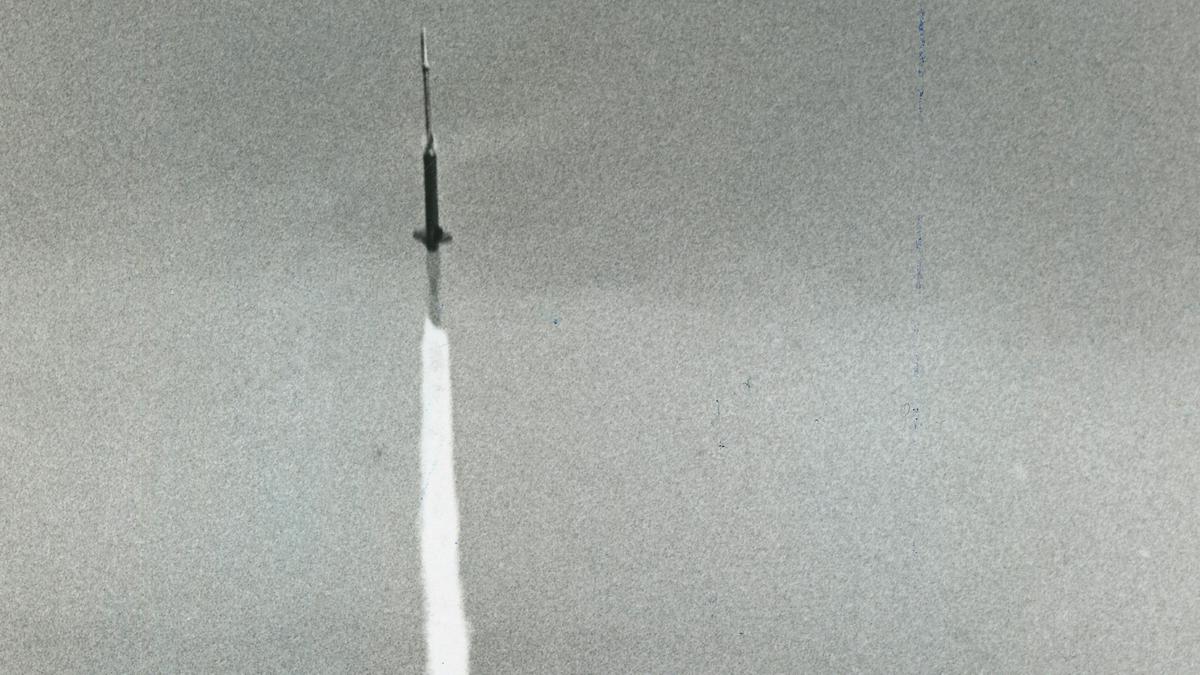
India's space programme began 60 years ago with the launch of a Nike Apache rocket from Thumba. Since then, ISRO has achieved many successes, including launching satellites for various applications and for deep-space science missions.
Sixty years ago, the Indian space programme was born.
On the evening of November 21, 1963, a 715-kg Nike Apache rocket soared from a small launch pad on the beach-head at Thumba, a fishing village on the outskirts of Thiruvananthapuram. It rose 208 km into the sky and released a sodium vapour payload, painting the twilight sky with a big, bright orange cloud.
The Kerala Assembly was in session at the time in Thiruvananthapuram. Its members ran out to see the spectacle in the sky. They were entranced. The sight fascinated thousands of people in the area. Some of them later said that the launch hooked them to rocketry and motivated them to join the Indian Space Research Organisation (ISRO).
The Nike Apache launch was an international effort under the United Nations. The rocket came from the U.S., the sodium vapour payload from France, and the range clearance from an MI-4 helicopter from the then Soviet Union. The rocket and payload engineers were Indians.
The rocket had been mated with the payload in St. Mary Magdalene Church, Thumba, which had been taken over by the national government. The parish priest’s house served as the mission control centre.
Vikram Sarabhai was present during the launch, as were E.V. Chitnis, P.D. Bhavsar, A.P.J. Abdul Kalam, and the French payload specialist Jacques Blamont, among others.
India launched its first truly indigenous rocket on February 22, 1969. Vasant Gowariker, who later became the Director of Vikram Sarabhai Space Centre (VSSC), Thumba, said it was “a pencil-sized rocket”. He told this writer in 1980 that it carried a few kilograms of solid propellants and rose a few kilometres into the air.


Discover the Minor Planet Centre, the key hub for tracking and verifying observations of small solar system bodies.

Discover the Minor Planet Centre, the key hub for tracking and verifying observations of small solar system bodies.

In this week's Science for All newsletter, XX explains

Test your knowledge with the quiz on Science films at the Oscars through history

Set between the Siwalik hills and the plains, Butwal offers travellers a mix of regional cuisine, pilgrimage trails to Lumbini and the comfort of Hyatt’s new hospitality landmark

Explore 2026's wallpaper trends in India, highlighting botanicals and handmade designs that enhance modern homes with nature-inspired aesthetics.

Mercedes-Benz CLA 250+ with EQ Technology review: design, performance, range and features explained. Discover how the new electric CLA combines advanced AI, long range, fast charging and futuristic styling for the next generation of luxury EVs.

AI tool for sparrow conservation

BTS’s comeback with ‘Arirang’ marks a major global music event. When does the album release, and where can you watch their concert live stream? We have all the details

The 2026 U.S. cholesterol guidelines urge starting screening and treatment at 30 to prevent cardiovascular disease effectively.

Olam Festival 2026 in Thiruvananthapuram returns March 27-29 with 120+ vendors, music, art, and cultural zones.

A few storytellers in Thiruvananthapuram share their journeys, challenges, and evolving methods on World Storytelling Day, inspiring young minds.

76-year-old Kurian Jacob from Kerala triumphs with seven medals, including five golds, at the Open Masters Games in Abu Dhabi.