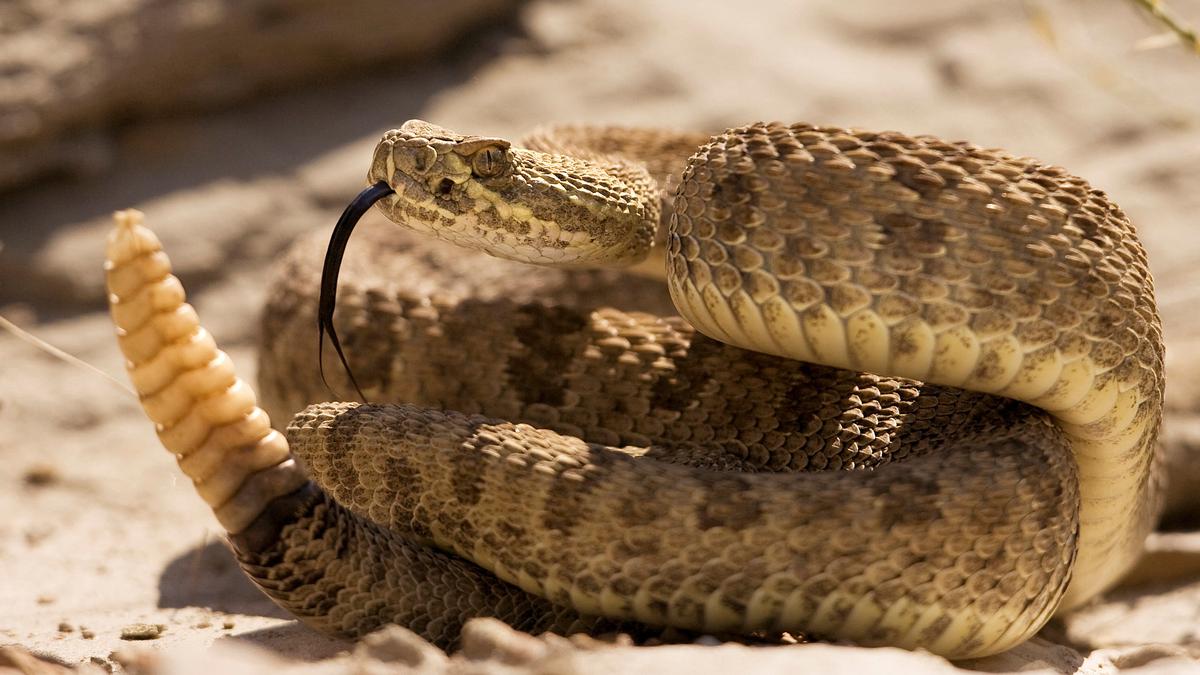
Misunderstood rattlesnakes have a tender side, study finds
The Hindu
New research showed that the snakes seem to gain a sense of well-being when they wriggle into sort of a group hug with other rattlers
Warm and cuddly are adjectives that seldom spring to mind when one thinks of rattlesnakes.
But a new study from Loma Linda University near San Bernardino, California, may change that by showing that the venomous rattler appears to take comfort in being close to its own kind, much like people.
The research showed that the snakes seem to gain a sense of well-being when they wriggle into sort of a group hug with other rattlers, according to the study published this week the journal Frontiers in Ethology. The findings challenge the notion that reptiles are solitary hunters that display little in the way of complex social behaviour.
The study is the work of Chelsea Martin, a Loma Linda doctoral student in biology, and her faculty adviser William Hayes, a professor of earth and biological sciences.
Also Read | Wasps use geometry to correct mistakes while building their nests
Ethology, the study of animal behavior, has long recognized that birds and mammals, including humans, find comfort from being physically close to their own kind. Such proximity tends to make reptiles more relaxed, lowers their heart rates and reduces stress - not much different from people, Hayes said.
"Unfortunately for rattlesnakes and other lower vertebrates and invertebrates, we seldom give them that credit," Hayes said.


Discover the Minor Planet Centre, the key hub for tracking and verifying observations of small solar system bodies.

Discover the Minor Planet Centre, the key hub for tracking and verifying observations of small solar system bodies.

In this week's Science for All newsletter, XX explains

Test your knowledge with the quiz on Science films at the Oscars through history

Set between the Siwalik hills and the plains, Butwal offers travellers a mix of regional cuisine, pilgrimage trails to Lumbini and the comfort of Hyatt’s new hospitality landmark

Explore 2026's wallpaper trends in India, highlighting botanicals and handmade designs that enhance modern homes with nature-inspired aesthetics.

Mercedes-Benz CLA 250+ with EQ Technology review: design, performance, range and features explained. Discover how the new electric CLA combines advanced AI, long range, fast charging and futuristic styling for the next generation of luxury EVs.

AI tool for sparrow conservation

BTS’s comeback with ‘Arirang’ marks a major global music event. When does the album release, and where can you watch their concert live stream? We have all the details

The 2026 U.S. cholesterol guidelines urge starting screening and treatment at 30 to prevent cardiovascular disease effectively.

Olam Festival 2026 in Thiruvananthapuram returns March 27-29 with 120+ vendors, music, art, and cultural zones.

A few storytellers in Thiruvananthapuram share their journeys, challenges, and evolving methods on World Storytelling Day, inspiring young minds.

76-year-old Kurian Jacob from Kerala triumphs with seven medals, including five golds, at the Open Masters Games in Abu Dhabi.