Minister touts deals with N.S. Indigenous communities as sign Ottawa’s plan working
Global News
'I think the approach we've taken, as demonstrated today, is working.'
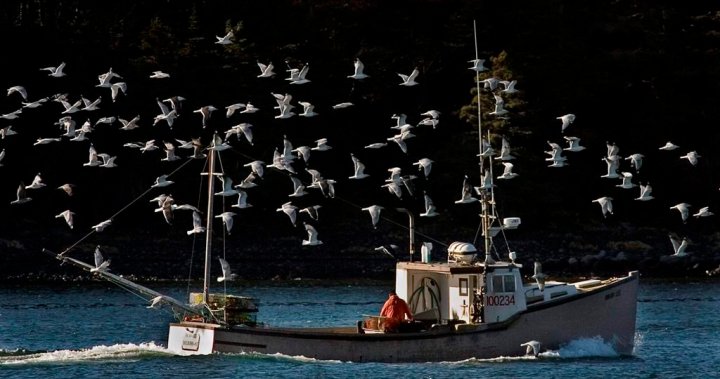
Departing Fisheries Minister Bernadette Jordan says new fishing agreements with Mi’kmaq communities indicate her approach to the Indigenous lobster harvest is working, despite continuing tensions on the water.
The Nova Scotia minister – who remains in her post until a new cabinet is named – was defeated in the Sept. 20 election, with some political scientists saying the fishing disputes in St. Marys Bay cost her votes among Indigenous communities and commercial fishers.
But in an interview with The Canadian Press, Jordan said negotiations are gradually bearing fruit with First Nations fisheries.
“I think the approach we’ve taken, as demonstrated today, is working,” she said. “We have First Nations out on the water today fishing a moderate livelihood …. We have understandings in place. These are very positive signs of communities that want to work with the government of Canada.”
On Wednesday, the federal Fisheries Department announced it had negotiated lobster fishing arrangements with Bear River and Annapolis Valley First Nations, which authorize their fishers to set 70 traps per harvester off southern Nova Scotia and to legally sell their catch. The Acadia and Glooscap First Nations also participated in the discussions and may request to take part in fishing this season under the same agreement.
Ottawa says a total of 3,500 traps can be set under the agreement, with the communities to decide how they are allocated.
In early June, the Potlotek First Nation in Cape Breton reached a similar “interim understanding” – a term used to indicate the bands haven’t given up their inherent rights – authorizing a total of 700 lobster traps for the community’s fishers to conduct a moderate livelihood fishery.
The agreements are linked to a 1999 Supreme Court of Canada decision that affirmed the treaty right of Indigenous harvesters to fish for a moderate livelihood, though the court later clarified that Ottawa could regulate the fishery for conservation and other limited purposes.


The remote Ontario community remains under a state of emergency after its water treatment plant failed last week. Evacuations are underway.

It's been proposed if the score remains even after overtime, it would be decided by alternating plays from the opposition's three-yard line until one scores and the other doesn't.

François Legault made the announcement at the national assembly of Quebec on Wednesday as October’s provincial election approaches.

Crombie announced she would resign back in September after a weak show of support for the leader at the Ontario Liberal convention on the back of a third-place election finish.

The O'Neills are at the centre of a Charter of Rights challenge, now before the B.C. Supreme Court, that seeks to end the practice of so-called "forced transfers."

The former Manwin Hotel, which has been vacant for about a year, is the scene of a major fire, though crews say the cause is not yet known.

A major issue this week will be China's heavy tariffs on pork, canola and seafood, which were imposed after Ottawa ordered tariffs on Chinese electric vehicles, steel and aluminum.

Despite data saying otherwise, Kelowna, B.C. business owners say break and enters, thefts and property crime are through the roof.

Kelowna is flooded with empty condo and rental units, with the city's vacancy rate now the highest in all of Canada at more than six per cent.

Producers in Saskatchewan say they are feeling optimistic ahead of Premier Scott Moe joining Prime Minister Mark Carney on his trip to China this week.

The Daily Bread Food Bank is alleging a misuse of funds at Feed Scarborough and cutting the agency from its network at the end of January.

Life expectancy at birth in Canada increased for the second consecutive year in 2024, with women living longer on average than men, Statistics Canada said.

SiRT is investigating a shooting involving members of the RCMP that resulted in the death of a man from Sipekne’katik First Nation in Nova Scotia on Tuesday morning.