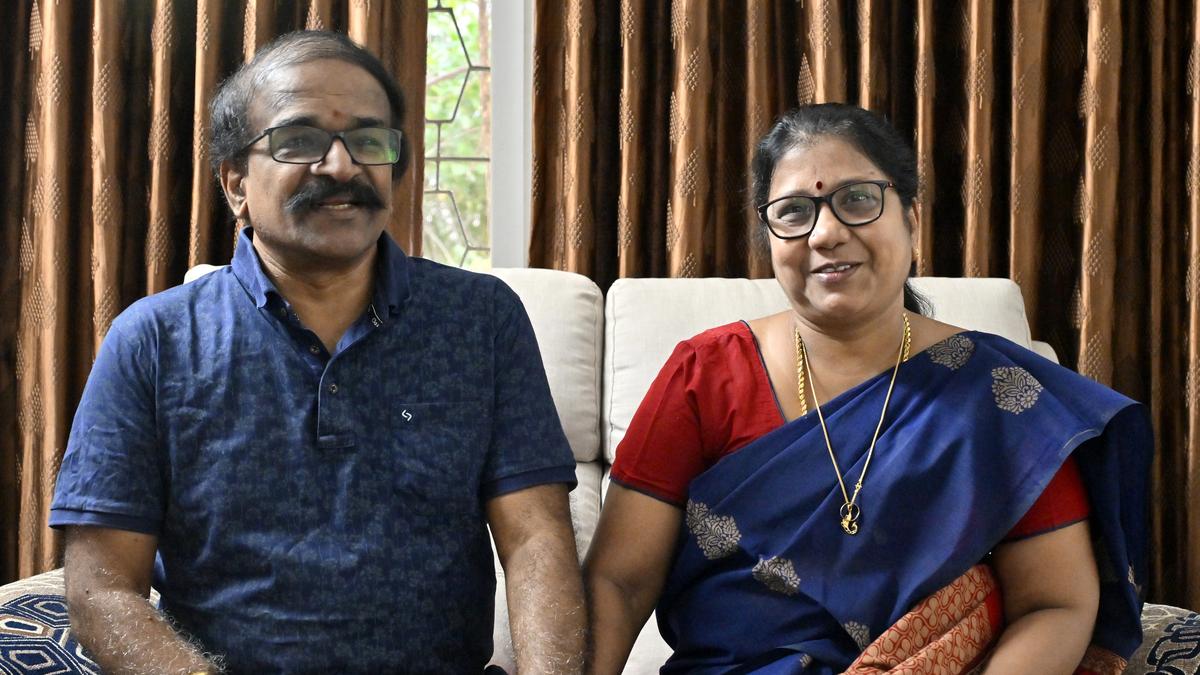
Middle income group: Higher exemption limit on savings will put money in our pocket, says retired professor
The Hindu
Retired professor S. Selladurai reviews Union Budget, highlighting benefits for salaried class, skill development, and education loans.
Annual income: ₹17 lakh
No. of family members: 3
The Union Budget has minor benefits for the salaried class and retired people, said S. Selladurai, a retired professor of Anna University. The increase in the standard deduction limit from ₹50,000 to ₹75,000 is welcome, he said.
“I appreciate the initiative of giving importance to skill development in the Budget. The government has been focusing every year on developing skillsets, but what happens to those who have developed skills? Are they getting jobs? Employers say students are not skilled, but even if we give them sufficient training, there will be a benefit only if there are sufficient jobs. There is no mention of improving job opportunities,” he said.
The Budget has offered to waive the interest on higher education loans to some extent, which is welcome, he said.
“There is no mention of any relief for senior citizens. We expected an exemption from interest on our investments post retirement. An increase in the limit of exemption would have benefited us,” he said.
The prices of groceries, especially lentils, have been soaring. The prices will fall only if the cost of petrol and diesel is brought down. There are small benefits in the changes to the slabs. I may save approximately ₹17,000 annually.


Indian markets plunged over 3% amid soaring crude prices, rupee depreciation, and escalating West Asia geopolitical tensions in March 2026.

Government launches ₹497 crore RELIEF scheme providing credit insurance to exporters affected by the West Asia crisis, focusing on MSMEs.

Crude oil futures rise amid Middle East attacks, pushing Brent above $116 on fears of tightening global supply.

West Asia conflict delays India’s FTA talks with GCC and Israel, while UK and EU agreements proceed as planned in 2024.

Russian Urals oil vessels will reach India on March 21 amid stable fuel prices and diversified LPG imports.

Warner Bros. dominated the Academy Awards, but Paramount’s looming acquisition of the studio signals the biggest restructuring of the industry in decades and a battle over the future of Hollywood itself

HDFC Bank board calls Atanu Chakraborty’s resignation baffling, affirms robust corporate governance and strong market confidence.

RNFI and Jio Payments Bank launch cardless UPI QR cash withdrawals for instant access across urban, semi-urban, and rural India.

RBI approves HDFC Bank's chairman transition plan, affirming the bank's strong financials and competent management.

Markets fall 2% as Israel attacks Iran’s South Pars gas field, pushing Brent crude above $112 and rupee below ₹93.

HDFC Bank shares drop over 4% following chairman’s ethical resignation, raising insider trading and management concerns.

Erran Berger, the Vice President of Product Engineering at LinkedIn, thinks the former type of division of labour is rapidly disappearing

India mandates oil and gas firms to share import and export data to mitigate consumer shortages amid rising global prices.