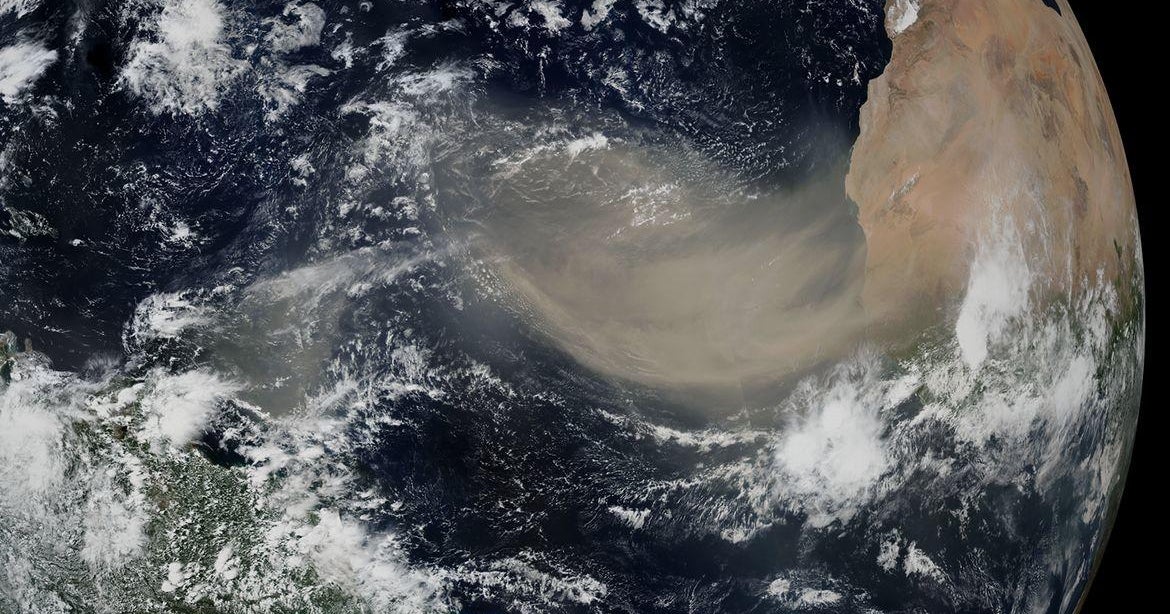
Microscopic dust from desert storms has been hiding the true extent of global warming, study finds
CBSN
Desert storms that have sent massive plumes of dust across the oceans may have a small but significant effect on global temperatures, scientists say. New research found the microscopic particles circulating through the atmosphere had a "slight overall cooling effect on the planet" that masked just how much the planet has truly warmed over recent decades.
The UCLA research, published in Nature Reviews Earth & Environment on Tuesday, found that the amount of atmospheric dust has increased by about 55% since pre-industrial times, with many ups and downs along the way. According to lead study author Jasper Kok, that increase is likely due to changes in global climate, such as wind speeds in some deserts, as well as land-use changes, such as transforming land into agriculture and diverting water for irrigation.
But the researchers say the impact of that dust has not been adequately factored into studies of global temperature trends. The overall increase in dust, according to Kok, "could have masked up to 8% of the greenhouse warming" that's taken place since the Industrial Revolution.


OnlyFans owner Leonid Radvinsky, a reclusive billionaire who transformed a little-known adult-content site into a cultural touchstone, has died of cancer, the company said Monday. Radvinsky was 43. Edited by Alain Sherter

Washington — President Trump said early Monday that he is postponing airstrikes on Iran's power plants after "very good and productive conversations" over the last two days about reopening the Strait of Hormuz. However, Iran's foreign ministry denied any such talks. Claire Day contributed to this report. In:

Immigration and Customs Enforcement agents began deploying to some U.S. airports on Monday as a partial government shutdown causes shortages of Transportation Security Administration officers who have resigned or called out of work. Skyler Henry contributed to this report. In:

London — Police in London are investigating a suspected antisemitic hate crime after vehicles belonging to a Jewish ambulance service were set on fire early Monday morning. In:

Washington — The Supreme Court is considering Monday a major elections dispute involving whether federal law bars states from counting mail ballots that are postmarked by, but received after Election Day.

Stocks look set to surge in early trading on Monday after President Trump postponed an ultimatum for Iran to reopen the Strait of Hormuz, saying that the U.S. is engaged in "good and productive" negotiations with Tehran. Edited by Alain Sherter In:

New York's La Guardia Airport was closed late Sunday night after an arriving Air Canada Express plane and ground vehicle collided, according to flight tracking service FlightRadar24.

Savannah Guthrie is renewing pleas to neighbors, friends and residents of Tucson, Arizona, to jog their memories in the hopes of sparking new leads in the disappearance of her mother, Nancy. In:

Officials at Immigration and Customs Enforcement have been scrambling to carry out a weekend directive from President Trump to have immigration agents provide security at airports amid the partial government shutdown, multiple sources familiar with the internal deliberations told CBS News. In:

Fentanyl was found inside Barbie doll packages being sold at a discount store in Missouri, police said on Saturday. In:

New Jersey Senator Cory Booker hasn't been the mayor of Newark since 2013. But when he walks around his neighborhood, you'd never know it. One passer-by yelled out, "The best mayor ever!" In:

Fentanyl was found inside Barbie doll packages being sold at a discount store in Missouri, police said on Saturday. In:

CBS News contributor Arthur C. Brooks is the author of a new book, "The Meaning of Your Life: Finding Purpose in an Age of Emptiness." This morning, he's charting an unlikely path to happiness: