‘Mercury may be present in Kodaikanal forest soil for centuries’
The Hindu
Two decades after Kodaikanal locals discovered mishandling of mercury by a global conglomerate, levels of the toxic metal are still vastly higher than normal in the hill station’s soil, says Ameer Shahul, former journalist and author of Heavy Metal: How a Global Corporation Poisoned Kodaikanal.
Two decades after Kodaikanal locals discovered mishandling of mercury by a global conglomerate, levels of the toxic metal are still vastly higher than normal in the hill station’s soil, says Ameer Shahul, former journalist and author of Heavy Metal: How a Global Corporation Poisoned Kodaikanal.
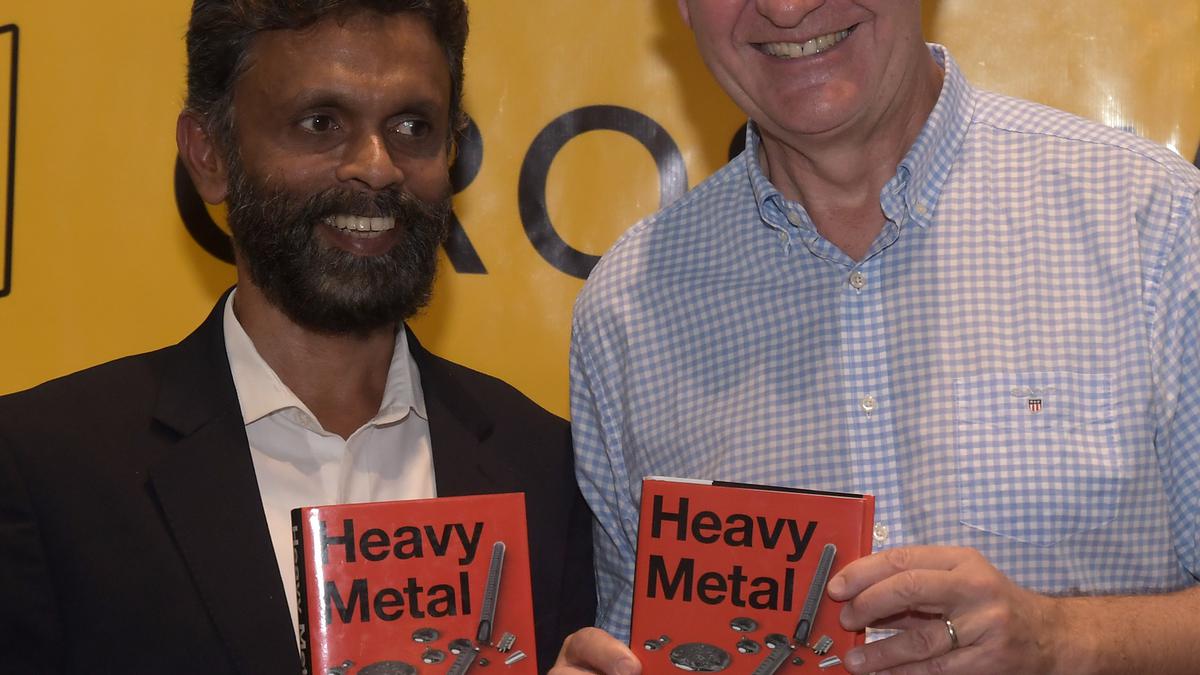
In the book, Mr. Shahul traces how an American thermometer factory was taken over by Hindustan-Unilever in Kodaikanal in 1983, the efforts that led to the factory’s closure, as well as the legal travails and health implications for the locals and factory workers. The book was formally launched by Erik Solheim, former Executive Director of UN Environment Programme (UNEP) and former Norway Environment Minister, in Chennai on Saturday.
Over the years, it was found that many people had lost their lives due to severe health complications as Hindustan-Unilever unit carelessly discarded mercury-laden scrap to local dealers, Mr. Solheim rued.
Drawing parallels with the mercury poisoning disaster in Minamata, Japan, which came to light in the 1950s, Mr. Solheim said, “When a tragedy such as this happens, the most important thing we can do is to make certain it does not happen again.” In 2017, when Mr. Solheim headed the UNEP, a historic agreement called the ‘Minamata Convention of Mercury’ was signed by over 160 countries, including India.
Mr. Shahul said while a drop in wildlife activity in prominent sites such as Tiger Shola and Bear Shola was indicative of the environmental effects of mercury sediments, there had been a lack of Kodaikanal-specific research on the subject, making it difficult to quantify the environmental repercussions. “We didn’t have a clear picture”, he said while adding that “traces of Mercury are likely to reside in Kodaikanal forest soil for decades or centuries”.
The Tamil translation of the book will be available in the next two months, he said.


AIADMK reveals its first candidate list for Tamil Nadu Assembly election, featuring familiar names and few surprises.

A study reveals antibiotic resistance causes 87% of India's typhoid economic burden, significantly impacting children and families.

How Dikshitar was inspired by Vaduvur Rama to come up with a composition in a raganga raga

Lok Sabha passes Finance Bill 2026 with amendments, completing its budgetary approval before Rajya Sabha's consideration.

Karnataka government to consult legal experts on pursuing action against Adani Group's ACC Ltd. over ₹850 crore in disputed dues.

The FCRA amendment bill aims to create an authority for managing NGO assets after license loss, addressing misuse of foreign funds.

Telangana Minister assures adequate petroleum stocks for three months, warns against illegal fuel carrying amid panic buying rumors.

TMC calls for the removal of Bhabanipur returning officer, citing alleged ties to BJP and concerns over neutrality.

Kerala CM Pinarayi Vijayan condemns UDF's misogynistic attacks on CPI(M) legislator U. Prathibha, highlighting political degeneration.

Selected from 9,400 submissions across 37 countries, the 100 photographs on display traverse intimate and political terrains. In MRC Nagar, photographer Swastik Pal captures life in the Sundarbans, where severe climate change has brought humans and wildlife into closer contact. Shane Hynan’s Beneath Beofhod reflects on Ireland’s boglands as sites of memory and restoration, while Mateo Trevisan’s More than the Sun examines the impact of coal-driven industrialisation in the Western Balkans.

Hyderabad officials assure sufficient fuel supply for 60 days, warn against misinformation and illegal sales amid panic buying.

Telangana MP urges Centre to expedite ₹1,270 crore dues transfer from Andhra Pradesh for financial fairness and development.

A Karnataka man was detained with ₹62.5 lakh in cash during election checks on NH 544, claiming it was from a property sale.