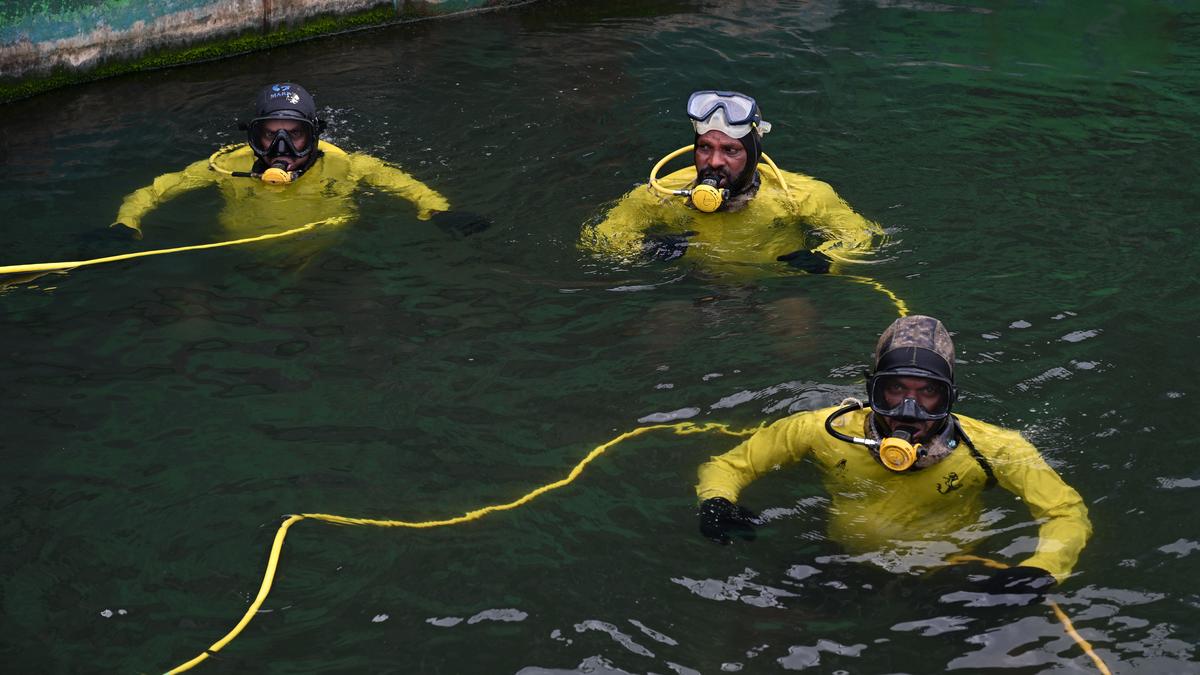
Meet Kasimedu’s divers who are experts at maintaining boats and rescuing sunken vessels
The Hindu
G Underwater Diving Works team in Kasimedu, Chennai, scrapes boat hulls clean underwater with precision and expertise.
C Ganesan’s office smells of grease, rust, and seawater. A refurbished shipping container, it stands near the N4 beach, holding precious cargo: his team’s diving equipment. T-shirts and shorts are hung on a clothesline along a corner, and at the far end, stands an air compressor. Outside, their nameboard reads: G Underwater Diving Works. This team, consisting of seven divers, has been aiding in the maintenance of berthed vessels at Kasimedu for 25 years.
These men are called muzhugali, meaning diver, and their key responsibility is to scrape marine life and barnacles off the underside of boats docked at the wharf. To do so, they swim underwater, kitted in diving equipment and armed with large metal scrapers. There are only four such teams at Kasimedu, and Ganesan’s is among the oldest. “I learnt to dive from my father,” says the 54-year-old, minutes before donning his diving attire on a muggy afternoon.
His father R Chinnayya who did odd jobs at the wharf, was drawn to the sea. “He learned to dive on his own,” says Ganesan, adding that Chinnayya used to assist the dockmaster and dock engineer. “He would dive underwater to inform the boat operator of the best angle to move their boat so that it slid into the perfect docking position,” explains Ganesan.
Chinnayya eventually trained his sons to dive, and taught them about investing in good equipment as well. Today, they are busy through the year, scrubbing gillnet boats and trawlers that can range from 40 to 80 feet in length. There are around 900 such vessels at Kasimedu harbour.
As we speak, Ganesan’s brother C Raja and cousin A Kathirvel mount an air compressor on to a three-wheeler that snakes its way into the wharf, puttering to a stop. This machine with its long tubes, will supply oxygen to the divers. They use metal plates in place of rubber fins for better mobility underwater. This is especially because they dive holding heavy metal scrapers.
A palm-sized jellyfish floats near a trawler at anchor as the divers do last minute checks before taking off. Jellyfish, that they call kilicha, can give them nasty cuts on the skin, but they are unperturbed. Years of diving has taught them to ignore minor inconveniences.
All that is left to do, is jump and disappear into the inky-blue sea.


Palla urges NDA leaders to unite for grassroots outreach, enhancing public trust through balanced welfare and development initiatives.

Horses shone at Auroville's 2026 event, showcasing equestrian talent through dressage, derby, and show jumping competitions.

Telangana Governor Shiv Pratap Shukla attends Bihar Foundation Day celebrations in Hyderabad, honoring Bihar's historical and cultural contributions.

Samsung workers protest for the reinstatement of 27 suspended employees, citing unfulfilled promises from the Labour Minister.

The Vice-Chancellor of Rajiv Gandhi University of Health Sciences (RGUHS) B. C. Bhagavan said on Sunday that the university will soon open a research centre on Yoga and Naturopathy on 60-acre land in Bengaluru.

UT Matters: Construction of Uppar drain road overbridge in Puducherry to be completed in four months, amid traffic regulations.

Union Minister Dharmendra Pradhan highlights Bharat Innovates' aim to elevate Indian deep-tech startups to the global stage.

In an exclusive interview, DMK MLA Ezhilan discusses Tamil Nadu's 2026 elections, party structure, and local governance challenges.

Minister Satish Jarkiholi asserts confidence in retaining Davangere and Bagalkot seats in upcoming bypolls amid addressing internal discontent.

Sunil Ambekar of RSS emphasizes national unity, defending road prayer restrictions and promoting awareness of shared ancestry in India.

Opposition MPs and activists voice strong concerns against proposed amendments to the Transgender Persons Act at a Delhi hearing.

Four Assam police commandos injured in an extremist attack during a gunfight in Tinsukia district, officials report.

Campaigning intensifies in Ernakulam district as candidates engage voters ahead of the crucial Assembly polls.