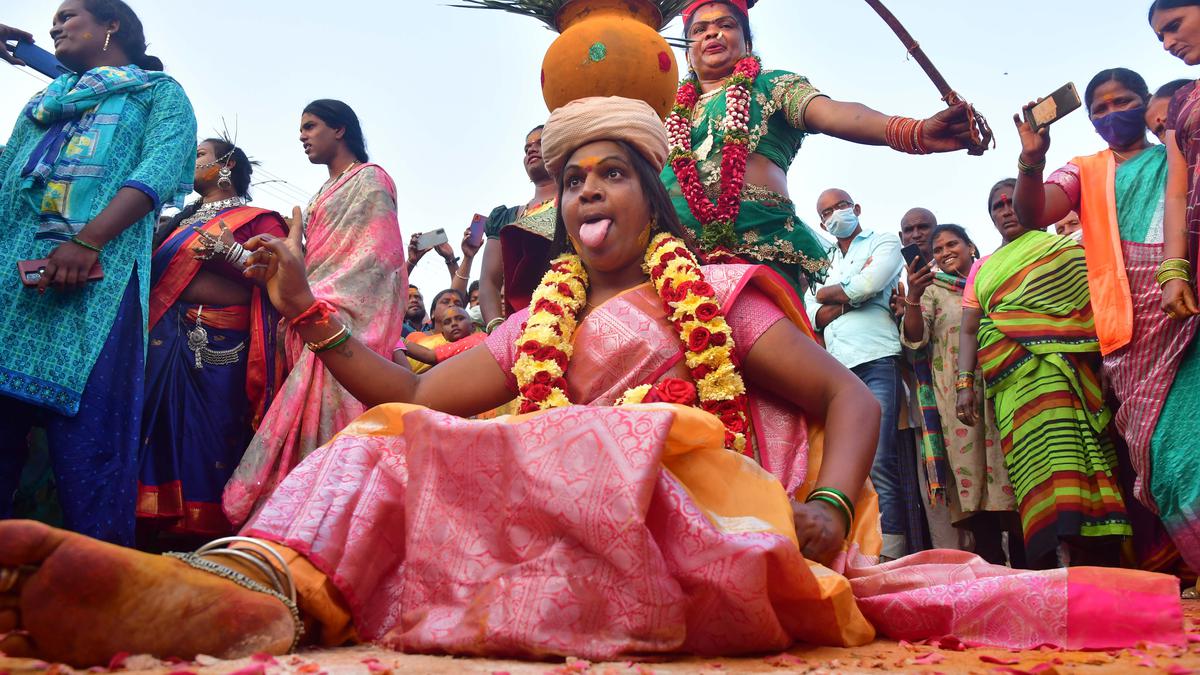
Medaram Jatara: A sacred gathering of devotion and tradition
The Hindu
The Medaram Jatara, a significant spiritual event, attracts devotees from all walks of life to commemorate a historical revolt.
MULUGU
The Medaram Jatara, spanning four days, stands at the pinnacle of spiritual significance for devotees who eagerly await this occasion every two years. This event is a testament to the devotion of the Koya tribe, who are joined by people from all walks of life, to commemorate a revolt led by Sammakka and Saralamma, a mother-daughter duo, against the levy of taxes on the tribal populace during a period of drought by the Kakatiya rulers in the 12th century. Though it has started as a small gathering of the Koya tribals, it earned the State festival status in 1998.
Scheduled from February 21 to 24, this year, this festival pays homage to the revered Goddesses Sammakka and Saralamma, and is observed biennially in the month of Magha (February) on the full moon day. Beyond its religious fervour, the Jatara serves as a platform for fostering understanding and harmony between visitors and tribal communities, promoting the preservation of their unique traditions, culture, and heritage on a global scale.
Months before the official commencement on February 21, devotees began streaming into Medaram, a quaint village nestled within the Eturnagaram wildlife sanctuary in the Mulugu district. With an estimated daily footfall of around one lakh pilgrims as on today, officials anticipate a higher turnout compared to previous years and would touch nearly two crore. Visitors from Telangana, Maharashtra, Karnataka, Chhattisgarh, and Odisha converge upon the shrine, creating a vibrant tapestry of cultural exchange.
At the heart of the Jatara, exhibitions and circuses captivate attendees, while a sprawling network of makeshift shops, including liquor stalls, adorn the area spanning over 10 kilometers. Accommodation, albeit scarce, commands exorbitant rates ranging from ₹30,000 to ₹50,000 for a single room due to the limited availability of housing in Medaram’s 300 households.
For those unable to afford such steep prices, tents become temporary sanctuaries in the surrounding forests, while farmers capitalise on the influx by offering their fields for rent. Excise officials prepare to issue temporary liquor licenses to cater to the demand, with plans for a dedicated depot to supply the shops during the festivities. “Farmers in villages like Reddygudem, Chalwai, Tadvai, and Narlapur also cash in on this wonderful opportunity and earn some extra bucks. They have temporarily halted cultivation and are offering their fields on rent to pilgrims to set up tents,” said Prathap Singh, a resident of Tadwai.
In tandem with these preparations, the State government facilitates online offerings of jaggery, locally known as Bangaram, for devotees wishing to contribute to the rituals. “The State government is making arrangements for the smooth conduct of the fair with a total of ₹110 crore, with ₹75 crore already released and an additional ₹35 crore awaiting clearance,” Ila Tripathi, District Collector and Nodal Officer for the Jatara, said.


Congress criticises Modi government, citing reports about Pakistan's diplomatic role amid U.S.-Iran tensions, labelling it a setback for India.

Folk music with the Barmer Boys that crosses all boundaries

Tamil comic blockbuster Thaai Kizhavi releases on JioHotstar this week, as actress Radikaa Sarathkumar rewrites rules on pay, age, and women in Tamil films

"The jury has difficulty coming to a consensus regarding one defendant, do you have any advice on how to move forward?" the jurors told Judge Carolyn Kuhl

Maharashtra relocates 25 leopards to Gujarat's Vantara facility amid rising leopard and tiger populations, says Forest Minister Naik.

Assembly polls 2026: Follow updates from The Hindu on the upcoming elections in five States on March 24, 2026

Delhi's per capita income is projected to grow 7.09% by 2025-26, highlighting the city's economic progress and infrastructure challenges.

Review meeting held in Dharmapuri with election observers and nodal officers to discuss upcoming Assembly elections.

Execution of development projects, infrastructure augmentation to occupy centre stage in electioneering

Telangana Cabinet approves Hate Speech and Parents Support Bills, ensuring accountability for neglecting elderly and curbing hate-driven offences.

EU and Australia finalize a free trade agreement and establish a new defense partnership to enhance economic and military cooperation.

U.S.-Israeli war on Iran LIVE: Iran faces deadline of US President Donald Trump warning to open Strait of Hormuz. Follow The Hindu for more LIVE updates on March 23 2026 on Iran-Israel war.

KPCC chief Sunny Joseph emphasizes UDF's focus on Sabarimala and corruption while expressing confidence in winning Kerala's upcoming Assembly elections.