Primary Country (Mandatory)

Other Country (Optional)

Set News Language for United States

Primary Language (Mandatory)
Other Language[s] (Optional)
No other language available

Set News Language for World

Primary Language (Mandatory)
Other Language(s) (Optional)

Set News Source for United States

Primary Source (Mandatory)
Other Source[s] (Optional)

Set News Source for World

Primary Source (Mandatory)
Other Source(s) (Optional)
  • Countries
    • India
    • United States
    • Qatar
    • Germany
    • China
    • Canada
    • Singapore
    • World
  • Categories
    • National
    • International
    • Business
    • Entertainment
    • Sports
    • Special
    • All Categories
  • Available Languages for United States
    • English
  • All Languages
    • English
    • Hindi
    • Arabic
    • German
    • Chinese
    • French
  • Sources
    • India
      • AajTak
      • NDTV India
      • The Hindu
      • India Today
      • Zee News
      • NDTV
      • BBC
      • The Wire
      • News18
      • News 24
      • The Quint
      • ABP News
      • Zee News
      • News 24
    • United States
      • CNN
      • Fox News
      • Al Jazeera
      • CBSN
      • NY Post
      • Voice of America
      • The New York Times
      • HuffPost
      • ABC News
      • Newsy
      • USA TODAY
      • NBC News
      • CNBC
    • Qatar
      • Al Jazeera
      • Al Arab
      • The Peninsula
      • Gulf Times
      • Al Sharq
      • Qatar Tribune
      • Al Raya
      • Lusail
    • Germany
      • DW
      • ZDF
      • ProSieben
      • RTL
      • n-tv
      • Die Welt
      • Süddeutsche Zeitung
      • Frankfurter Rundschau
    • China
      • China Daily
      • BBC
      • The New York Times
      • Voice of America
      • Beijing Daily
      • The Epoch Times
      • Ta Kung Pao
      • Xinmin Evening News
    • Canada
      • CBC
      • Radio-Canada
      • CTV
      • TVA Nouvelles
      • Le Journal de Montréal
      • Global News
      • BNN Bloomberg
      • Métro
    • Singapore
      • CNA
      • The Straits Times
      • Lianhe Zaobao
'Meatflation' not the only sticker shock: Food Price Report

'Meatflation' not the only sticker shock: Food Price Report

BNN Bloomberg
Thursday, December 09, 2021 01:03:02 PM UTC

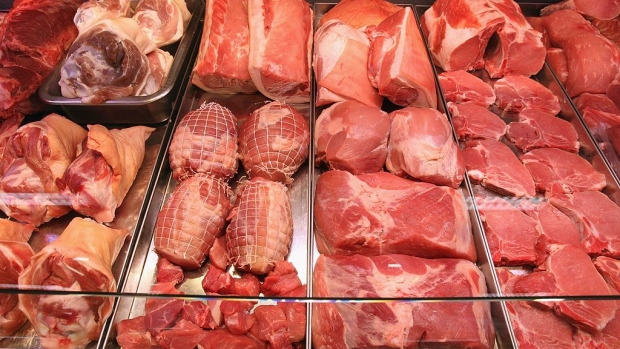
Sticker shock at the meat counter won’t likely go away anytime soon, but new research also suggests overall grocery bills have skyrocketed by up to 70 per cent over the last couple of decades.

Sticker shock at the meat counter won’t likely go away anytime soon, but new research also suggests overall grocery bills have skyrocketed by up to 70 per cent over the last couple of decades.    That’s according to a new food price report by researchers at Dalhousie University in collaboration with the University of Guelph, the University of Saskatchewan and the University of British Columbia.    This year’s report tried to answer tough questions about the Canadian food supply chain without fully knowing when the COVID-19 pandemic will end and what permanent changes it could leave behind on the industry as a whole.    In addition to rising prices and labour market challenges, researchers expect food retailers could see increased rates of theft, food programs may face surging demand, and the growing effects of climate change will continue to be felt in more dire and urgent ways.    Food insecurity is also likely to persist, thanks to wages failing to match the pace of inflation, the report said. 

  “This is not to say we haven’t seen a lot of resilience and adaptability in Canada’s food supply chain during this past year,” said Sylvain Charlebois, project lead and director of the Agri-Food Analytics Lab in Nova Scotia.    “But the fact is, inflation alone reached an 18-year high and there’s many other factors from the pandemic we have yet to fully understand the scope of… Coming out of this crisis won’t be easy for the food industry and neither will it be for many Canadians’ pockets.”   According to the report, consumers saw much of this coming — pointing to a 2021 study on inflation that found 86 per cent surveyed Canadians perceived food prices to be higher — with meat being the food category in which the highest proportion noticed a price hike.   It’s a phenomenon known as “meatflation,” which has been around well before the pandemic, but became more pronounced since the onset of COVID-19, said Charlebois.    “Just look at our own predictions from last year,” he said. “We had a forecast for up to 6.5 per cent price increases with meat, which many people thought was way too high. And in reality, that actually rose by 9.5 per cent — which is much, much higher than most other categories.”

  The “industry trifecta” of chicken, pork and beef has always competed amongst itself in markets across Canada. Yet, during the pandemic, a majority of the trends affecting one type of meat has also been seen with others.    “It’s just not meat though. Almost all animal products — including eggs, dairy and whatnot — are also like this,” said Charlebois. “In many ways, there is a perfect storm happening because labour shutdowns and transportation issues are still continuing to be seen all over the world, and that impacts animal products in more ways than other products.”   Still, plant-based products have not completely filled the gaps that rising meat costs have created, Charlebois added.    “There is a lot of noise out there about the plant-based category. And it’s certainly giving many consumers viable options with better price points than meat which didn’t exist before,” he said. “But there is a lot of growth yet to be seen or felt there.”   Meat prices are further expected to rise by up to two per cent next year. Overall, however, dairy products have been given a much higher forecast of an up to eight per cent increase.    Charlebois said that’s just the tip of the iceberg and that Canadians should start getting used to soaring food costs.   “It might be an unpopular thing to say, but I think we’d gotten accustomed for the longest time to a much lower cost of food than what makes sense in the long-term,” he said. “I’m talking about decades from the ‘70s up to the early 2000s. And I think that era ended when the financial crisis of 2008 happened. We’d all better get used to the version of that we’re seeing now.”

Read full story on BNN Bloomberg
Share this story on:-
More Related News
Trump’s tariffs are hurting American manufacturers instead of helping them

Jay Allen is a fan of U.S. President Donald Trump, and voted for him on the belief that the Republican would cut taxes and trim regulations, helping his manufacturing business in northeast Arkansas.

David Burrows’ Top Picks for March 18, 2026

Top Picks from David Burrows, Chairman & CEO, Barometer Capital Management

Canadian ships stuck in Persian Gulf as blockade of Strait of Hormuz continues

Two Canadian cargo ships are stuck in the Persian Gulf and unable to pass through the blocked Strait of Hormuz as the war in Iran continues.

U.S. stocks fall as Brent crude jumps toward $110 per barrel

U.S. stocks are sinking Wednesday after another climb for oil prices raised worries about inflation, which may have been primed to worsen even before the war with Iran began.

U.S. crude stocks rise, gasoline and distillate inventories fall, EIA says

U.S. crude stocks rose while gasoline and distillate inventories fell last week, the Energy Information Administration said on Wednesday.

Christopher Liew: Here are 5 tax credits and deductions Canadians are missing out on

Every year, billions of dollars in tax credits and benefits go unclaimed in Canada. Here are five commonly missed tax

Federal Reserve could signal no interest rate cuts this year in wake of Iran war

A key question hangs over the Federal Reserve’s two-day meeting that ends Wednesday: Will central bank policymakers still reduce short-term interest rates this year, now that the Iran war has sent oil prices higher and gas prices spiking? Or will they have to stand pat for months to see how the conflict plays out?

Wall Street follows global markets higher and oil retreats despite new barrage out of Iran

Wall Street followed global markets higher Wednesday and the price of U.S. crude fell eased despite a new barrage of attacks by Iran on its Gulf neighbors.

Trump’s tariffs are hurting American manufacturers instead of helping them

Jay Allen is a fan of U.S. President Donald Trump, and voted for him on the belief that the Republican would cut taxes and trim regulations, helping his manufacturing business in northeast Arkansas.

World shares advance and oil slips back despite a barrage of attacks by Iran

Shares advanced Wednesday in Europe and Asia as oil prices fell back slightly despite a barrage of attacks by Iran on its Gulf neighbours.

Christopher Liew: Are you missing these tax credits?

Every year, billions of dollars in tax credits and benefits go unclaimed in Canada. Here are five commonly missed tax

Oil prices resume their rise, but U.S. stocks hold steadier this time around

Oil prices resumed their rise on Tuesday because of the war with Iran, but U.S. stocks held steadier this time around.

Market Outlook: Oil above $100 deepens central bank dilemma

Oil prices above $100 add pressure on inflation and growth, complicating rate decisions for central banks.

Market Outlook: ETF strategy shifts to defence as volatility opens tech buying

ETF strategies shift to defensive sectors while targeting growth opportunities as volatility and geopolitical risks reshape investor sentiment.

Iran war underscores risks of Trump's relentless focus on oil

When U.S. President Donald Trump returned to office last year, he launched a crusade to shift the country away from renewable energy, drastically undoing the climate-friendly policies of his Democratic predecessor to focus instead on oil and other fossil fuels as the answer to his goal of American energy dominance.

Market Outlook: Oil surge tests resilience as Middle East tensions rise

Markets remain resilient despite oil surge from Middle East conflict, as investors watch inflation risks and potential supply disruptions.

Canada spending $307M to buy new modular army rifles from Colt

The federal government is buying 30,000 new modular assault rifles for the Canadian Army from Colt Canada in a $307 million procurement deal.

The Daily Chase: Energy prices surge as strikes on gulf facilities escalate

Here are five things you need to know this morning.

TC CEO urges quicker timelines as globe clamours for stable energy supplies

The CEO of natural gas pipeline operator TC Energy Corp. says Canada risks missing out on opportunities to provide global markets with a secure supply of energy if permitting timelines aren’t significantly shortened.

Market Outlook: Housing demand weakens as population growth stalls

Canada’s population decline is easing rental demand and weighing on housing as interest rates remain elevated and activity stays subdued.

Strikes hit world’s largest natural gas field in Iran, and Tehran retaliates with more attacks

Israel killed another top Iranian official -- the intelligence minister -- in its campaign against the Islamic Republic’s leadership, and an Iranian offshore natural gas field was struck Wednesday amid the war’s escalating pressure on the region’s economic lifeblood: energy.

Canadian and U.S. stock markets fall amid BoC, U.S. Fed interest rate decisions

Canadian and U.S. stock markets fell on Wednesday amid interest rate decisions from the Bank of Canada and the U.S. Federal Reserve, with both central banks acknowledging inflationary risks from the war in the Middle East. 

Iran says it will attack Qatar, Saudi Arabia and UAE’s oil and gas infrastructure after offshore field hit

Israel killed another top Iranian official -- the intelligence minister -- in its campaign against the Islamic Republic’s leadership, and an Iranian offshore natural gas field was struck Wednesday amid the war’s escalating pressure on the region’s economic lifeblood: energy.

Market Outlook: Rate held at 2.25% as growth slows and oil risks rise

Bank of Canada holds rate at 2.25 per cent as growth weakens and oil-driven inflation risks rise amid geopolitical uncertainty.

U.S. stocks hold their losses after the Federal Reserve opts again not to cut interest rates

U.S. stocks are sinking Wednesday after a discouraging report said inflation was primed to worsen, even before the war with Iran sent oil prices spiking.

© 2008 - 2026 Webjosh  |  News Archive  |  Privacy Policy  |  Contact Us