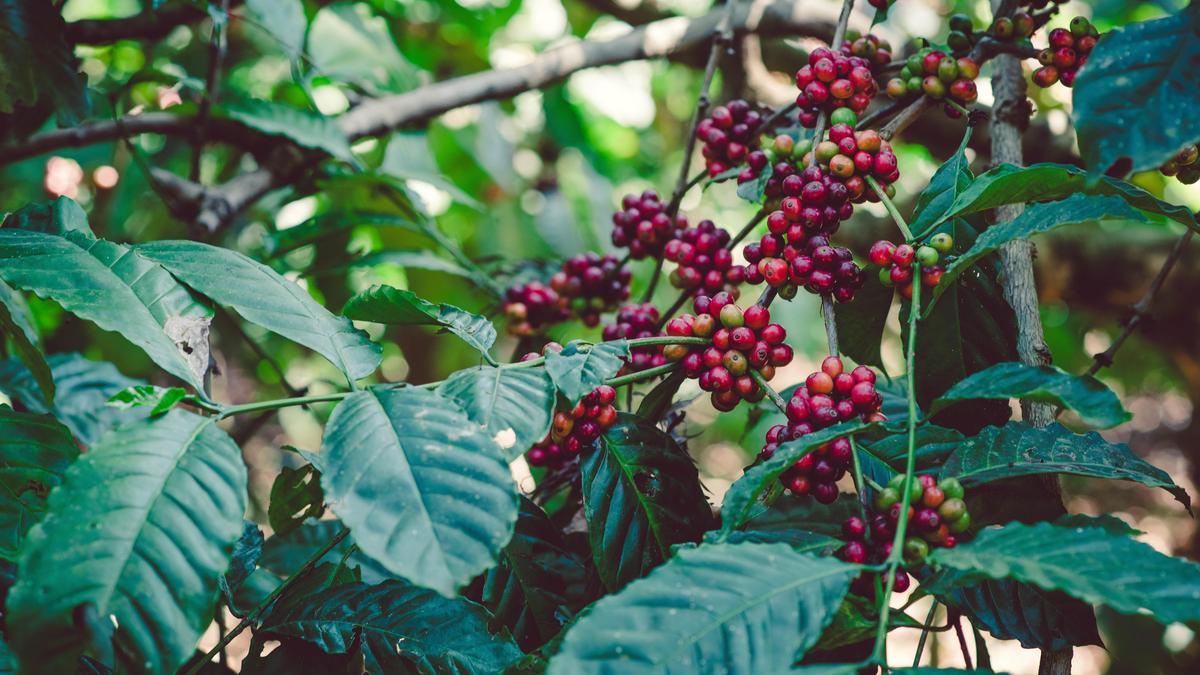
Measuring Coorg in coffee spoons: Review of Kavery Nambisan’s book, ‘Cherry Red, Cherry Black: The Story of Coffee in India’
The Hindu
Kavery Nambisan traces the history and geography of the brew in India in her book ‘Cherry Red, Cherry Black: The Story of Coffee in India’
When did coffee arrive in India? How did Coorg, a rice-growing area initially, take to growing coffee in large quantities? Where does India stand as a coffee planter and exporter? Kavery Nambisan writes the history of one of the country’s most popular beverages in her new book, Cherry Red, Cherry Black: The Story of Coffee in India. In an interview, she says the history of coffee in India is closely interwoven with global history.
The story goes that an Indian merchant who went on a pilgrimage to Mecca is said to have brought some coffee seeds back with him in the early 17th century, and thus began the backyard cultivation of coffee in parts of then Mysore province, mainly Chikmagalur, Hassan and Coorg. The British saw its potential and expanded the growth of the cash crop. Having worked in the industry — she tried at her hand at berry picking when she was 15 and realised what a tough thing it is — Nambisan also outlines the challenges the industry faces.
The history of coffee is closely interwoven with global history, particularly from the 18th to the 20th century. It is believed that the stimulant effects were first discovered in Abyssinia when a goatherd noted how his goats frolicked non-stop after eating coffee berries growing in the wild. This led to its cultivation and coffee became something of an energy drink of those days. Its popularity spread to many parts of Arabia and from there to parts of Europe. An Indian merchant who went on a pilgrimage to Mecca is said to have brought some coffee beans back with him and so started the back-yard cultivation of coffee in parts of the Mysore Province, mainly, Chikmagalur, Hassan and Coorg.
ALSO READ | A Luxury Called Health review: A discovery of India’s fragile health care system
By the mid-19th century the British had recognised the potential for growing coffee (and tea) on a large scale. They cut down thousands of acres of forests in these regions for this purpose. The British government which got revenue from its production and export, played a key role in regulating the sale of coffee. The two World Wars challenged the prospects of export and profits while competition from other coffee-growing countries ensured that our own plantations had to work on improving quantity and quality.
The people of Coorg were hunter-peasants right up to the early 19th century when it was annexed by the British. Livelihood was closely tied to paddy cultivation which in turn was dependent on the monsoons. Paddy is a labour-intensive crop and needs workers prepared to work in difficult weather conditions. So the local tribespeople worked in the fields for daily wages. Coffee growing was initially very challenging, and disease often destroyed the crops. But with effective planning, research on the cause of disease, treatment and plant selection, it turned out to be very profitable.
North Coorg where coffee was initially grown receives heavy rainfall which can damage the blossoms and the young berries. Moreover, the area is mostly hilly and so coffee is grown on steep terrain. Within a few decades of cultivation, hundreds of acres of coffee plantations were thus destroyed. Many plantations closed down and some of the British planters went back to England. In Southern Coorg on the other hand, the land is gently sloping, or flat and the rains are not so severe. It is better suited for coffee cultivation. The two varieties of coffee grown are Robusta and Arabica.


Deputy Director Udayakumar D. advocates skill development and self-employment for students to navigate today's competitive job market.

Freebies are necessary but there should be a monitoring mechanism, say activists

The New Mangalore Port Authority (NMPA) marked a milestone with the arrival of MT Apollo Ocean, an LPG tanker, at Berth No. 13 on Thursday, at 4 p.m., which is recognised as the 40,000th vessel to call at the Port since its inception.

Traffic curbs announced for Sri Rama Navami Yatra in Hyderabad

A Tamil Nadu State Planning Commission study reveals the ground reality of gig workers across platforms like Uber, Swiggy, and Zomato. Long hours, mounting debt, and lack of basic facilities expose the gap between “flexibility” and survival. Is the gig economy truly empowering workers—or trapping them?

Posing as Border Security Force (BSF) officials, conmen duped a Bengaluru-based firm of over ₹26 lakh by issuing a fake purchase order.

Sniffer dog wing welcomes puppy ‘Brownie’

The High Court of Karnataka on Thursday ordered the issue of notice to Chief Minister Siddaramaiah, his wife Parvathi B.M. and others on a petition challenging a special court’s order of accepting a clean chit given to them by the Lokayukta police on the allegation of illegalities and corruption in the allotment of 14 alternative sites worth ₹56 crore to Ms. Parvathi by the Mysuru Urban Development Authority (MUDA).

Parliamentary panel proposes a National Highway Safety Patrol to enhance accident response, enforce traffic discipline, and protect infrastructure.

Nara Bhuvaneswari announces a comprehensive development plan for Kuppam, focusing on industrial growth, welfare, and infrastructure.

Political tensions rise in Vattiyurkavu as UDF candidate alleges secret CPI(M)-BJP deals ahead of Kerala Assembly polls 2026.

Cashier in Hassan accused of refusing service and making derogatory religious remarks; police investigate after viral video.

Mangaluru City Corporation (MCC) in its Budget for 2026-27 proposed three initiatives for women.