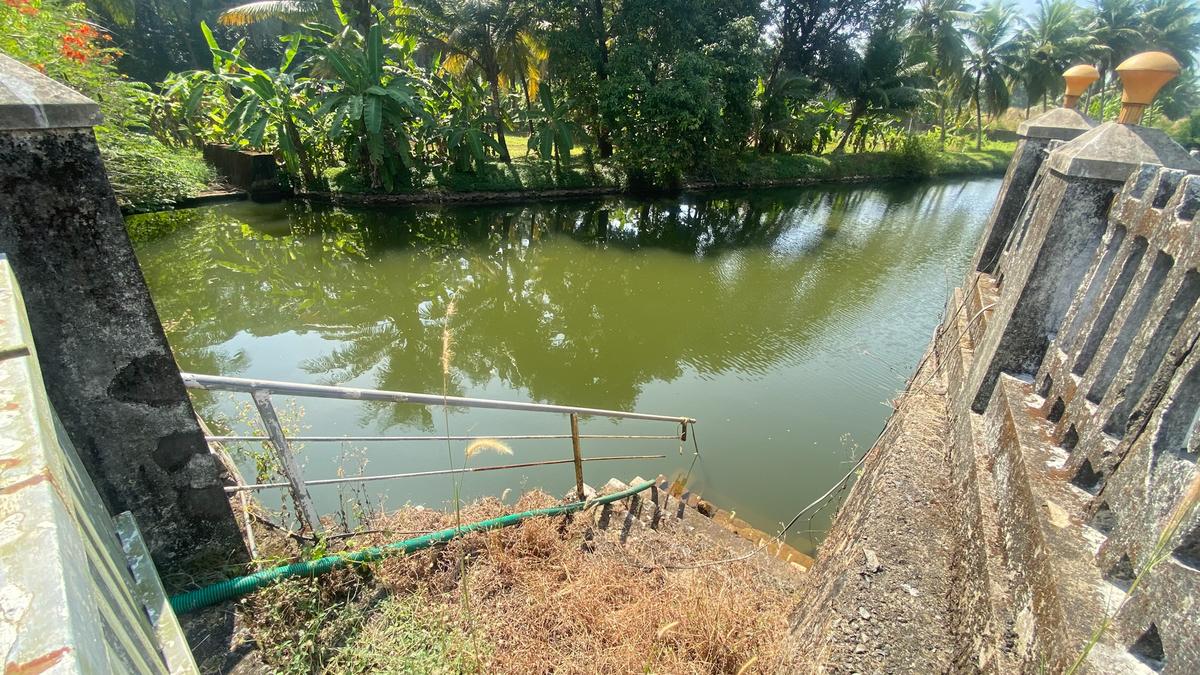
MCC proposes to rejuvenate four more waterbodies amid concerns over flow of sewage to already dredged bodies
The Hindu
The Mangaluru City Corporation (MCC) has proposed to rejuvenate four more waterbodies. However, water in some bodies already rejuvenated remains non-potable with continued flow of sewage.
The Mangaluru City Corporation (MCC) has proposed to rejuvenate four more waterbodies. However, water in some bodies already rejuvenated remains non-potable with continued flow of sewage.
The MCC has now proposed to spend ₹26.95 crore for the rejuvenation of four more waterbodies and development of three parks under the second phase of the Centrally-sponsored Atal Mission for Rejuvenation and Urban Transformation (AMRUT) 2.0.
The council of the civic body in its meeting on November 28 approved this proposal. Of the total project cost, ₹1.95 crore has been allocated for the operation and maintenance.
The waterbodies proposed for rejuvenation are Jogimatta and adjacent lakes (₹2.4 crore); Byradi lake (₹1.35 crore); Baggundi lake (₹14 crore) and Kadekar Mallikarjuna lake (₹3.7 crore). The parks proposed for development are Souharda lane park (₹55 lakh); Kodical Kallakanda Park (₹2.2 crore) and Kadri Park (₹2.75 crore).
Of the lakes proposed for rejuvenation, the Mangaluru Urban Development Authority (MUDA) had invested in the rejuvenation of Byradi lake and Jogimatta lake when Ravishankar Mijar was the chairman between 2019-20 and 2022-23.
Asked about proposing to rejuvenate the two waterbodies again, an official of the corporation told The Hindu said, “The scope of rejuvenation is wide. It need not be taken into account only for dredging. It could be preventing seepage of sewage to water bodies or their beautification. The government appointed consultant for the proposed projects will identity the scope of work to which the fund under AMRUT 2.0 should be invested as per the guidelines. Hence the scope of work is yet to be identified.”
Nemu Kottari, Secretary, Gujjarakere Teertha Samrakshana Samithi, Jeppu, told The Hindu that merely removing silt and beautifying waterbodies without stopping flow of sewage serves no purpose.


Amit Shah reviews Manipur's security, urging the CM to tackle drug cartels and aid displaced communities after ethnic violence.

Kerala's fisherfolk urge political parties to address livelihood concerns, demanding fair pricing, rule enforcement, and better support during elections.

Moderate rainfall in Visakhapatnam brings relief but causes traffic disruptions and power outages across the city.

Shubman Gill’s Gujarat Titans banks on its tried-and-tested formula

Agriculture Ministry reviews unseasonal rains' impact, assesses farm losses, and discusses relief measures for affected farmers.

Premium petrol prices rise by ₹2 per litre, but government claims no impact on the common man amidst global oil tensions.

Kum. Veerabhadrappa’s acclaimed novel Aramane has been adapted into a television serial. Kannada channel DD Chandana (Doordarshan) has launched the serial with the same name. National Award-winning filmmaker Mansore is the director behind the project,

Diya Chitale and Manav Thakkar reach semifinals, while Yashaswini Ghorpade upsets top seed Sreeja Akula at National TT Championships.

DYFI criticizes A.P.'s job calendar for failing unemployed youth, demanding a revision to include 1 lakh posts and higher age limits.

‘Lethargic’ officials who left Chambal sanctuary to the mercy of sand miners will be held liable: SC
Supreme Court holds negligent officials accountable for enabling illegal sand mining in Chambal Sanctuary, emphasizing habitat protection laws.

Work on the Srisailam Left Bank Canal tunnel resumes after 13 months, with completion targeted by 2027-end, says Minister Reddy.

Ancient ‘Vanni’ tree at Sri Meenakshi Sundareswarar Temple tilts; steps on to restore it

Bengaluru Metro penalises 14 passengers for disrupting services with loud singing, following a viral clip of their antics.