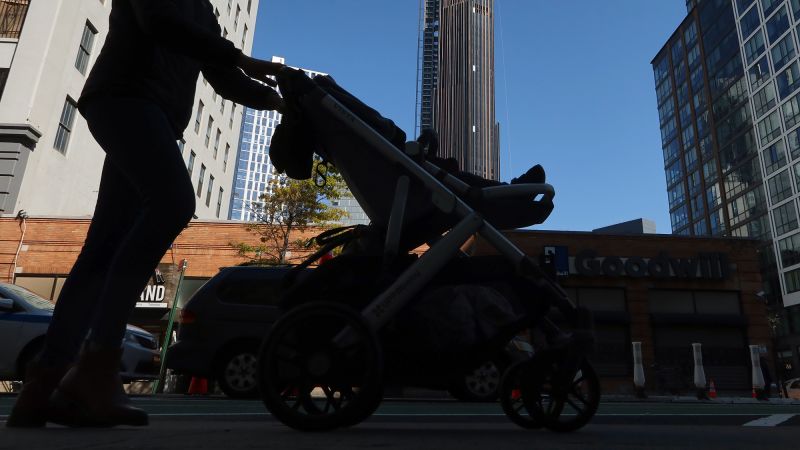
Many US families depend on immigrant nannies. Trump’s policies could upend that
CNN
“The childcare sector broadly has long been facing a crisis and a shortage of workers. And immigrant workers are critical to keeping that system running. Both the formal sector and the informal sector,” says Wendy Cervantes, director of Immigration and Immigrant Families at the Center for Law and Social Policy.
Catalina, a 23-year-old US citizen, confidently drives to her job as a nanny and earns a fair wage. Yet her mother – an undocumented immigrant from Peru – has worked in the shadows for 30 years. “Even though we have the same job, do the same thing, and work the same hours, the pay is very different,” Catalina tells CNN. “I’ve done very well because I was born here, and the pay is very good when you speak Spanish.” CNN has changed her name to protect her identity and her mother’s safety. During Barack Obama’s time in the White House, Catalina’s mother considered returning to Peru, according to her daughter. The Obama administration focused on curbing interior deportations (as opposed to deportations at the border) and, especially in its later years, on so-called “quick returns” of recent border arrivals who were perceived to have fewer ties in the US. “A lot of people told her nothing would happen, and indeed, nothing did,” Catalina says, explaining her mother ultimately decided to stay. However, the harsh immigration policies of Donald Trump’s administration paint a bleaker picture for both. The 23-year-old fears her mother could be detained when she drops off the children of a family she cares for every afternoon to support her own family.


An Air Canada plane traveling from Montreal collided with an emergency vehicle on the runway at New York City’s LaGuardia Airport in the late hours of Sunday night, killing two pilots and injuring dozens of people.

Top Senate Republicans on Capitol Hill believe their party is unified behind a plan to reopen the Department of Homeland Security. Now, they need to sell the plan to Democrats.

Markwayne Mullin will serve as Donald Trump’s next Department of Homeland Security secretary, elevating the US senator to helm the agency at the center of the president’s controversial immigration enforcement effort and an ongoing shutdown.

President Donald Trump’s sudden turnabout and, according to him, rapidly advancing peace talks made for an abrupt shift in the administration’s approach to the Iran war.

The Supreme Court’s conservative majority appeared dubious of state laws that allow the counting of mail ballots that arrive at election offices after Election Day as justices heard oral arguments in a challenge to Mississippi’s five-day grace period for mail ballots.

The chief district judge in New Jersey appointed Robert Frazer, a career prosecutor, to serve as US attorney for the state, ending for now a dispute over the legality of the office’s leadership that threatened to derail criminal investigations.

Tens of thousands of taxpayer dollars were spent on expenses for hair and makeup artists and a horse for the advertisement showcasing outgoing Department of Homeland Security Secretary Kristi Noem in front of Mount Rushmore, according to invoices seen by CNN.

President Donald Trump was presented Sunday with a potential off-ramp to the more than month-long Department of Homeland Security shutdown: fund every part of the department except enforcement operations by Immigration and Customs Enforcement, two sources familiar with the conversations told CNN.

Immigration and Customs Enforcement agents are heading to 13 airports today to help with crowd management as travelers at some airports wait in hours-long security lines amid the DHS shutdown. Follow here for the latest.

A consortium of the nation’s top architectural and historic preservation groups is targeting President Donald Trump’s plans to temporarily close and extensively renovate the Kennedy Center, filing a new lawsuit Monday that asks a federal judge to indefinitely halt the project.

ICE agents sent to airports as TSA callouts remain high; separately, two people have died after a plane collided with a fire truck at New York’s second biggest airport. Follow for live updates

Mike Pence used to dream of following two successful Donald Trump terms with his own turn in the White House.

An Air Canada plane was damaged after colliding with a vehicle on a runway at New York’s LaGuardia Airport Monday, according to video from the scene and air traffic control audio.