Man convicted of killing boy may be set free because prosecutors racially profiled the jury pool
CNN
“Black.’ ‘Jewish.’ ‘Short, fat troll.’ Handwritten notes on jury questionnaires suggest prosecutorial misconduct that may overturn death penalty cases.
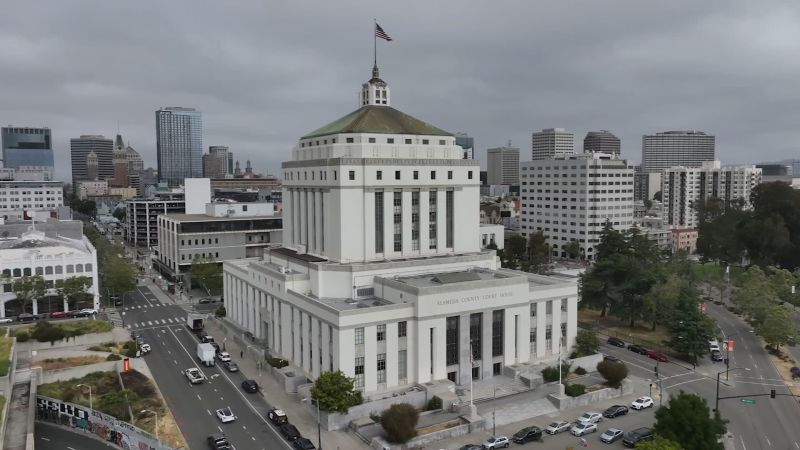
Lance Clark was 9 years old when he was shot dead in a robbery. A man named Ernest Dykes was convicted of the 1993 Oakland murder and sentenced to death. But the boy’s family says prosecutors just told them Dykes could be released from prison in nine months to a year. “Lance was a happy, funny, loving, sweet little boy,” his sisters told CNN in a family statement. “He was robbed of a future.” Dykes might be released because, while preparing for his appeal, an Alameda County deputy district attorney found in the dusty case files some handwritten notes about potential jurors from the trial back in the 1990s. One potential juror in the Dykes case file is described as a “Short, fat troll.” Like other Black potential jurors – and only Black potential jurors – her race is noted. The letters “FB” are written next to her name, apparently noting her gender and race. “Must go,” is written next to the name of a Black man, who is described as “MB.” Another juror has the word “Jewish” underlined on their questionnaire. Farther down, a handwritten note reads: “I liked him better than any other Jew. But no way.” There were no Black or Jewish jurors seated at the trial. “When you have serious prosecutorial misconduct, that means that the conviction is a wrongful conviction,” said current Alameda County District Attorney Pamela Price. “And so, it’s a question of whether or not we’re able to negotiate a resolution, or whether we have to go back to trial.”


The storied White House East Room has welcomed politicians, foreign dignitaries, war heroes, celebrities and elite athletes, but on Wednesday, it was the setting for an extremely robotic speech introducing first lady Melania Trump.

Amid the constant barrage of President Donald Trump’s often-unpopular actions, it can be easy to lose sight of what probably matters most politically: the sputtering economy.

An Air Canada regional jet landing at one of the country’s busiest and most prominent airports slammed into a firetruck at more than 100 miles per hour on Sunday, leaving federal investigators and frightened passengers questioning what could have gone wrong.

The former assistant attorney general for civil rights under President Joe Biden, Kristen Clarke, is joining the National Association for the Advancement of Color People (NAACP) as general counsel, according to the organization.

Approximately 1,000 US soldiers with the Army’s 82nd Airborne Division are expecting to deploy in coming days to the Middle East, according to two sources familiar with the matter, adding to the growing military firepower in the region as the Trump administration says it is in talks with Iran to end the conflict.

CNN’s 5 Things AM brings you the news you need to know every morning.

When the historic East Wing of the White House was suddenly demolished to make way for President Donald Trump’s new ballroom construction last year, another piece of history was taken down with it.

The high-profile deployment of Immigration and Customs Enforcement agents to airports has renewed support on the right and fear on the left about the possibility of ICE going to the polls in November.

The House Oversight Committee released videos Tuesday of closed-door depositions with two men in Jeffrey Epstein’s inner circle as part of its probe into the late convicted sex offender.

The House Intelligence Committee voted Tuesday to give federal prosecutors classified records related to John Brennan, according to a committee spokesperson, signaling the Justice Department’s investigation into the former CIA director may be heading towards possible charges.

North Carolina State Senate leader Phil Berger on Tuesday conceded his primary race to Rockingham County Sheriff Sam Page, a political earthquake that took down arguably the most powerful politician in a pivotal swing state.

It’s looking like the Department of Homeland Security shutdown could soon be over. The two sides seem to have made serious progress, and President Donald Trump hasn’t rejected anything, even if he’s a little sour. But it’s likely the resolution will disappoint many Democrats.

California Gov. Gavin Newsom said that he regretted using the word “apartheid” to describe the Israeli government’s treatment of Palestinians, though he warned “that’s a word you may hear others use” if Prime Minister Benjamin Netanyahu pushes for territorial gains.