LS poll results brought in shift in NDA’s style of governance, says Aakar Patel
The Hindu
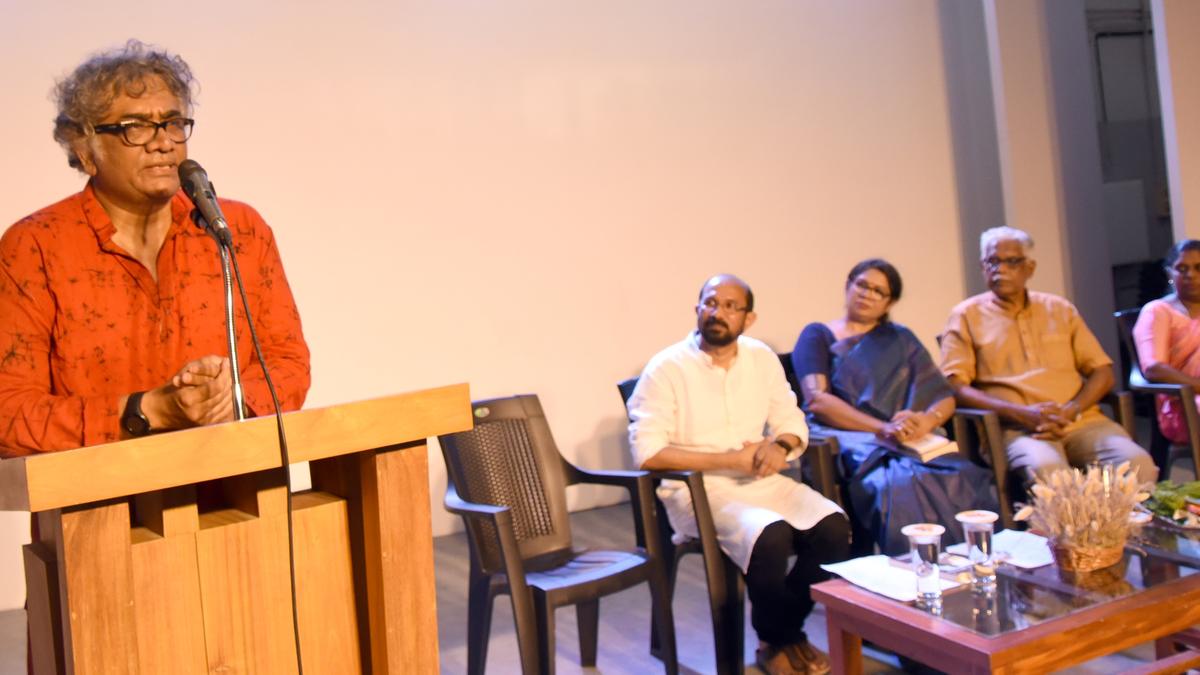
Journalist Aakar Patel discusses significant shifts in NDA government style and substance post-elections at Chavara Cultural Centre.
Journalist and author Aakar Patel has said that the Lok Sabha election results on June 4 have brought about a shift in the “matters of substance and style” of the National Democratic Alliance (NDA) government at the Centre.
He was delivering a talk on ‘The shifting sands of our secular republic’ at the Chavara Cultural Centre on Tuesday. Mr. Patel said that the general election results represented a moment more important than many think it was. “The Home Minister, Finance Minister, Defence Minister, Foreign Minister, etc. are all the same. Even the Speaker of the Lok Sabha and the National Security Advisor are the same. But, there has been a shift in matters of substance and in style,” he said.
Before the elections, many people had assumed that India had slipped into a democracy with a permanent one-party rule. “The results have laid that idea to rest... The idea that we are in continuing need of a saviour, who is present in the form of one person, who will deliver to us solutions to all of our problems, which have been created by somebody else. That was also laid to rest,” Mr. Patel said.
He pointed out that the country seemed to be safe in the medium term, for at least 10-20 years. For the first time, Prime Minister Narendra Modi was facing opposition of some sort from the NDA. The Waqf (Amendment) Bill and the proposal on lateral entry appointments to the civil service cadre could not go through because of the NDA’s alliance partners. “They don’t have any kind of ideological investment in what the BJP does.” Mr. Modi was also facing a stronger Opposition that was more vocal and more visible. It had been able to push back, including in Parliament. The Prime Minister was also facing Opposition inside the party, he said.
On the K. Hema Committee panel proposals on the working conditions of women in the Malayalam film industry, Mr. Patel said that making material of this sort public was unusual in this part of the world. “It is up to the film industry and society at large to ensure that those things that have happened see justice in some form, that those voices like Mohanlal, Mammootty, and Fahadh Fazil are heard on this issue. The problems the report has made visible are tackled,” he added.


The government plans to amend the FCRA, introducing new regulations for NGO asset management and accountability for key functionaries.

The draft policy for “Responsible Digital Use Among Students”, released on Monday by the Department of Health and Family Welfare, has recommended that parents set structured routines with clear screen-time rules and prioritise privacy, safety, and open conversation with children on digital well-being.

Police Observer Sushant Kumar Saxena conducts surprise inspection at Shencottai police station, reviewing warrants and security arrangements ahead of elections.

Andhra Pradesh government to launch key projects in April, focusing on industrial growth and infrastructure development, says Nara Lokesh.

Lok Sabha refers the Corporate Laws (Amendment) Bill to a JPC amid opposition concerns over CSR provisions dilution.

SHG members in Kanniyakumari use snakes and ladders to raise election awareness and boost voter turnout.

Government accelerates consultations for early implementation of the Women’s Reservation Act to ensure women’s representation in 2029 elections.

CM A. Revanth Reddy distributes ₹1 crore insurance cheques to families of deceased Electricity department employees, enhancing financial security for workers.

The Bengaluru Traffic Police (BTP) registered 634 cases of drunk driving during a week-long special enforcement drive conducted across the city between March 16 and March 22.

GHMC intensifies action against property tax defaulters, seizing properties and offering a One Time Settlement scheme for payments.

CCB arrests three drug peddlers in Mangaluru, seizing ₹2.5 lakh worth of MDMA and other valuables.

TVK's 28 candidates in Puducherry include former BJP MLAs, a sitting Independent, and a retired police IG.

BRS submits notice on private member bill to Speaker