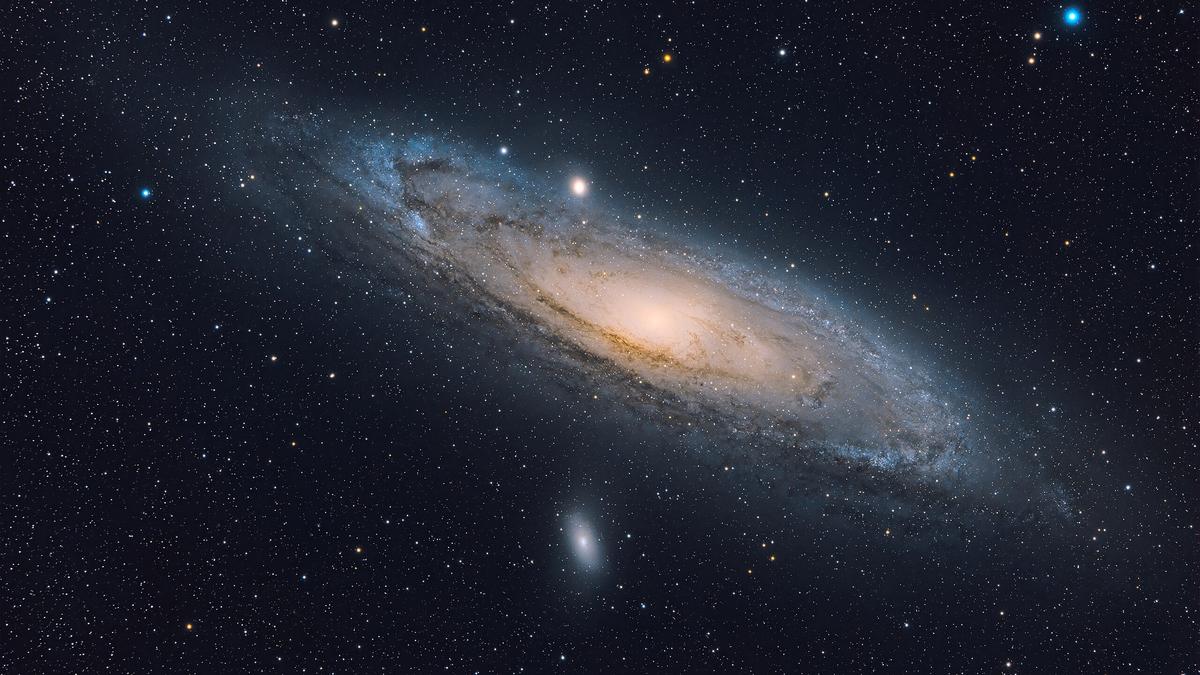
Looming clash between Milky Way, Andromeda may not happen after all
The Hindu
Milky Way and Andromeda galaxies may not collide, with 50-50 odds in 10 billion years, according to astronomers.
It turns out that looming collision between our Milky Way and Andromeda galaxies might not happen after all.
Astronomers reported Monday that the probability of the two spiral galaxies colliding is less than previously thought, with a 50-50 chance within the next 10 billion years. That’s essentially a coin flip, but still better odds than previous estimates and farther out in time.
“As it stands, proclamations of the impending demise of our galaxy seem greatly exaggerated,” the Finnish-led team wrote in a study appearing in Nature Astronomy.
While good news for the Milky Way galaxy, the latest forecast may be moot for humanity.
“We likely won’t live to see the benefit," lead author Till Sawala of the University of Helsinki said in an email.
Already more than 4.5 billion years old, the sun is on course to run out of energy and die in another 5 billion years or so, but not before becoming so big it will engulf Mercury, Venus, and possibly the earth. Even if it doesn’t swallow the earth, the home planet will be left a burnt ball, its oceans long since boiled away.
Sawala’s international team relied on the latest observations by NASA’s Hubble Space Telescope and the European Space Agency’s Gaia star-surveying spacecraft to simulate the possible scenarios facing the Milky Way and next-door neighbour Andromeda. Both already collided with other galaxies in their ancient past and, according to many, seemed destined for a head-on crash.


Explore 2026's wallpaper trends in India, highlighting botanicals and handmade designs that enhance modern homes with nature-inspired aesthetics.

Mercedes-Benz CLA 250+ with EQ Technology review: design, performance, range and features explained. Discover how the new electric CLA combines advanced AI, long range, fast charging and futuristic styling for the next generation of luxury EVs.

AI tool for sparrow conservation

BTS’s comeback with ‘Arirang’ marks a major global music event. When does the album release, and where can you watch their concert live stream? We have all the details

The 2026 U.S. cholesterol guidelines urge starting screening and treatment at 30 to prevent cardiovascular disease effectively.

Olam Festival 2026 in Thiruvananthapuram returns March 27-29 with 120+ vendors, music, art, and cultural zones.

A few storytellers in Thiruvananthapuram share their journeys, challenges, and evolving methods on World Storytelling Day, inspiring young minds.

76-year-old Kurian Jacob from Kerala triumphs with seven medals, including five golds, at the Open Masters Games in Abu Dhabi.

Explore the nature of the human mind as an emergent property of brain activity and complex neural interactions.

CERN's Large Hadron Collider discovers the Xi-cc-plus particle, enhancing understanding of quantum mechanics and baryon behavior.

Vibha Batra’s latest book, Spotless (Hachette India) is a novel in verse for young adults

In its first edition, the Madras Art Salon spotlights the works of journalist and artist Narayan Lakshman at The Botanical Club, a social space in the British Deputy High Commission, Chennai

Cholesterol enhances melanoma cell invasion by making nuclei squishier, revealing a potential treatment target in cancer progression.