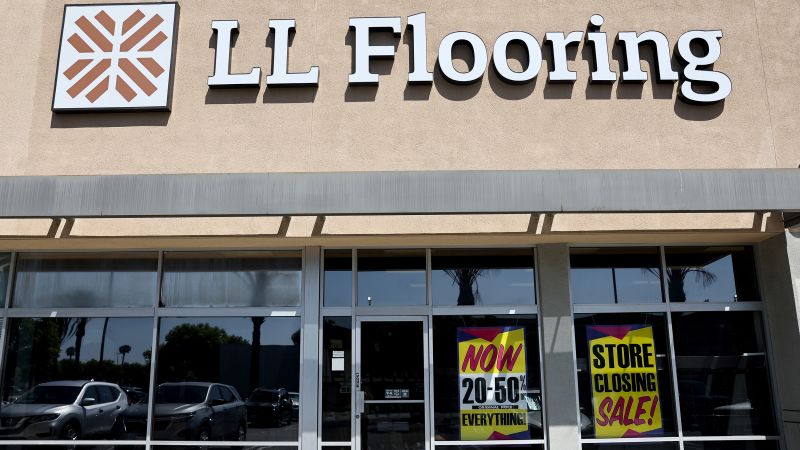
LL Flooring files for bankruptcy and will close 94 stores
CNN
LL Flooring, formerly known as Lumber Liquidators, has filed for bankruptcy and will close 94 of its stores across the United States.
LL Flooring, formerly known as Lumber Liquidators, has filed for bankruptcy and will close 94 of its stores across the United States. But the retailer is not liquidating itself immediately, as the company recently announced that it had entered Chapter 11, which allows for a re-organization rather than a wind-down of the business. Instead, LL Flooring will use the process to seek a sale of the 30-year-old business, which said it’s in “active negotiations with multiple bidders,” according to a press release. Major furniture retailers are continuing to struggle after a pandemic boom, particularly as Americans deal with persistent inflation. Plus, discretionary big-ticket items, such as furniture, have quickly dropped off the shopping list for more budget-conscious consumers. That means that it’s much tougher out there for companies like LL Flooring. “After comprehensive efforts to enhance our liquidity position in a challenging macro environment, a determination was made that initiating this Chapter 11 process is the best path forward for the company,” said CEO Charles Tyson. He added that the process gives the company “additional time and financial flexibility as we reduce our physical footprint and close certain stores while pursuing a going-concern sale of the rest of our business.”


President Donald Trump has repeatedly promised that Americans will get larger tax refunds this year thanks to his “big, beautiful bill.”

President Donald Trump has repeatedly promised that Americans will get larger tax refunds this year thanks to his “big, beautiful bill.”

Oil prices edged lower on Friday after a tumultuous day that saw the international benchmark surge above $119 a barrel as the Middle East conflict deepened energy supply fears.

The war in Iran has delivered what economists call a “black swan” event — an unforeseen shock so destructive, no one is immune to it.

The war in Iran is driving up the cost of buying a home in America.

Eight state attorneys general have filed an antitrust lawsuit to block Nexstar’s pending acquisition of Tegna, which would strengthen the right-leaning Nexstar and shrink the number of station owners in the US.

The Iran war has driven oil prices to their highest levels in years. Now, a wave of attacks in the past 24 hours on energy production sites across the Middle East have turned the spotlight on another crucial fossil fuel: liquefied natural gas, or LNG.

Oil and natural gas prices spiked Thursday, as Iran ramped up strikes on energy infrastructure across the Middle East and attacked one of the world’s most important liquefied natural gas (LNG) facilities in Qatar.

In normal times, the Federal Reserve would more or less ignore an oil price shock like the one we’re in now.

Property brokerage Compass on Wednesday dropped its lawsuit against Zillow, ending a legal clash over how home listings can be marketed online.

Fed officials didn’t make any rate moves at their March meeting and released an updated forecast for the path of the American economy as the war in Iran stretches on.

Fed officials are set to announce their latest rate decision Wednesday afternoon, along with a new forecast for the path of the American economy as the war in Iran stretches on.

“The speed with which American democracy is currently dismantled is unprecedented in modern history,” one of the world’s top democracy researchers says in a new report.