Liverpool faces testing times as the Klopp era winds down Premium
The Hindu
Jurgen Klopp's departure from Liverpool after a successful tenure, his impact on the club, and the search for his successor.
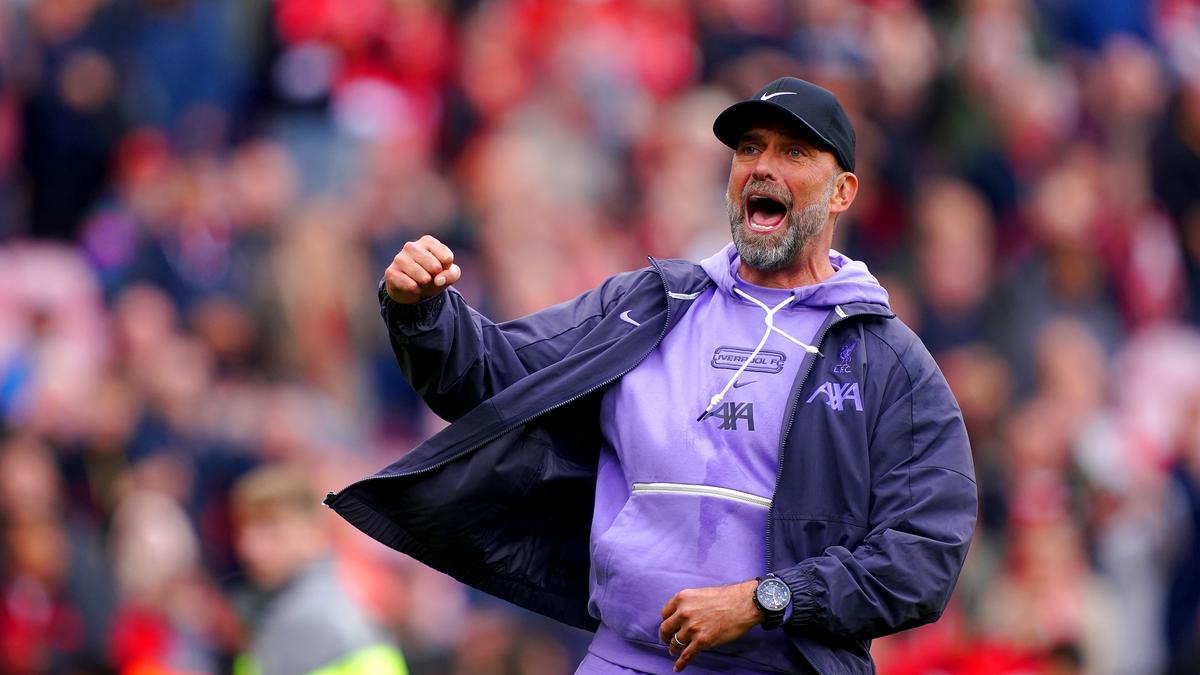
When Jurgen Klopp explained his decision to leave Liverpool after a successful but demanding eight and a half years, he again showed why he is such an effective, unique communicator. “We’re not young rabbits anymore,” he said, “and we don’t jump as high as we once did.”
For those who prefer mean machines to fluffy animals, he produced a different turn of phrase. “I am like a proper sports car,” he said. “Not the best one, but a pretty good one. I can still drive 160, 170, 180 miles per hour, but I am the only one who sees the tank needle is going down.”
Excellence demands near-limitless energy, especially for those whose methods rely heavily on it. “My coaching, my managing style is based on energy, I usually have enough to give it to a lot of people,” Klopp said. “And if that’s not there I am not the same.”
The Liverpool job also took a lot out of the German. Having built up a reputation as a winner by leading Borussia Dortmund to back-to-back Bundesliga titles in 2011 and 2012, he faced an even more challenging task on Merseyside: that of resurrecting a giant.
Klopp changed Liverpool’s fortunes after arriving at Anfield in 2015, returning the club to one of European football’s powerhouses. In addition to guiding the Reds to their first league title for 30 years in 2020 and to Champions League glory in 2019, Klopp presided over triumphs in the FA Cup, League Cup, FIFA Club World Cup, UEFA Super Cup and Community Shield.
These successes, in isolation, merit high praise. When you consider that Klopp was up against Manchester City’s seemingly unlimited resources — it has been charged with 115 breaches of the Premier League’s financial regulations — and Pep Guardiola’s genius, the value of these trophies increases substantially.
Klopp has been the perfect manager for Liverpool. His force of personality, charisma and coaching nous have resonated with an emotive fanbase. The club’s history has been marked by tragedy as much as triumph. He quickly understood the emotion that drove the club, the impact of Hillsborough (the disaster, which killed 97 Liverpool fans in 1989, has left indelible scars), the respectful city rivalry with Everton and the far more visceral rivalry with Manchester United.


Jhingan’s late leveller denies Chennaiyin a winning start at home

Jhingan’s late leveller denies Chennaiyin a winning start at home

South Africa levels T20I series against New Zealand with a 19-run victory, highlighting spinners' dominance ahead of the final match.

LeBron James sets a new NBA record for most games played, surpassing Robert Parish with his 1,612th appearance.

Rajasthan Royals has the task of filling Sanju Samson’s big shoes

Yashaswini’s birthday gift for long-time coach

Manav, Yashaswini win maiden National titles

Akash Deep is out of IPL due to a back injury, casting doubt on his participation in the upcoming Test against Afghanistan.

Kohli urges RCB teammates to maintain focus and intensity as they prepare to defend their IPL title starting March 28.

Cameron McEvoy sets a new 50-meter freestyle world record at 20.88 seconds, surpassing César Cielo's 17-year mark.

India's cricket team will play two T20Is in Ireland on June 26 and 28, marking their Belfast return since 2007.

Rahane embraces captaincy challenge for KKR in IPL 2026, focusing on positivity and team consistency after a tough season.

Harry Maguire's red card costs Manchester United a 2-2 draw against Bournemouth in a thrilling Premier League clash.