Lit fest nation | Why are literary gatherings mushrooming in India?
The Hindu
The Jaipur Literature Festival (JLF) set the tone, but the rise in the number of lit fests since proves that the market is strong for events that unite books, stars, and life experiences
Jitlal, the auto driver I meet outside Hotel Clarks Amer, isn’t entirely sure what the big event that has taken over his city is about. If he’s to guess, he says, it would be something to do with celebrities. He’s noticed the heavy security outside the main gates of the venue of the Jaipur Literature Festival (JLF) and knows that this is an annual affair, whatever this is. But he keeps track of the dates and plans to be back at the hotel’s gates next year too. “I get five times my usual business during this mela,” he says.
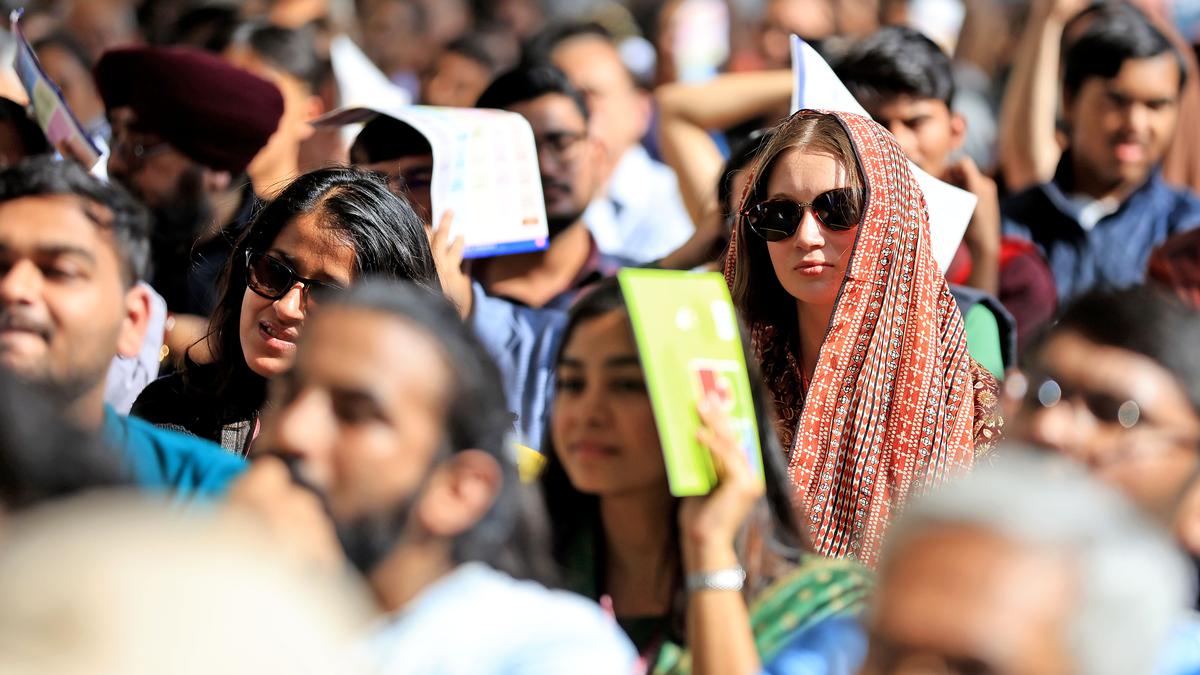
There are many in Jaipur like Jitlal who track the dates of this festival, knowing that it will boost their business. Prep for JLF, often called “the greatest literary show on earth”, starts early and involves a large number of individuals and organisations. At a glance, the numbers for the festival’s 17th edition are impressive: 400 volunteers selected from over 1,400 applications, around 4,000 vendors, more than 500 speakers over 200 sessions, and over 4,00,000 visitors from across the world. JLF debuted in 2006 with 18 authors and some 100 visitors.
At this year’s inaugural session, Rajasthan’s Deputy Chief Minister Diya Kumari, who has been associated with the festival since its inception, spoke of its impact on the city it calls home. “Five days of the JLF do more for tourism than what the State government does for attracting visitors during the entire year,” she said, adding that tourists, when planning their trip to Jaipur for the event, also carve out time to take in other attractions, bringing in business for both the city and the State.
I find an echo of this in my conversation with a group of young students from Sunbeam school in Varanasi. While the school has sent a group of teachers and students especially for the festival, they have been taking recommendations for their time outside it — where to eat the best ghevar or buy beautiful leheriya saris. Hotels receive bookings well in advance. JLF itself partners with around 25 hotels, from budget to luxury properties. Online reviews for stays in Jaipur now often include comments such as “perfect location for JLF”, “easy walk to site of JLF”, and so on.
Jaipur-based businesses too work in anticipation of the festival dates. Vidhi Mittal, owner of Beads & Beyond, a jewellery brand, has been a part of JLF’s ‘Festival Buzzaar’ for three years now, and designs a line especially for the event. Tarang Arora, creative director of the popular Amrapali Jewels, says his business sees a “30% spurt just in these five days”. At his cocktail party held to coincide with JLF, the eclectic crowd this year included designer Ritu Kumar, writer-director Mozez Singh, producer and author Koel Purie, author and JLF founder William Dalrymple and actor Ila Arun, among others, all gathered to “celebrate Jaipur, its art and culture, and JLF”, says Arora.
According to Sanjoy Roy, Managing Director of Teamwork Arts, the entertainment company that produces and organises JLF, perhaps the biggest success of the event is the fact that since it began, over 60 literary festivals have sprung up in the country, with many of them pushing the format, trying new things, experimenting with scale, style and ideas. “Today, every city in India hopes to have a festival like JLF,” he says. But how much sway do books and reading hold in the face of ever-diminishing attention spans and screen addiction?
Ananth Padmanabhan, CEO, HarperCollins India, says the COVID-19 pandemic proved to be a “forced tipping point” for literature festivals in India. “People were forced to stay home, and many of them turned to books,” he says. With the number of readers growing, the pull of lit fests is stronger than ever. “People go to meet their favourite authors, watch some of the biggest stars perform, and in the age of social media, it becomes a place to be seen at,” says Ananth Padmanabhan.


The society must not allow people to be isolated or threatened on the basis of faith, he stressed

Telangana's public debt is nearing ₹6 lakh crore, projected at ₹5.62 lakh crore by the end of 2026-27.

Telangana's 2026-27 budget allocates ₹13,679 crore for health, emphasizing infrastructure, preventive care, and maternal and child health initiatives.

Guindy Children’s Park in Chennai closes due to avian flu outbreak after nearly 40 birds die from H5N1 virus.

A study reveals over 20 lichen species in Kochi's Subhash Chandra Bose Park, highlighting its ecological importance and air quality.

Telangana's 2026-27 budget focuses on welfare, emphasizing urban and rural development with significant allocations across key sectors.

Delhi HC criticizes Centre for lack of timeline on filling vacancies in the National Commission for Minorities, demanding accountability.

Supreme Court grants bail to ex-police officer Rajesh Das in sexual harassment case, overturning prior Madras High Court decisions.

Kerala CM Pinarayi Vijayan criticizes CPI(M) defectors for betrayal, citing rising individual ambitions and party loyalty concerns.

Bengaluru’s KIA named Best Regional Airport in India and South Asia, ranking 41st globally, excelling in passenger experience and sustainability.

Kannada Development Authority Chairman releases Poovappa Kaniyoor's refined book on the Bhootaradhane tradition in Mangaluru.

Hyderabad tax-payers can now claim a 50% HRA exemption under new tax rules effective April 1, 2026.

NIPER Raebareli partners with Roche Pharma to Strengthen Pharmaceutical Education and Research Capability Building Collaboration