Primary Country (Mandatory)

Other Country (Optional)

Set News Language for United States

Primary Language (Mandatory)
Other Language[s] (Optional)
No other language available

Set News Language for World

Primary Language (Mandatory)
Other Language(s) (Optional)

Set News Source for United States

Primary Source (Mandatory)
Other Source[s] (Optional)

Set News Source for World

Primary Source (Mandatory)
Other Source(s) (Optional)
  • Countries
    • India
    • United States
    • Qatar
    • Germany
    • China
    • Canada
    • World
  • Categories
    • National
    • International
    • Business
    • Entertainment
    • Sports
    • Special
    • All Categories
  • Available Languages for United States
    • English
  • All Languages
    • English
    • Hindi
    • Arabic
    • German
    • Chinese
    • French
  • Sources
    • India
      • AajTak
      • NDTV India
      • The Hindu
      • India Today
      • Zee News
      • NDTV
      • BBC
      • The Wire
      • News18
      • News 24
      • The Quint
      • ABP News
      • Zee News
      • News 24
    • United States
      • CNN
      • Fox News
      • Al Jazeera
      • CBSN
      • NY Post
      • Voice of America
      • The New York Times
      • HuffPost
      • ABC News
      • Newsy
    • Qatar
      • Al Jazeera
      • Al Arab
      • The Peninsula
      • Gulf Times
      • Al Sharq
      • Qatar Tribune
      • Al Raya
      • Lusail
    • Germany
      • DW
      • ZDF
      • ProSieben
      • RTL
      • n-tv
      • Die Welt
      • Süddeutsche Zeitung
      • Frankfurter Rundschau
    • China
      • China Daily
      • BBC
      • The New York Times
      • Voice of America
      • Beijing Daily
      • The Epoch Times
      • Ta Kung Pao
      • Xinmin Evening News
    • Canada
      • CBC
      • Radio-Canada
      • CTV
      • TVA Nouvelles
      • Le Journal de Montréal
      • Global News
      • BNN Bloomberg
      • Métro
Lessons from the hills

Lessons from the hills

The Hindu
Friday, August 30, 2024 10:26:14 AM UTC

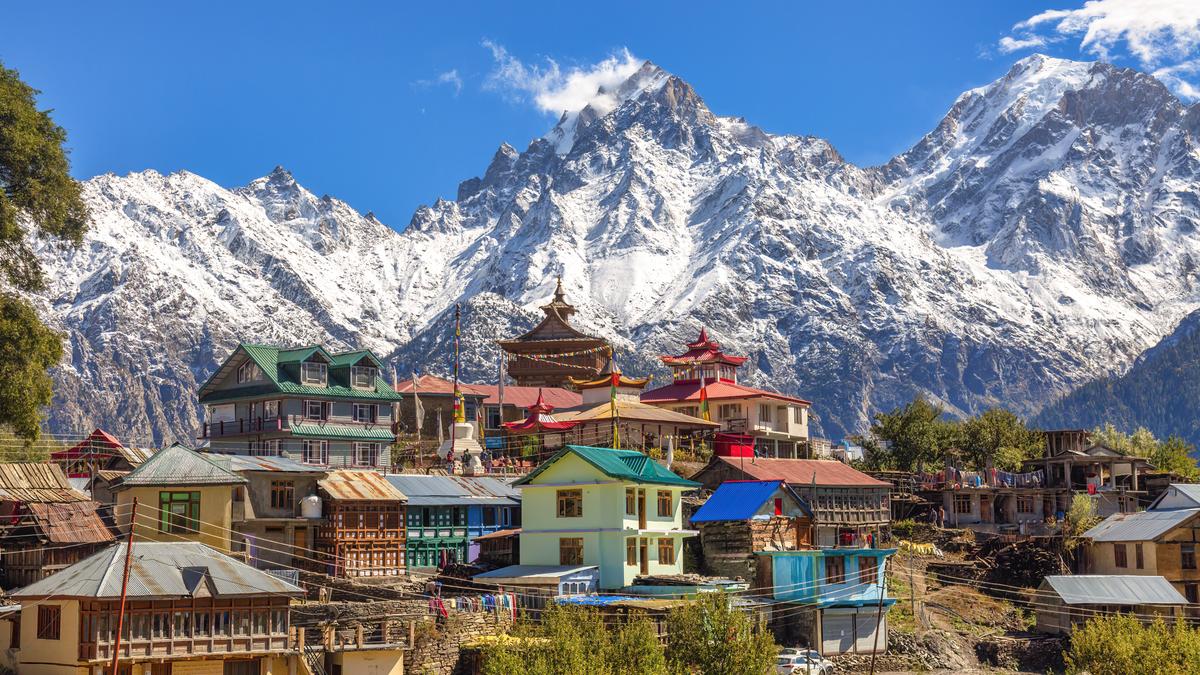
Small windows to retain indoor heat, and sloped roofs with slate to drain rainwater — how architects can borrow elements from traditional mountain architecture for contemporary homes

Houses in the hills usually have a picturesque, dreamy quality, becoming one with the slopes. But hills are known for challenging climatic conditions like extreme cold, snow, and even earthquakes. There are also difficulties in transporting materials for construction on rough terrain. How did indigenous buildings traditionally respond to these conditions?

The primary criteria any house had to satisfy was to be sturdy and resilient and maintain a comfortable indoor climate. While the natural response in hot climates was to orient away from the sun, in cold climates it was to get the most out of the sun. Lower floors that would be cooler were used for storage and livestock, while upper floors were used for living. Balconies and terraces became important living spaces on sunny days. However, the hills are not a monolith, and different regions have their unique responses to local conditions.

Many indigenous houses of Himachal Pradesh use wood and stone in a distinct local technique called Kath Kuni (Kath meaning wood, and Kuni, corner). The wood (usually, local Deodar wood) is laid in long horizontal layers, alternating with layers of stone. No mortar or nails are used, and the strength of the building comes from these horizontal beams, rather than vertical supports like columns and pillars. This was to safeguard buildings against earthquakes.

Vertical members are more prone to buckling during tremors, explains Rahul Bhushan, a Himachal-based architect working on reviving the Kath Kuni technique. With the horizontal supports, the house might shake but would not collapse. The technique has been around for several hundred years, helping protect generations from earthquakes.

Kath Kuni houses were often built with an air gap between two layers of the wall. Air is a bad conductor, i.e. it doesn’t allow heat to pass through. So this helps retain warmth indoors.  Sloped roofs with slate helped drain rainwater, and interior walls were plastered with mud. The outer façade was left exposed, giving Kath Kuni buildings their distinctive beautiful aesthetic.

Another technique in this region was the Dhajji Dewari. This used a crisscrossing system of wooden posts, filled in with stone. The Dhajji technique is also resistant to earthquakes and is used in mountainous regions of South Asia like Kashmir and Pakistan.

It might appear that techniques like this would only suit small, low-rise buildings and would be impractical for the present. But the tallest Kath Kuni structure in Himachal is more than 12 storeys high, and built without any mortar. Called Chehni Kothi, it used to be a fort, and it is believed to have been built in the early 17th Century.

Read full story on The Hindu
Share this story on:-
More Related News
The snail as a model for restoring vision in humans Premium

Discover how golden apple snails' eye regeneration offers insights into restoring human vision through genetic understanding and CRISPR technology.

Why do microwave ovens sometimes overheat water? Premium

Discover how microwave ovens can superheat water, leading to unexpected boiling when disturbed. Stay safe while heating.

Manhattan’s hot new INDN Bar: Butter chicken cocktails, keema pav, zero kids 

INDN has launched in NYC’s NoMad. Indian food goes 21+ here, with savoury cocktails, nostalgic small plates and a bar that refuses desi clichés — much to one dad’s horror

2025 to be second or third-hottest year on record: EU scientists

EU scientists predict 2025 will be among the hottest years on record, highlighting urgent climate change concerns and inadequate global action.

Tata Sierra review — The icon returns with purpose, poise and personality

Explore the complete review of the 2025 Tata Sierra, India’s reborn SUV icon. From its standout design and premium cabin to refined petrol and diesel engines, advanced tech and competitive pricing, this in-depth breakdown reveals why the new Sierra is poised to lead the midsize SUV segment.

SpaceX to pursue 2026 IPO raising above $30 billion: Report

Elon Musk’s SpaceX is moving ahead with plans for an initial public offering that would seek to raise significantly more than $30 billion and target a valuation of about $1.5 trillion, Bloomberg News reported

Aditya-L1 in a global effort reveals why the 2024 solar storm behaved unusually

Aditya-L1 and U.S. satellites uncover why the May 2024 solar storm behaved unusually, revealing significant magnetic field dynamics.

Harley-Davidson X440T launched: Refined midsize motorcycle with modern rider features

Harley-Davidson X440T introduces updated rider aids, refined performance and refreshed styling, offering a modern, city-focused evolution of the successful X440.

How can India benefit from neurotechnology? | Explained

Explore how neurotechnology, including BCIs, can transform healthcare and enhance India's capabilities in addressing neurological disorders and beyond.

On zoos and magnets: the physics behind sounds Premium

Explore the fascinating physics of sound waves and their enchanting presence in nature and everyday life.

Parambriyam reopens in Anna Nagar, showcasing South Indian culinary heritage

Parambriyam reopens in Anna Nagar, offering a vibrant dining experience celebrating South India's rich culinary traditions and flavors.

Fossils, genomes clash as scientists debate the mosquito’s origins Premium

Scientists debate mosquito origins as fossil evidence and genomic studies clash, revealing new insights into their evolutionary timeline.

A guide to going sustainable this Christmas

From Christmas trees fashioned out of books to real spices as ornaments

Why has the claimed dark matter discovery sparked debate, caution? Premium

Explore the debate surrounding a potential dark matter discovery, highlighting skepticism and the need for rigorous validation in astronomy.

'Extremely exciting': the ice cores that could help save glaciers

Discover how ice cores from the Pamir Mountains could unlock secrets to protect the world's glaciers from climate change.

Why does spicy food make our nose run? Premium

Discover why spicy food causes a runny nose and how capsaicin triggers a protective response in our bodies.

How India established its first research station in Antarctica

In October this year, India announced its intention to build Maitri II, the country’s newest research station in Antarctica and India’s fourth, about 40 forty-odd years after the first permanent research station in Antarctica, Dakshin Gangotri, was established. The Hindu talks to Dr Harsh K Gupta, who led the team that established it

How is Asia-like artemisinin resistance emerging in Africa? Premium

Study reveals rising artemisinin resistance in Africa, echoing Asia's past, urging urgent action to prevent widespread crisis.

The Michelin Guide enters the world of wine with The Michelin Grappe, a new distinction

Michelin launches The Grappe, a new wine distinction, recognizing excellence with one to three grapes, starting with the Burgundy and Bordeaux regions

Inside a scientific experiment that transformed skin cells into embryo-forming eggs Premium

A groundbreaking experiment transforms skin cells into egg-like cells, offering hope for infertility treatments amidst ethical considerations.

Niraba brings sabai grass weaving to contemporary furniture design

Discover Niraba, a collaboration merging Odisha's sabai grass weaving and dhokra craft into contemporary furniture and lighting design.

The story behind Goa’s 18-foot crochet Christmas tree

How do you create a Christmas tree with crochet? Take notes from crochet artist Sheena Pereira, who co-founded Goa-based Crochet Collective with crocheter Sharmila Majumdar in 2025. Their artwork takes centre stage at the Where We Gather exhibit, which is part of Festivals of Goa, an ongoing exhibition hosted by the Museum of Goa. The collective’s multi-hued, 18-foot crochet Christmas tree has been put together by 25 women from across the State. “I’ve always thought of doing an installation with crochet. So, we thought of doing something throughout the year that would culminate at the year end; something that would resonate with Christmas message — peace, hope, joy, love,” explains Sheena. 

Science Quiz: Remembering Max Born, quantum physics architect Premium

Max Born made many contributions to quantum theory. This said, he was awarded the Nobel Prize for physics in 1954 for establishing the statistical interpretation of the ____________. Fill in the blank with the name of an object central to quantum theory but whose exact nature is still not fully understood.

‘Moms of Kochi’ to organise Purple Carnival, a lifestyle exhibition

Join the Moms of Kochi for the Purple Carnival, a vibrant lifestyle exhibition featuring stalls, competitions, and entertainment on December 13-14.

Why human-rating matters as India prepares for Gaganyaan Premium

Human-rating emerges as a crucial process ensuring that space systems like LVM-3 can safely carry humans by adding redundancy, robust abort capabilities, and rigorous testing

© 2008 - 2025 Webjosh  |  News Archive  |  Privacy Policy  |  Contact Us