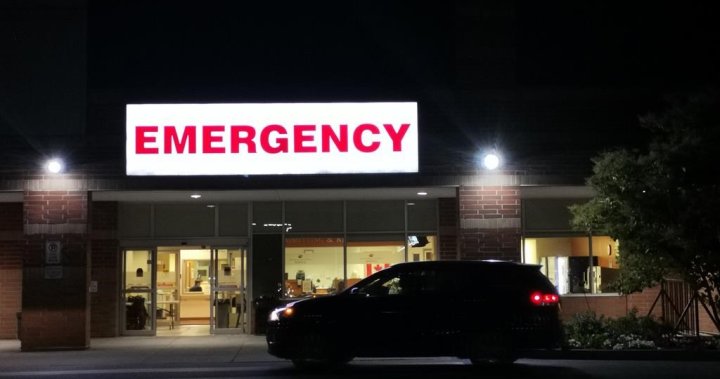
Lack of urgency on mental health transfer contributing to ER crisis, advocates say
Global News
A lack of urgency to improve and expand access to mental health and addictions care across the country is contributing to the 'crisis' in Canada’s emergency rooms, advocates say.
A lack of urgency to improve and expand access to mental health and addictions care across the country is contributing to the “crisis” in Canada’s emergency rooms, as mental health patients who need help often have nowhere to go but an ER, advocates say.
That’s why a group of more than 35 organizations that represent physicians, mental health professionals and groups that advocate for Canadians suffering from mental health, addictions and poverty-related issues say Ottawa needs to act now to implement a new $4.5-billion mental health transfer – a measure promised by the Liberals in last year’s federal election that has since stalled.
Patients in crisis are increasingly ending up in emergency departments due to gaps in publicly-funded services, as it is the only option for those who don’t have private insurance, says Margaret Eaton, national CEO for the Canadian Mental Health Association (CMHA).
But with hospitals across the country experiencing significant challenges due to staffing shortages, health worker burnout and a surge of patients with viral illnesses, mental health patients are yet another contributing stressor to overcrowded ERs, she said.
“If the emergency room is the only place for someone to go to get help, then it means that people that could be better served elsewhere are also going to be in line at emergency,” Eaton said.
There is also concern about the kind of care mental health and addictions patients get when the ER is their only option, Eaton added, because it does not provide the opportunity for follow-up or consistent aftercare.
Data compiled by the Canadian Institute for Health Information (CIHI) in 2017 shows nearly one in 10 Canadians who visit the emergency room for help with mental health or addictions will do so four or more times a year.
This demonstrates not only that these patients need more care than can be accessed in one ER visit, but also that the lack of community-based care is adding to the demands on already swamped emergency departments, Eaton said.


City of Wetaskiwin officials have issued a statement on the decision to ban Mayor Joe Branco from city hall — but it does little to clarify the ongoing situation.

An Abbotsford woman who was sexually abused as a child is speaking out after suffering years of abuse at the hands of her stepfather, starting at the age of just 12 years old.

Technology Minister Nate Glubish says such images, known as deepfakes, can cause people serious harm and that changing the law should create a new layer of protection.

Renters in Quebec may soon have final say over whether they're allowed to keep pets in their homes following a legal ruling that no-pet clauses in leases violate Charter rights.

Alberta RCMP say they have located a Grey 2022 Ford F-150 involved in the fatal highway shooting of an Edmonton man earlier this month. The suspect remains at large.

Education Minister Paul Calandra, however, said he won't use the notwithstanding clause if he moves to eliminate trustees in Ontario.

U.S. President Donald Trump said on Sunday that he would order federal immigration agents to airports to assist TSA. Canadians landing the U.S. should be prepared.

Three overpasses in Saskatoon have been hit in the past three weeks, with charges announced against the driver in the first incident.

Auditor General Karen Hogan says there are critical weaknesses in the integrity controls for the International Student Program.

Return trips by Canadian residents from the U.S. fell 22 per cent in January compared with a year earlier, according to the latest data.

Three byelections are being held on April 13 and the results could have an impact on both the makeup of Parliament and how long it lasts.

Ontario's provincial members of parliament are heading back to Queen's Park Monday, as the legislature sits for the first time since December.

Members of Parliament are back in the House of Commons today, where the government is expected to face tough questions about new auditor general reports and the war in Iran.