Korea’s ‘amazing’ Haenyeo divers show unique genetic adaptations Premium
The Hindu
Genetic adaptation and physiological changes among South Korea's Haenyeo divers revealed in groundbreaking study.
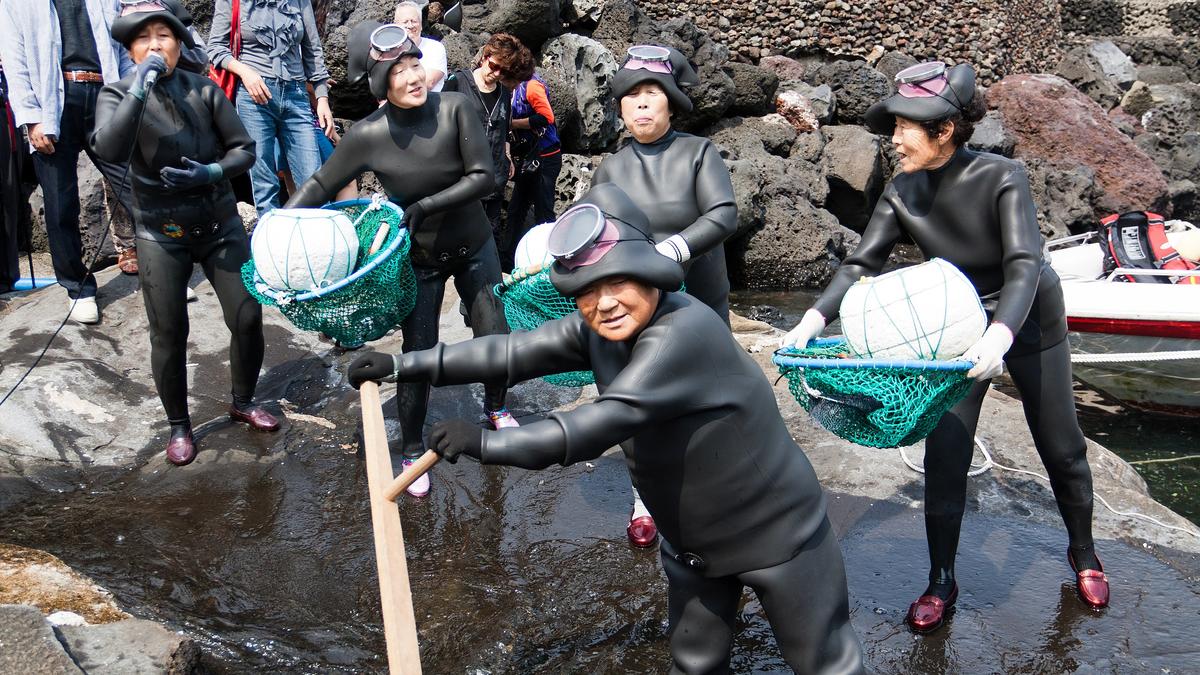
A new study has presented evidence of both genetic adaptation and physiological changes among the Haenyeo, a unique group of women in South Korea’s Jeju Island known for diving up to 10 m underwater and up to seven hours a day to collect shellfish.
“In a society where established traditions have historically shaped gender roles, the Jeju-Haenyeo culture has emerged as an exceptional phenomenon,” the UNESCO said after including the community in its ‘Intangible Cultural Heritage’ list in 2016.
The genetic variant identified in the study may reduce pregnancy-associated hypertension risks, according to the researchers. The findings were published in the journal Cell Reports.
The researchers explored whether long-term diving practice and natural selection have shaped distinct traits in this community, particularly with respect to bradycardia (the slowing of heart rate), blood pressure regulation, and genetic variants associated with cold tolerance and pregnancy-related cardiovascular stress.
The researchers studied 91 women divided into three groups: 30 Haenyeo divers from Jeju, 30 non-diving Jeju ‘controls’, and 31 non-diving Seoul ‘controls’. The physiological data collected included spleen volume (using ultrasound), haematological parameters like hemoglobin and hematocrit levels, and cardiovascular responses during a simulated dive (immersing one’s face in cold water while holding breath).
Haenyeo divers were found to be more bradycardic during simulated dives than both control groups, which the researchers said suggested a robust diving reflex likely due to training. This said, the individuals’ spleen sizes were not significantly different between Haenyeo and non-Haenyeo Jeju women — even though both groups had larger spleens than the participants from Seoul. This, the researchers argued, reflected regional factors rather than genetic adaptation.
The Haenyeo and Jeju controls also had higher diastolic blood pressure than the Seoul participants across the baseline, dive, and recovery periods. The difference persisted even after the researchers adjusted for confounding variables, indicating a potential adaptive feature that enhanced the force that pumped blood to the brain during dives. The systolic pressure remained unchanged, however.


The 2026 U.S. cholesterol guidelines urge starting screening and treatment at 30 to prevent cardiovascular disease effectively.

Olam Festival 2026 in Thiruvananthapuram returns March 27-29 with 120+ vendors, music, art, and cultural zones.

A few storytellers in Thiruvananthapuram share their journeys, challenges, and evolving methods on World Storytelling Day, inspiring young minds.

76-year-old Kurian Jacob from Kerala triumphs with seven medals, including five golds, at the Open Masters Games in Abu Dhabi.

Explore the nature of the human mind as an emergent property of brain activity and complex neural interactions.

CERN's Large Hadron Collider discovers the Xi-cc-plus particle, enhancing understanding of quantum mechanics and baryon behavior.

Vibha Batra’s latest book, Spotless (Hachette India) is a novel in verse for young adults

In its first edition, the Madras Art Salon spotlights the works of journalist and artist Narayan Lakshman at The Botanical Club, a social space in the British Deputy High Commission, Chennai

Cholesterol enhances melanoma cell invasion by making nuclei squishier, revealing a potential treatment target in cancer progression.

The designers reinterpret the Swedish artist’s symbolic forms and colour energy through contemporary resortwear silhouettes

Discover the inspiring legacy of Bibha Chowdhuri, a pioneering woman in physics and a trailblazer in STEM history.

Discover the inspiring legacy of Bibha Chowdhuri, a pioneering woman in physics and a trailblazer in STEM history.

Ashdeen’s Spring 2026 collection features saris inspired by the designer’s Parsi gara archive