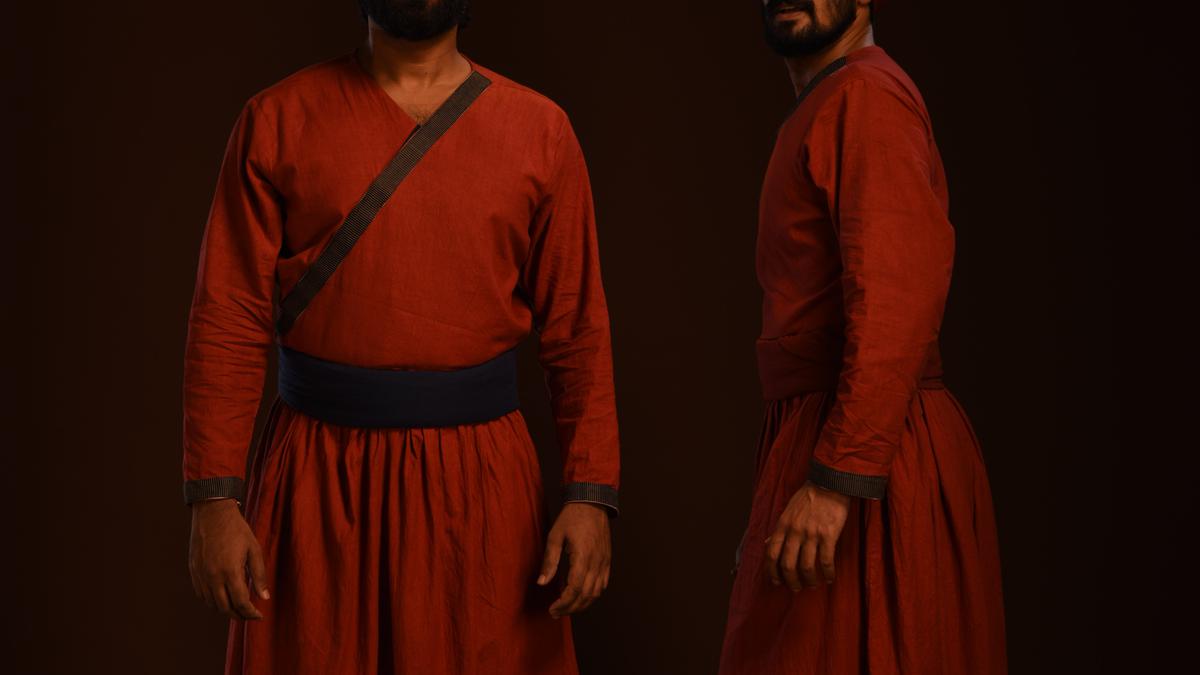
Kochi’s Rasa Theatre Collective to stage Guards at the Taj, a play by Rajiv Joseph
The Hindu
"Guards at the Taj: A dark comedy exploring friendship, power, and duty through the perspectives of two imperial guards."
The stage is set for the unveiling of one of the world’s most beautiful monuments, the Taj Mahal. Its construction was shrouded in secrecy as the emperor Shah Jahan did not want the world to see it before its formal unveiling. And through the years of its building, rumours surrounding its construction were rife. Two low-level imperial guards, who are also friends, are assigned to watch over the Taj, before its grand reveal.
Guards at the Taj, Rasa Theatre Collective’s third production, explores concepts of friendship and loyalty, beauty and duty, and the dynamics of power through the perspectives of these guards.
Written by Pulitzer-nominated American playwright Rajiv Joseph, the play premiered at The Atlantic Theatre in New York in 2015. The highly nuanced play, while examining the friendship between the two guards, also showcases the politics of power — how even those in the lowest rung of social order are affected by the decisions of the rulers of the land.
Rahul Thomas and Sidharth Varma (the founders of Rasa Theatre Collective), essay the guards Babur and Humayun. “We read the play last year and were moved by the way the plot was propelled by these two characters on stage. It builds as conversation between these two and how it plays on the myths and legends that surround the Taj and its relevance in the modern world is what inspired us to take it up,” says Rahul Thomas, who has also directed it.
A dark comedy, the play constantly challenges notions of power and personal integrity. While the two guards are close friends, their inner worlds come crashing down when they are ordered to carry out an unfathomable task. While Babur has a romantic outlook of the world, Humayun, whose father heads the imperial guards, is more rooted in practicality. The different personalities of the friends lead to conflicting ideas and while Babur insists they could escape the tyrannical ways of the emperor, Humayun is bound by his unshakeable sense of duty.
“Though intense, it is delivered in a lighter vein, with the two friends reminiscing their happier times together. It is peppered with humour and every scene has a new reveal,” says Sidharth. “Though set in the 17th century, the language used is contemporary, which the audience can relate to,” he adds.
The two-hour play in English is for 14 years and above. The play was rehearsed at Nilam by One Little Earth, Tripunithura. It was a crowd-funded initiative, say Rahul and Sidharth.


In its first edition, the Madras Art Salon spotlights the works of journalist and artist Narayan Lakshman at The Botanical Club, a social space in the British Deputy High Commission, Chennai

Cholesterol enhances melanoma cell invasion by making nuclei squishier, revealing a potential treatment target in cancer progression.

The designers reinterpret the Swedish artist’s symbolic forms and colour energy through contemporary resortwear silhouettes

Discover the inspiring legacy of Bibha Chowdhuri, a pioneering woman in physics and a trailblazer in STEM history.

Discover the inspiring legacy of Bibha Chowdhuri, a pioneering woman in physics and a trailblazer in STEM history.

Ashdeen’s Spring 2026 collection features saris inspired by the designer’s Parsi gara archive

Red ochre burials, ritual markings and myths across cultures show that red repeatedly marks liminal thresholds such as puberty, sacrifice and death; anthropologists argue that the colour functions as a technology of collective ritual and value, binding communities through shared symbolic acts

India approves 23 institutions for quantum labs under the National Quantum Mission, aiming to advance quantum technology and research.

India approves 23 institutions for quantum labs under the National Quantum Mission, aiming to advance quantum technology and research.

The Gaza conflict exacerbates environmental damage, emitting millions of tonnes of CO2 and threatening climate stability in West Asia.

Chefs and cookery experts share smart kitchen hacks, hybrid cooking methods and appliance tips to help households reduce LPG use without compromising on food

Discover groundbreaking research on Titan's lakes, bat vaccinations, and the unique aroma of ripening bananas in just one minute.

IRSO's NavIC system faces challenges as the last atomic clock fails, reducing operational satellites for navigation services.