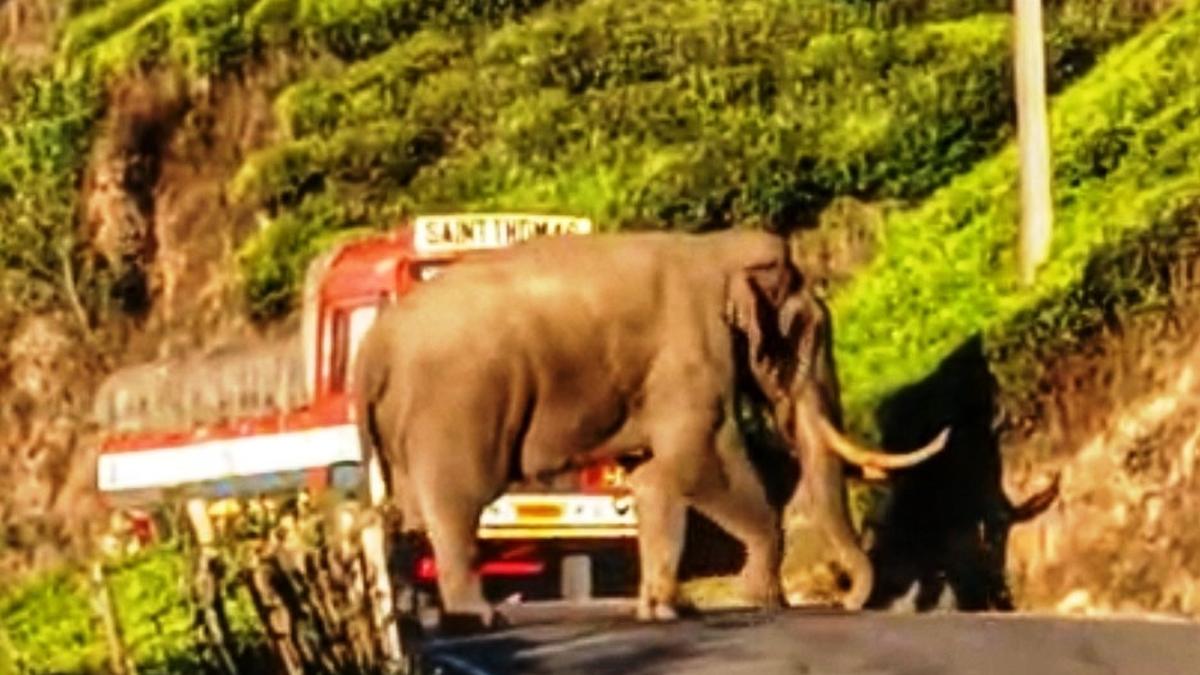
Kerala government to adopt mitigation steps to address man-animal conflicts
The Hindu
Kerala government adopts various measures to mitigate man-animal conflicts, including beehive fences and compensation for victims.
Faced with an increasing prevalence of man-animal conflicts in the State, the Kerala government has decided to adopt a wide range of mitigation efforts, ranging from eco-restoration activities to erecting ‘beehive fences’, to keep the marauding animals at bay.
Chief Minister Pinarayi Vijayan, who on Thursday chaired the first meeting of the high-level committee constituted recently to address the issue, said a 24-hour control room has commenced functioning at the headquarters of the Forest department to coordinate the efforts. Steps are also in progress to operationalise emergency operation centres in 36 forest divisions.
Around 900 watchers will be deployed on a temporary basis to the rapid response teams and conflict-prone areas. WhatsApp groups have been formed at the forest circle and division levels to alert local residents of animal movement in localities plagued by wildlife incursions. Similar groups will be created at the panchayat level.
The government will expedite steps to clear undergrowth on 66 plantations in Wayanad with the assistance of local bodies. A meeting of plantation owners and managers in Munnar has also been jointly conducted by the forest, revenue and police officers to chalk out similar strategies in the region.
In order to ensure adequate water availability in forest areas, especially during the summer season, the government has been maintaining 341 ponds in Wayanad and 249 ponds in Idukki. Steps have been adopted to construct new ponds and check-dams by tapping into corporate social responsibility (CSR) funds. Water tanks will also be built for the purpose.
As part of the ongoing eco-restoration efforts, steps to remove invasive alien species, including Senna spectabilis, will be expedited.
The high-level meeting has resolved to adopt beehive fencing in certain forest fringe areas to ward off wild elephants. However, the technique will be adopted only in places devoid of bears.


Parliament Budget Session LIVE: Follow The Hindu's latest updates on the Parliament Budget Session on March 23, 2026.

T. Nagar faces severe infrastructure challenges amid commercial growth, impacting emergency services and resident quality of life.

Five individuals detained after a man's death due to a lift malfunction at R.G. Kar Hospital in Kolkata.

In 2014, Amazon introduced its first smartphone, hoping to take on Apple and Samsung. Instead, the Fire Phone, overseen directly by founder Jeff Bezos, was scrapped in barely over a year, one of Amazon’s highest-profile flops.

A data jam on March 28 by OpenCity will have participants studying how the Assembly constituencies in and around Chennai are faring on a set of parameters

IUML files police complaint over a fake Facebook post targeting its leader, warning against misinformation and potential legal action.

Experience global flavors at Vizag's 'World Flavours' food festival, celebrating cultural unity through authentic international cuisines.

Three men were killed in a road mishap after their mini truck crashed into a stationary truck near Medahalli in east Bengaluru on Saturday night, police said.

Kerala's critical sectors face LPG shortages despite a 20% relief allocation, impacting restaurants and hotels significantly.

Explore the Sattankulam custodial torture deaths of P. Jayaraj and his son J. Benicks, revealing a shocking tale of police brutality.

Explore the Sattankulam custodial torture deaths of P. Jayaraj and his son J. Benicks, revealing a shocking tale of police brutality.

The 2026 Assembly elections in India will involve Assam, West Bengal, Kerala, Tamil Nadu, and Puducherry across 824 constituencies.

Ernakulam initiates a drive to recycle old clothes into eco-friendly mobile holders for polling stations, promoting sustainability.