Kashmir’s fading Sufiyana Mausiki, Tchakri songs attract a spotlight
The Hindu
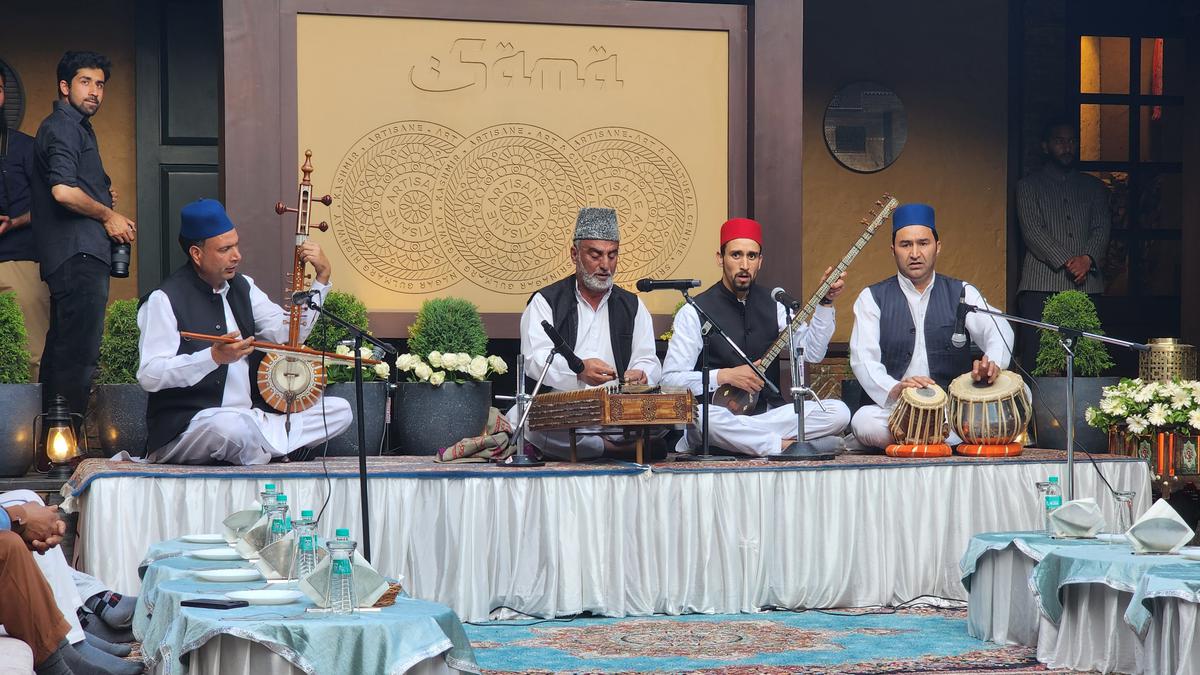
The fast-fading Sufiyana Mausiki and Tchakri were replayed with the old-charm in Baramulla of north Kashmir on May 28.
The fast fading Sufiyana Mausiki and Tchakri, devotional folk songs that assumed centrality for carpet and shawl weavers of Kashmir for centuries, were finally replayed with the old-charm setting in a rare bid to “reconnect with the past” at Kunzer area in Baramulla of north Kashmir on Sunday.
To revive the old tradition of celebrating the vibrancy of onset of summers, Mehboob Iqbal Shah, co-founder of the Artisane Art and Cultural Centre, an off-shoot of the ‘House of Ali Shah’ established in 1860, on Sunday evening organised ‘Dastaan-e-Bahaar’ to pay tributes to the master weavers of shawls and carpets and prominent folk singers.
Ustad Muhammad Yaqoob Sheikh, a known name in Sufiyana Mausiki, and Ghulam Ahmad Kachroo, a well-known Tchakri singer, sang soul-stirring poetry and verses in an open-air setting, as candles lit up the evening to pay tributes to the families of the artisans in Kashmir.
“Sufiyana music helps to have peace at heart. This folk music has been granted classical status. It has 180 mukaams or stages and, unfortunately, several stages are lost because of decline in the tradition. The Mukaam-e-Bahaar is sung at low pitch and just before the sunset,” Mr. Sheikh said.
Two well-known artisans – Ghulam Muhammad, a carpet weaver, and Abdul Rasheed, a Kani shawl weaver – threw light on the centrality gained by devotional songs, especially Sufiyana Mausiki, among the tribe of artisans from Kashmir for many decades now. Such mehfils, including night-long musical sessions, were a regular feature at the Valley’s Karkhanas or weaving centres in the past.
“Sufiyana Kalam makes us engross ourselves in the art work. It’s a powerful tool to focus and maintain attention on meticulous details while weaving carpets and shawls. It would even attract foreigners in the past,” Mr. Muhammad said.
Mr. Shah said Kunzer’s Takiya Batapora area had emerged as the centre of learning for the artisans of the entire Baramulla district at one point of time. “In 1970, the area was home to over 100 carpet looms, making it one of the biggest clusters in the district,” he added.


Artist Kapila Nahender explores notions of belonging, growth and memories in her show Pockets of Resistance

BTS's comeback concert in Seoul drew over 100,000 fans, featuring their new album "ARIRANG" and a global livestream.

Prasads Multiplex Hyderabad unveiled one of India’s largest HDR cinema auditoriums, the PCX HDR by Barco

From staged funerals to rented fatherhood, Brendan Fraser turns rented intimacy into something disarmingly real in Hikari’s poignant Tokyo fable

Meet Nivrritii Mahesh, a Bharatanatyam dancer who dances with Cochlear implants

In a surprising turn of events, Urvashi theatre, one of Bengaluru’s iconic single screens, has re-opened, with the much-talked-about Dhurandhar: The Revenge running to a full house in the theatre. After the expiry of the 45-year lease, it seemed like curtains would come down on the king-size theatre but for now, it’s good news for fans.

The thrilling ‘Peaky Blinders’ finale is a farewell tour tailored for Tommy Shelby, while passing the baton to a new generation

BTS's comeback concert in Seoul drew over 100,000 fans, featuring their new album "ARIRANG" and a global livestream.

Khalid Rahman is reuniting with Malayalam superstar Mammootty after Unda (2019). The Thallumaala director has teamed up with the veteran for Mattancherry Mafia.

Bollywood actor Akshay Kumar paid tribute to the martial arts grandmaster and Hollywood’s action star, Chuck Norris, who passed away on Thursday, March 19, 2026.

Renowned Odissi dancer Madhumita Raut, aged 59, dies of cardiac arrest, leaving behind a legacy of artistic achievements.

Chuck Norris, iconic martial arts master and actor, dies at 86, leaving behind a legendary legacy and internet memes.

South African naturalist Steve Boyes speaks on ghost elephants, ancestral tracking, and Werner Herzog’s documentary exploring Angola’s elusive highland giants