Karnataka rolls out APAAR ID for schoolchildren
The Hindu
Controversy surrounds the introduction of APAAR ID for school children, with educationists questioning its necessity and privacy implications.
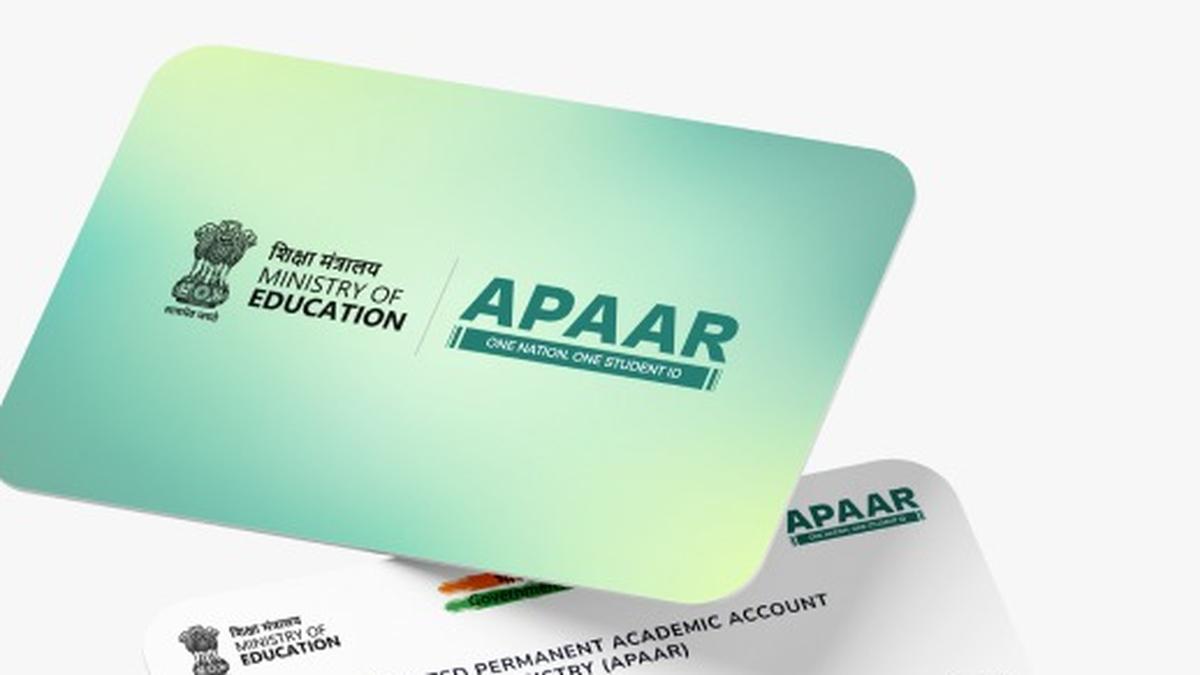
The Department of School Education and Literacy (DSEL) has initiated the issuance of 12-digit Automatic Permanent Academic Account Registry (APAAR) unique identity cards, modeled after Aadhaar, for all government, aided, and private school students in the State.
However, the move has sparked criticism from educationists, who argue that the State’s adoption of APAAR contradicts its stance against the National Education Policy (NEP) and its commitment to implementing a State Education Policy (SEP). Critics also questioned the need for the new ID, given that students in the State are already assigned Student Achievement Tracking System (SATS) IDs.
The Union Ministry of Education has said that the APAAR ID is a critical component of the NEP and the National Credit and Qualifications Framework (NCqF). The ID is designed to serve as a unique, lifelong identifier under the “One Nation, One Student ID” initiative, ensuring uniformity across educational and administrative systems. According to the Ministry, it will facilitate seamless transitions between schools, States, and institutions.
Additionally, the APAAR ID will integrate with the DigiLocker ecosystem, enabling secure storage of academic records, exam results, holistic report cards, and extracurricular achievements. It will also be utilised for entrance exams conducted by the National Testing Agency, admissions, scholarships, government benefits, and awards for students and educators.
Parental consent is mandatory for APAAR registration. Following the Union government’s directive, the DSEL has instructed schools to convene parent meetings to secure consent. The registration process, linking parents’ Aadhaar, EPIC, and driving licence numbers, is already underway in government, aided, and unaided schools.
Development educationist Niranjanaradhya V.P. criticised the move, stating, “The federal government is using all means to gain control over school education, despite education being on the concurrent list.” He said Karnataka’s existing SATS system, which is being upgraded to version 2.0, is sufficient. “The imposition of APAAR ID raises concerns about student privacy and infringes on constitutional rights,” he added.


Four Assam police commandos injured in an extremist attack during a gunfight in Tinsukia district, officials report.

Campaigning intensifies in Ernakulam district as candidates engage voters ahead of the crucial Assembly polls.

Lord Rama rides Hanumantha Vahanam on sixth day of Brahmotsavams in Tirupati

Nagapattinam faces underdevelopment and resource challenges, impacting its rich heritage and the livelihoods of its fishing community.

Governor Arlekar emphasizes that justice must embody human values, fairness, and accessibility for all citizens at VIT conference.

Motorists on Valparai Road are warned of increased wild animal activity this summer, particularly elephants seeking water.

In a surprising turn of events, Urvashi theatre, one of Bengaluru’s iconic single screens, has re-opened, with the much-talked-about Dhurandhar: The Revenge running to a full house in the theatre. After the expiry of the 45-year lease, it seemed like curtains would come down on the king-size theatre but for now, it’s good news for fans.

First tranche of Rythu Bharosa released by CM Revanth

Collectors in Kanniyakumari and Thoothukudi inspect polling stations to ensure election preparedness ahead of Tamil Nadu's assembly elections.

The Vice-Chancellor of Rajiv Gandhi University of Health Sciences (RGUHS) B. C. Bhagavan said on Sunday that the university will soon open a research centre on Yoga and Naturopathy on 60-acre land in Bengaluru.

Parliamentary committee urges swift action to fully operationalise Lokpal's inquiry and prosecution wings amid rising corruption complaints.

Hyderabad paediatrician Dr. Sivaranjani Santosh faces legal action from pharma firms over her remarks on ORS labelling reforms.

Palla urges NDA leaders to unite for grassroots outreach, enhancing public trust through balanced welfare and development initiatives.