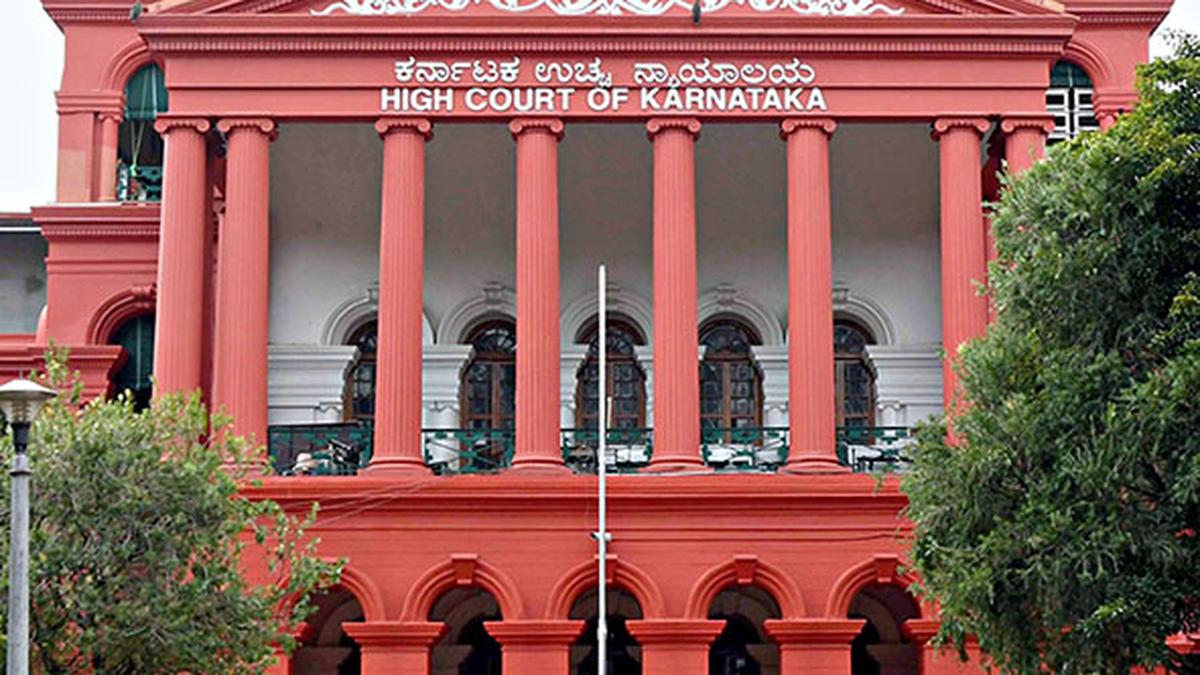
Karnataka High Court dismisses plea of PhonePe against making disclosure to police for probe
The Hindu
Observing that “the duty to protect data must yield, where public interest and criminal investigation intersect,” the High Court of Karnataka has said that digital payment intermediaries such as PhonePe has no complete immunity under the law from disclosing confidential information about transaction details/account credentials of registered users to th
Observing that “the duty to protect data must yield, where public interest and criminal investigation intersect,” the High Court of Karnataka has said that digital payment intermediaries such as PhonePe has no complete immunity under the law from disclosing confidential information about transaction details/account credentials of registered users to the police for investigation in a criminal case.
“The protection of consumer privacy cannot eclipse the lawful imperative of investigating officers to secure evidence and take the investigation to its logical conclusion. Confidentiality must coexist with accountability,” the court observed.
Justice M. Nagaprasanna made these observations while dismissing a petition filed by PhonePe Pvt. Ltd.
The company had questioned the summons issued by CEN police station, Bengaluru Rural district, asking the company to give certain information about transactions on a complaint lodged by a person alleging that he had lost money in 2022 while using several digital payment gateways while transferring various amounts to online cricket betting apps.
It was contended by PhonePe that digital payment intermediaries had immunity from disclosing information to anyone, including the police, except the courts, under the provisions of the Payment and Settlement Systems (PSS) Act, 2007 and the Bankers Books Evidence (BBE) Act, 1891 which is made applicable to the Payment and Settlement Systems Act, 2007.
“Section 22 of the PSS 2007 Act, no doubt, permits a payment gateway to keep the documents involved in payment system confidential. Exceptions are carved out in the statute itself. The provision itself carves out that except where such disclosure would be required in obedience to the orders passed by the court of competent jurisdiction or a statutory authority in exercise of power conferred under the statute,” the court noted.
Hence, the court said that the investigating officer was a statutory authority, who was acting in terms of the powers conferred under the Code of Criminal Procedure while conducting investigation, and therefore the contention that details could not be divulged could not be accepted. Even the provisions of the BBE Act, 1891 itself made provision for disclosure of information, the court pointed out.


India pledges 60% non-fossil fuel power by 2035, targeting 47% emissions reduction per GDP unit and enhanced carbon sinks.

Supreme Court rules land acquisition compensation and interest must uphold constitutional guarantees, unaffected by financial burdens.

Election officials accept 23 nominations for Bagalkot bypolls, rejecting three, with polling scheduled for April 9.

Students and women’s self-help groups in Madurai engage in vibrant voter awareness campaigns promoting 100% voting participation.

Congress signals a "friendly fight" with allies in select Puducherry Assembly seats ahead of the April 9 elections.

Airstrike in western Anbar kills 7 Iraqi soldiers, injures 13, prompting condemnation for violating international laws on medical facilities.

Plaque unveiled in Bengaluru honors 11 victims of RCB stampede, emphasizing safety responsibility for future events.

India and the U.S. reaffirm commitment to enhance strategic defense cooperation at the 18th Defence Policy Group meeting in New Delhi.

Chhattisgarh's Deputy CM reports only 30-40 Maoists remain in Bastar, highlighting recent surrenders and future development plans.

Explore the historical and industrial significance of Ariyalur constituency, highlighting its challenges, agriculture, and political landscape.

Dindigul and Madurai Collectors conduct joint inspection

In this episode, Kalki Subramaniam speaks to us about why the Transgender Persons Amendment Bill has sparked protests, and how these amendments threaten to push a marginalised community back into the shadows.

India's EU FTA is poised to attract more German companies, boosting bilateral trade and investment opportunities.