Kamala Harris’ economic pitch just got a lot more complicated
CNN
The Biden-Harris administration couldn’t shake the “vibecession” even when the economy was on a tear. It may be even harder now that cracks are forming in the labor market.
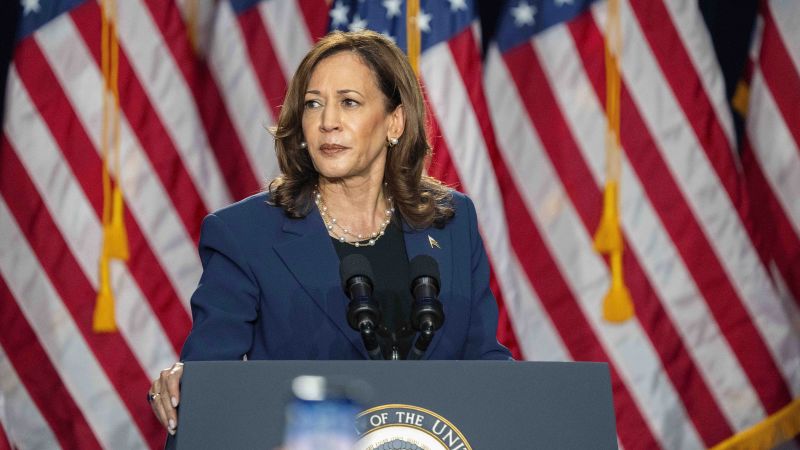
The Biden-Harris administration couldn’t shake the “vibecession” even when the economy was on a tear. It may be even harder now that cracks are forming in the labor market. Americans have been grumpy about the economy for the better part of three years because prices have gone up, and — fairly or unfairly — many consumers have blamed the White House. Now, inflation is more or less under control, but that’s also come at a cost: The job market, while still historically strong, is starting to weaken. Last month, the economy gained just 114,000 jobs, and unemployment rose to 4.3% from 4.1%, largely because of an influx of job seekers re-entering the workforce. It was hardly a disastrous jobs report, but it was a surprisingly abrupt shift from June, when the economy added 179,000, and May, when it added 216,000. The jobs report was not a disaster, by any stretch, and it’s no guarantee of a looming recession. But it was a surprise, and economists expressed concerns about how quickly the labor market appears to have downshifted. “We don’t know just how precipitously the labor market is softening, but it seems pretty darn clear that it is softening,” said Heidi Shierholz, president of the Economic Policy Institute, a left-leaning think tank. One month isn’t enough to declare a trend, but it’s enough to seriously complicate Vice President Kamala Harris’ economic pitch as the new presumptive Democratic nominee.


Looking out his shop window, across the street, just to the right, Paloma Clothing co-owner Mike Roach sees one of Portland, Oregon’s, most expensive gas stations.

Oil and liquefied natural gas tankers moving through the Strait of Hormuz carry around 20% of the world’s supply. But for countries on the Persian Gulf, the waterway is more than just an energy route – it’s a lifeline for more than 100 million people.

A California jury has largely sided with Twitter shareholders who accused billionaire Elon Musk of defrauding them by intentionally driving down the social media company’s stock ahead of his $44 billion acquisition in 2022.

The war with Iran is disrupting global oil flows, damaging energy infrastructure and raising fears of prolonged conflict. But gold, usually considered a safe haven during periods of economic uncertainty, has slumped.

US stocks and bonds fell, oil prices rose and gold had its worst week in four decades as the Iran war continues to ripple through financial markets.

The White House on Friday released its long-awaited national artificial intelligence legislative framework, a move to prevent states from enacting their own laws and enforce the Trump administration’s light-touch approach to AI regulation.

“Today is a difficult day,” CBS executives wrote to staff, explaining the cuts as a tough but necessary reallocation of newsroom resources.

President Donald Trump has repeatedly promised that Americans will get larger tax refunds this year thanks to his “big, beautiful bill.”

President Donald Trump has repeatedly promised that Americans will get larger tax refunds this year thanks to his “big, beautiful bill.”

Oil prices edged lower on Friday after a tumultuous day that saw the international benchmark surge above $119 a barrel as the Middle East conflict deepened energy supply fears.

The war in Iran has delivered what economists call a “black swan” event — an unforeseen shock so destructive, no one is immune to it.

The war in Iran is driving up the cost of buying a home in America.

Eight state attorneys general have filed an antitrust lawsuit to block Nexstar’s pending acquisition of Tegna, which would strengthen the right-leaning Nexstar and shrink the number of station owners in the US.