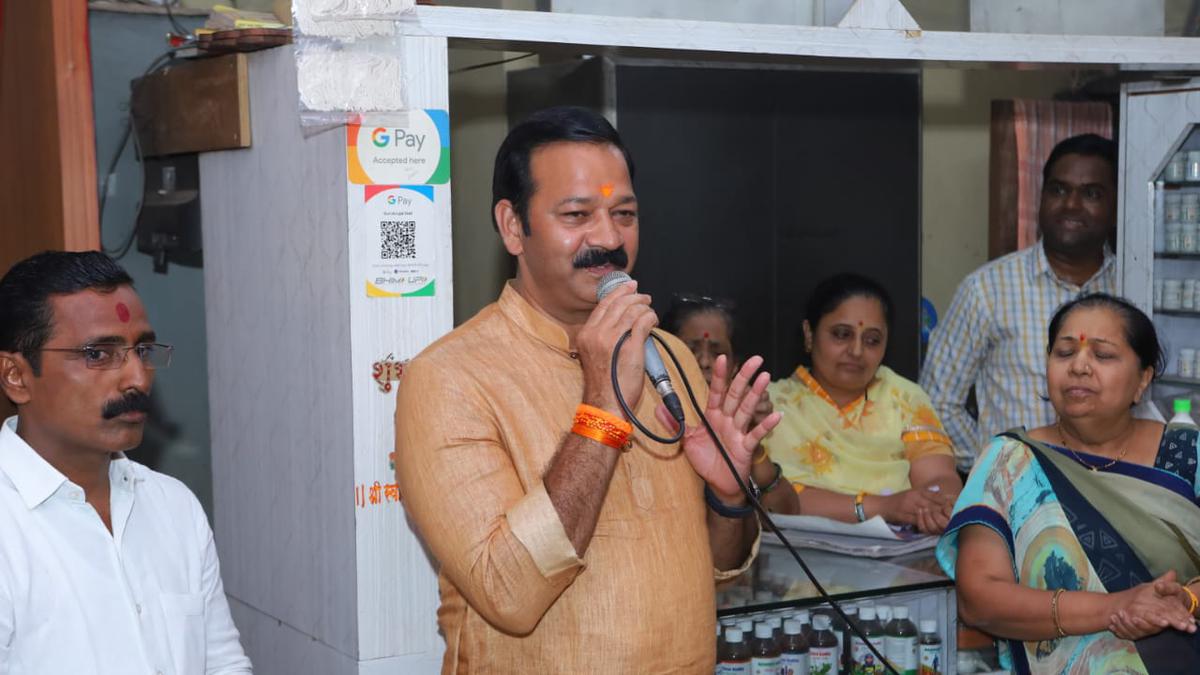
Kalyan BJP MLA Ganpat Gaikwad, held for shooting Shinde Sena leader, now booked under SC/ST Act
The Hindu
BJP MLA Ganpat Gaikwad booked for shooting Shiv Sena leader Mahesh Gaikwad, sparking political controversy in Maharashtra.
The Thane Police have booked Bharatiya Janata Party (BJP) MLA Ganpat Gaikwad, accused of shooting and injuring Shiv Sena (Eknath Shinde faction) leader Mahesh Gaikwad inside a police station in Ulhasnagar, under the Scheduled Caste and Scheduled Tribes (Prevention of Atrocities) Act, said authorities on February 4.
Mr. Ganpat Gaikwad, a three-time legislator from the Kalyan East constituency, had pumped six bullets into Kalyan Shiv Sena (Shinde faction) leader Mr. Mahesh Gaikwad while injuring the latter’s associate, Rahul Patil, late Friday night over an apparent case of land dispute.
According to the Hill Line Police, they have now booked the MLA, along with seven others, based on a complaint filed by a resident of Dwarli village on Saturday under sections of the Indian Penal Code (IPC) and SC/ST (Prevention of Atrocities) Act.
As per the complainant, she was subjected to caste-based abuse by Mr. Ganpat Gaikwad and the others on January 31, said the police.
“A probe into the complaint of the woman, who is a land owner, is underway,” the station house officer of Hill Line police station said.
Despite being part of the ruling parties which constitute the Eknath Shinde-led ‘Mahayuti’ government, the fierce political and personal rivalry between Mr. Ganpat Gaikwad and Mr. Mahesh Gaikwad was well-known throughout Kalyan and the Thane region.
Both leaders never pulled punches during their verbal slanging matches in the past.


Perundurai's industrial growth faces challenges of pollution, water scarcity, and healthcare, impacting residents ahead of the 2026 elections.

The Travancore Devaswom Board asserts that courts should respect community beliefs in its Supreme Court submission on Sabarimala's entry issue.

Karnataka cancels Deendayal Upadhyay event at KSOU due to protocol violations, citing inconsistency with university objectives.

Illegal pickle unit busted in Hyderabad, one arrested; unhygienic stock worth ₹3 lakh seized

Karnataka has entered a state of demographic transition where a large working-age population will no longer be enough to drive economic growth, and future gains will depend on how productively people are employed, the ‘State of Working India 2026’ report said.

Key demands in Sulur Assembly constituency include reviving the powerloom sector, addressing farmers' needs, and protecting River Noyyal.

Kodihalli urges Karnataka CM to allocate ₹10,000 crore revolving fund for seamless procurement of farm products under MSP scheme.

Kerala's political parties continue to marginalize women candidates, highlighting a troubling disconnect between gender demographics and representation.

The High Court of Karnataka on Tuesday ordered the issue of a notice to the State government on a PIL petition, which had complained about disturbances caused to people residing in the localities around the National Public School situated in Rajajinagar 5th block due to use of loudspeakers with high volume in the school and parking of school buses in residential areas.

China is extensively mapping ocean floors to enhance submarine warfare capabilities against the U.S. and allies across key oceans.

AIADMK's 2026 manifesto promises free rations, women's benefits, education reforms, and economic growth initiatives for Tamil Nadu.

The vehicle towing drive will soon resume in the city to ease traffic congestion. The Bengaluru Traffic Police (BTP), in coordination with the Greater Bengaluru Authority (GBA), is set to relaunch the vehicle towing drive across the city shortly to tackle traffic congestion and illegal parking.

Panic buying, not shortage, is leading to long queues at Hyderabad petrol pumps.