K. Hema Committee report reveals sexual exploitation in Malayalam film industry
The Hindu
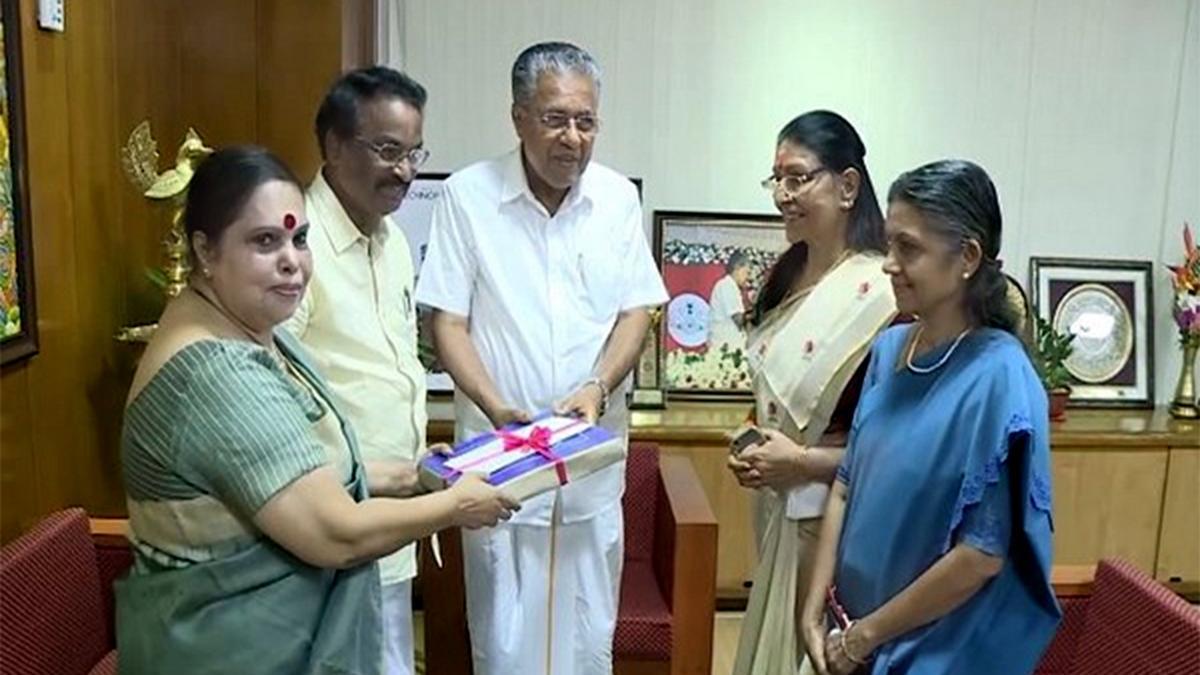
The K. Hema Committee report on the issues faced by women in the Malayalam film industry, published on Monday, five years after it was submitted to the Kerala government, revealed horrid tales of sexual exploitation, illegal bans, discrimination, drug and alcohol abuse, wage disparity and in some cases, inhuman working conditions. The 235-page report, published after redacting the names of the witnesses as well as the accused, notes that the Malayalam film industry is under the clutches of certain male producers, directors and actors, whom a prominent actor referred to as a “mafia”, as they could ban anyone from the industry.
The K. Hema Committee report on the issues faced by women in the Malayalam film industry, published on Monday, five years after it was submitted to the Kerala government, revealed horrid tales of sexual exploitation, illegal bans, discrimination, drug and alcohol abuse, wage disparity and in some cases, inhuman working conditions.
The 235-page report, published after redacting the names of the witnesses as well as the accused, notes that the Malayalam film industry is under the clutches of certain male producers, directors and actors, whom a prominent actor referred to as a “mafia”, as they could ban anyone from the industry.
The committee confirms the rumoured existence of the practice of “casting couch” in the industry. Contrary to the other fields, sexual harassment starts even before a woman starts working in the film industry as demands for sexual favours are made by very well-known people in the industry in lieu of offering them roles. Some of the witnesses provided video clips, audio clips and screenshots of WhatsApp messages as proof of casting couch attempts.
Many of the women find it unsafe to stay alone in the accommodation arranged for them during shooting, as men in inebriated condition habitually knock their doors. Attempts to forcibly enter their room by knocking down doors were also recounted by witnesses, notes the report. One specific case mentions an actress who had to act as the wife of her abuser the very next day of the incident, causing the victim immense trauma. In an attempt to persuade newcomers, some people in the industry actively create the impression that successful women have made it through “compromises”.
Many who were examined by the committee were afraid to reveal things which they experienced fearing adverse consequences. The fear is well-founded. The committee damningly notes that it is concerned about their safety and even that of their close relatives. The experiences which many women in cinema have gone through are of such gravity that they had not disclosed these details even to their close family members.
They also rarely approach the police fearing the consequences from powerful forces in the industry as well as cyberattacks due to their public profiles. In another instance of the climate of fear that existed in the industry, when the Hema Committee formed a WhatsApp group with dancers in the industry, most of them left the group one after the other, after hearing the committee’s intention. Similar was the case with junior artistes, one of the most exploited lot in the industry.
Producers are warned by the industry’s “power group” not to cast actors who fall out of favour with them. Even the release of movies can be prevented as the Film Chamber of Commerce has to issue NOC. Production controllers have a major role in getting people banned from cinema. Members of the Women in Cinema Collective (WCC), following whose demand the Hema Committee was set up, were banned from cinema because the organisation speaks out against the atrocities women face.


South African naturalist Steve Boyes speaks on ghost elephants, ancestral tracking, and Werner Herzog’s documentary exploring Angola’s elusive highland giants

Actor-director Amol Palekar will receive META's Lifetime Achievement award for 2026 on March 25 in New Delhi.

India's artists unite against rising censorship, advocating for creative freedom and support for marginalized voices in the arts.

Written and directed by Kunal, the film also stars Sparsh Shrivastava and Vanshika Dhir

This year, Bharatnatyam artistes will present the Tyagaraja Aradhane as a dance performance

This year, Bharatnatyam artistes will present the Tyagaraja Aradhane as a dance performance

The actor, along with director Sushant Shah, speak about their upcoming series ‘Chiraiya’, Divya’s process of working on the dialect, Sushant’s approach to telling a story about women, and more

An independent video, ‘Feel the Spark’ by Raleigh Rajan with vocals by Ciera Dumas that celebrates Tamil literary giants, garnered 1.4 million views in less than 36 hours.

In ‘Jack Ryan: Ghost War’, John Krasinski is back as the savvy CIA analyst, diving headfirst into a high-stakes mission that unravels a deadly conspiracy and pits him against a rogue black-ops unit

Shriram Bharatiya Kala Kendra’s Shankarlal festival showcased rare ragas, radiant artistry, and inclusive performances, from Pt Madhup Mudgal’s serene morning ragas to Ramana Balachandran’s Saraswati veena.

Explore "Threads that Bind: The Kantha Project," an exhibition in Delhi reimagining kantha as a medium of repair and renewal.

Sean Penn skips the Oscars to meet Ukraine's Zelenskyy, who praises him as a "true friend" amid the war.

The teaser of Tamil star Suriya’s much-awaited film with director Venky Atluri, titled Vishwanath and Sons, was unveiled by the makers on Monday