Julian Assange extradition case: Stella Assange, supporters decry politics behind case
The Hindu
Julian Assange's extradition case highlights political interference, potential 175-year sentence, mental health concerns, and international legal complexities.
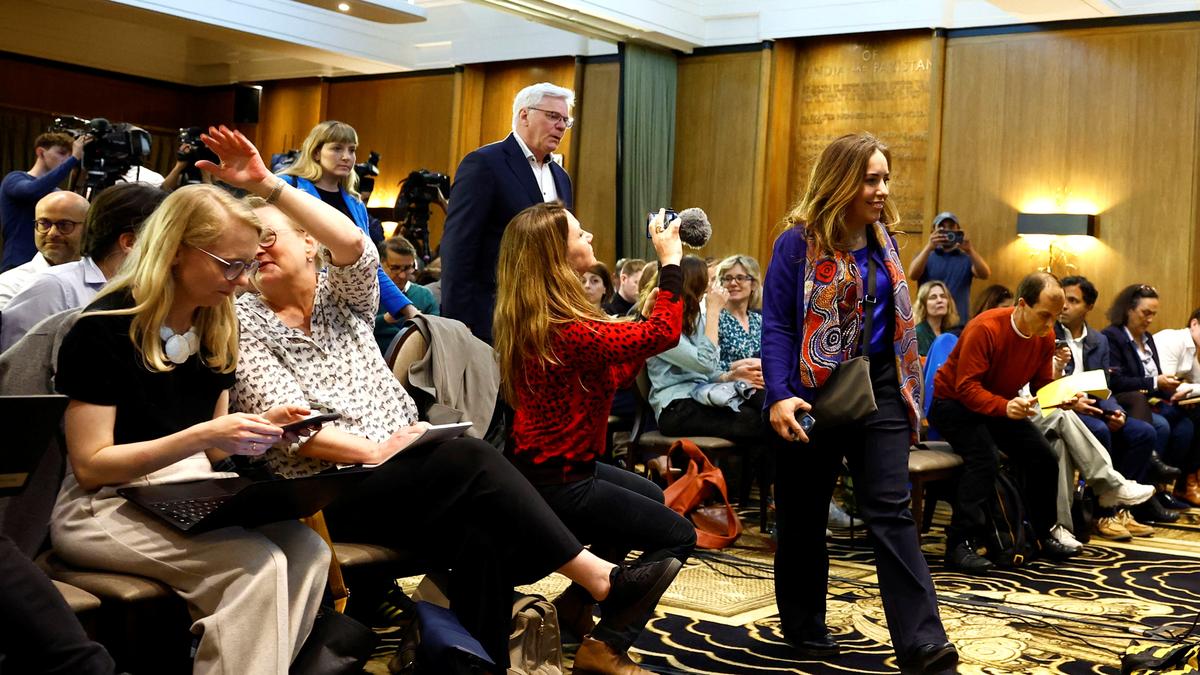
Days before a U.K. High Court hearing on whether WikiLeaks Founder Julian Assange will be allowed to appeal his extradition to the United States, his wife, Stella, and other supporters, decried the role politics had played in the case.
Mr. Assange, 52, is being charged on 18 counts, 17 of which involve the violation of the U.S.’ Espionage Act, for publishing sensitive diplomatic and military cables. He faces up to 175 years in prison.
“Julian is just one decision away from being extradited,” Ms. Assange told reporters at a briefing organised by the Foreign Press Association on May 15. It was “bizzare”, Ms. Assange said, that the U.S. had been allowed multiple opportunities to amend its case. “It seems like they’re given endless chances to change their case,” she said.
The case is rigged against Julian,” WikiLeaks Editor in Chief Kristinn Hrafnsson said, adding that Mr. Assange was a “political prisoner”.
In March, the High Court had said that Mr. Assange would be allowed to appeal his extradition if the U.S. failed to provide assurances that he would not face the death penalty and that Mr. Assange, an Australian (i.e., a non-U.S. citizen), could rely on the U.S.’ First Amendment (i.e., free speech) rights during his defence.
In April, it was reported that the U.S. had provided an assurance that the death penalty will not be sought or imposed in Mr Assange’s case. The U.S. also said Mr. Assange “will have the ability to raise and seek to rely upon” the First Amendment, but whether those rights applied to him as an Australian, would be entirely a matter for U.S. courts to decide. This has been a central concern for Mr. Assange’s lawyers.
“That is a non assurance, it doesn’t provide any assurance whatsoever,” Jennifer Robinson, part of Mr. Assange’s legal team, told reporters on Wednesday. Ms. Robinson, who addressed journalists virtually from Australia, said that there was case law in the U.S. which said foreign nationals cannot rely on First Amendment protections for acts committed outside the U.S. “The court should not accept these this diplomatic notes [ U.S. assurances] because it doesn’t respond to the assurances that they were seeking,” Ms. Assange said.


Saudi Arabia expels Iranian military staff amid escalating tensions and ongoing missile attacks during the U.S.-Israeli war on Iran.

Russia claims control of Potapivka village in Ukraine's Sumy region amid ongoing military efforts to establish a buffer zone.

Iranian missile strikes on Israeli towns cause widespread damage and injuries, marking a significant escalation in the ongoing conflict.

As Gor makes first trip as U.S. Special envoy to South Asia, Delhi watches strategic signals closely
Sergio Gor's inaugural trip as U.S. Special Envoy to South Asia signals strategic U.S. engagement amid regional tensions.

Slovenians vote in a tight election between liberal and populist candidates, impacting the country's future domestic and foreign policies.

Netanyahu asserts U.S.-Israel alliance fights Iranian threats, emphasizing global security after missile strikes on Israeli and European targets.

Israeli settlers attack Palestinian villages in the West Bank, causing injuries and destruction amid ongoing settlement expansion.

Britain asserts no evidence of Iran planning missile strikes on Europe, despite Israeli claims of missile capabilities.

UNESCO reports over half of countries have banned phones in schools due to concerns about attention, cyberbullying, and social media impact.

Analysis reveals a U.S.-operated Patriot missile likely caused a pre-dawn explosion in Bahrain, injuring numerous civilians.

Sri Lanka raises fuel prices by 25% amid ongoing West Asia conflict, impacting petrol and diesel costs significantly.

Iran strikes near Israeli nuclear research center as Trump threatens attacks on Iranian power plants
Iran's missile strikes near Israel's nuclear site escalate tensions as Trump threatens retaliation against Iranian power plants.

Saudi Arabia intercepts one of three ballistic missiles targeting Riyadh amid ongoing regional tensions and threats from Iran.