JNTBGRI researchers unravel the mystery behind the ‘shooting’ droplets from Theepacha
The Hindu
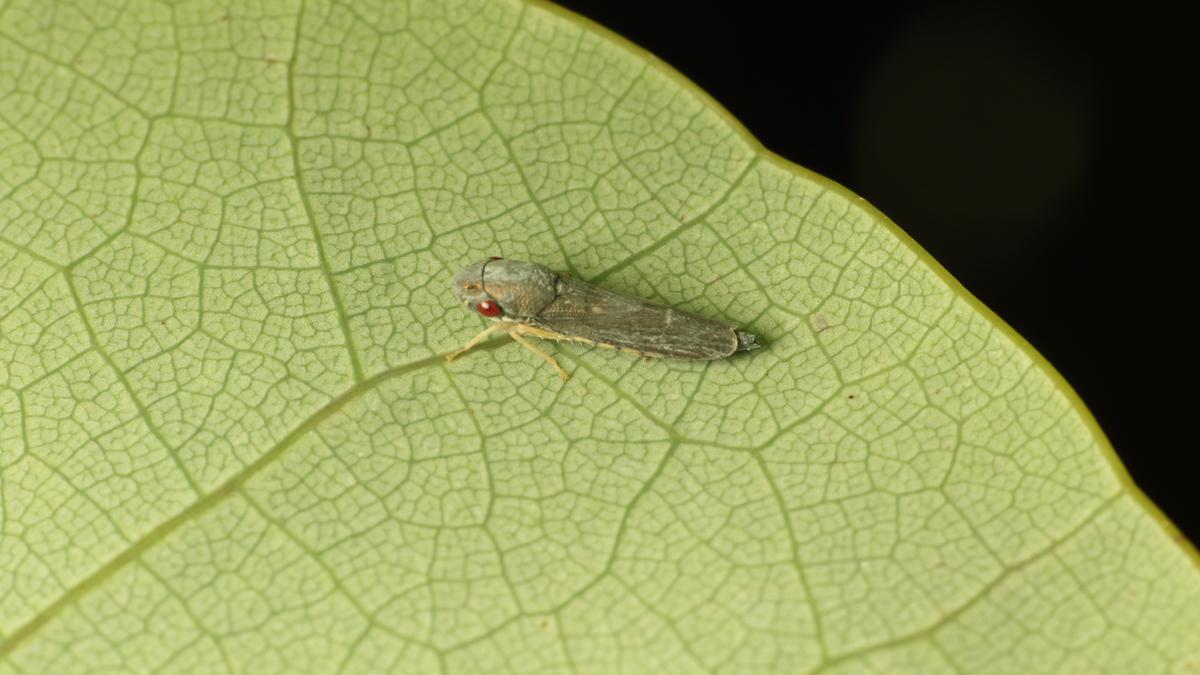
A recent study suggests the source of the droplets is not the liana as is commonly believed, but the Aloka depressa, a leafhopper that feeds on sap from the kidney-shaped leaves of its host.
Researchers at the Jawaharlal Nehru Tropical Botanic Garden and Research Institute (JNTBGRI) may have figured out the secret behind the water droplets that keep drizzling from the Diploclisia glaucescens, a liana or woody vine known locally as the ‘Theepacha.’
Call it the curious case of the leafhopper, the liana, and, well, insect ‘pee.’
The source of the droplets, it appears, is not the liana as is commonly believed, but the Aloka depressa (tribe Phlogisini), a leafhopper that feeds on sap from the kidney-shaped leaves of its host. The tiny insect sucks nutrients from the sap, and, using a springy stylus on its tail-end, flicks away the waste fluid in the form of teeny-weeny droplets.
The fascinating relationship between the Diploclisia glaucescens and the Aloka depressa and the mystery of the ‘shooting’ droplets are the subject of an upcoming research paper in the journal Plant Biology (the paper has been published online). This is the first time that the phenomenon, dubbed ‘sharpshooting’ by researchers, is being reported from India, JNTBGRI said.
Field observations and related studies were led by B. Sabulal of JNTBGRI. Team members included S. Ajikumaran Nair, Anil John J., T. Sabu and Gokul B. S. of JNTBGRI, and H. M. Yeshwanth of the National Centre for Biological Sciences, Bengaluru.
As the droplets appear to drizzle down from the liana, the latter gained the moniker ‘rain showering plant.’ But in reality, it is the insect that causes the droplets to fall. The phenomenon has not been reported elsewhere in India. Only a single type specimen of the leafhopper, Aloka depressa, was previously reported from Karnataka, according to the researchers.
In size, these leafhoppers are tiny. The males are about 6.25 mm in length. A recent study found that the stylus on its rear end serves as a catapult, a sort of insect-realm ‘super propulsion’ tech which helps it fling away the droplet excreta.


CM A. Revanth Reddy distributes ₹1 crore insurance cheques to families of deceased Electricity department employees, enhancing financial security for workers.

The Bengaluru Traffic Police (BTP) registered 634 cases of drunk driving during a week-long special enforcement drive conducted across the city between March 16 and March 22.

GHMC intensifies action against property tax defaulters, seizing properties and offering a One Time Settlement scheme for payments.

CCB arrests three drug peddlers in Mangaluru, seizing ₹2.5 lakh worth of MDMA and other valuables.

TVK's 28 candidates in Puducherry include former BJP MLAs, a sitting Independent, and a retired police IG.

BRS submits notice on private member bill to Speaker

CPI-M accepts DMK's five-seat offer for Tamil Nadu Assembly elections, prioritizing INDIA bloc unity over seat demands.

Ricky Rai, son of former underworld operative Muthappa Rai, on Monday appeared before the Bengaluru Traffic Police for questioning in connection with a case involving a Lamborghini performing dangerous stunts at Anil Kumble Circle on March 21.

The Dispur election heats up as 'CongBJP' defections shape a high-stakes contest between veteran candidates from BJP and Congress.

Bengaluru's M. Chinnaswamy Stadium conducts readiness drill ahead of IPL 2026, ensuring upgrades and technical preparations are complete.

First-level randomisation of EVMs completed in Nagapattinam for upcoming elections, ensuring transparency and security.

A district-level committee in Krishnagiri has been formed to assess and verify seizure claims of goods and cash.

Minister Anam Ramanarayana Reddy pledges government support for local fishermen and farmers facing challenges in Andhra Pradesh.