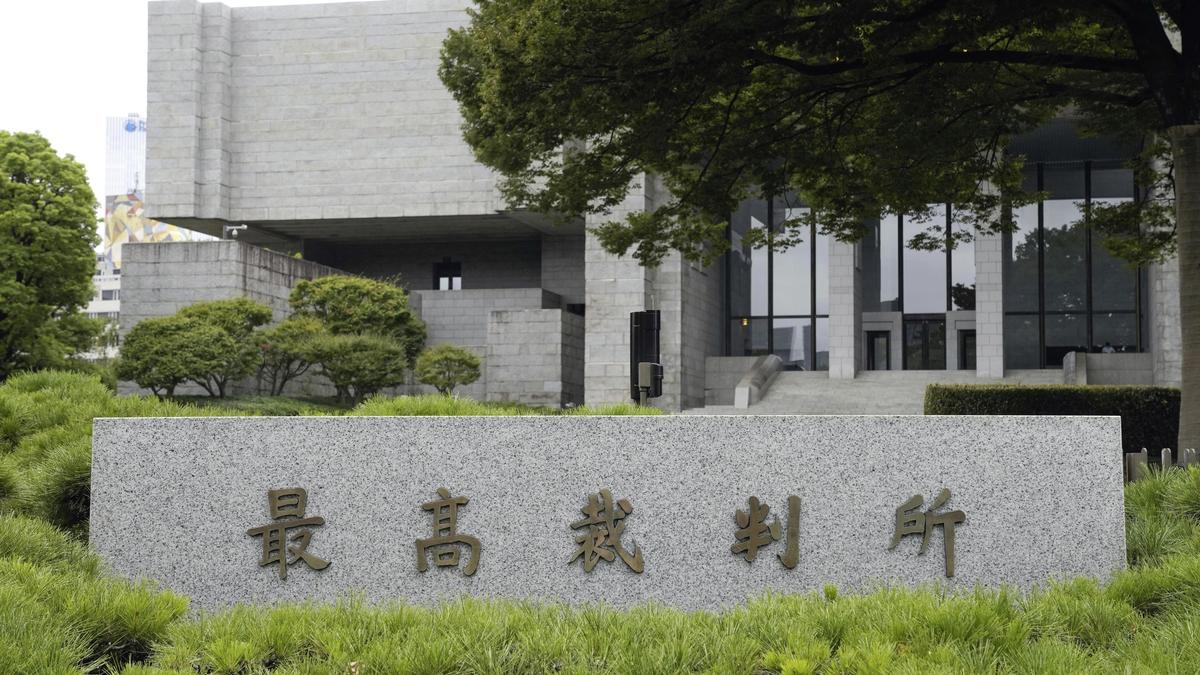
Japan’s Supreme Court strikes down required removal of reproductive organs to officially change gender
The Hindu
Japan’s Supreme Court ruled that a law requiring transgender people to have their reproductive organs removed in order to officially change their gender is unconstitutional
Japan’s Supreme Court on October 25 ruled that a law requiring transgender people to have their reproductive organs removed in order to officially change their gender is unconstitutional.
The decision by the top court’s 15-judge Grand Bench was its first on the constitutionality of Japan’s 2003 law requiring the removal of reproductive organs for a state-recognized gender change, a practice long criticized by international rights and medical groups.
The case was filed by a plaintiff whose request for a gender change in her family registry — to female from her biologically assigned male — was turned down by lower courts.
The decision comes at a time of heightened awareness of issues surrounding LGBTQ+ people in Japan and is a major victory for that community.
Kyodo News said the judges unanimously ruled that the part of the law requiring the loss of reproductive functions for a gender change is unconstitutional. Other details of the decision were not immediately available.
Under the law that was struck down, transgender people who want to have their biologically assigned gender changed on family registries and other official documents must be diagnosed as having Gender Identity Disorder and undergo an operation to remove their reproductive organs.
LGBTQ+ activists in Japan have stepped up efforts to pass an anti-discrimination law since a former aide to Prime Minister Fumio Kishida said in February that he wouldn’t want to live next to LGBTQ+ people and that citizens would flee Japan if same-sex marriage were allowed.


Union Minister Kiren Rijiju meets Tamil Nadu Bishops and pastors to discuss minority welfare and counter anti-BJP narratives.

Japan may consider minesweeping in the Strait of Hormuz post-ceasefire, says Foreign Minister Motegi, amid ongoing regional tensions.

Delhi University job fair guidelines excluding School of Open Learning students spark protests over equity and access to opportunities.

Rwanda's Fanny Utagushimaninde, at 15, becomes the youngest player to score a T20 international century.

Assembly polls 2026: Follow updates from The Hindu on the upcoming elections in five States, on March 22, 2026

Currently, only the services in the 32 series stop at the section of the road adjacent to the Broadway terminus, temporarily closed on account of reconstruction work. Small traders association tells R. Ragu that ensuring the services now accommodated at the temporary terminus at Island Grounds stop at NSC Bose road would benefit visitors to the markets in Parrys

The Hindu photo feature on Aragam which is now known as book village. Photos and text by Imran Nissar

The silent reading movement in the Mylapore-Mandaveli-RA Puram area showed up first at Nageswara Rao Park around two years ago, with modest ambitions, when Balaji launched it along with other reading enthusiasts from the region. This initiative has now moved parks, and seems to set to get entrenched in one. Due to renovation work at Nageswara Park, the reading session became irregular. With the Nageswara Rao park work gaining more surface area, it had to be shifted elsewhere. And it seems set to continue with a newly discovered green patch in RK Nagar in the Sundays to follow.

Explore Tamil Nadu's upcoming four-cornered election contest, featuring key players DMK, AIADMK, TVK, and Naam Tamizhar Katchi.

Trump plans to deploy ICE officers for airport security unless Democrats fund the Department of Homeland Security amid ongoing shutdown.

Cuba experiences its second nationwide blackout in a week, exacerbated by an ongoing U.S. oil blockade and energy crisis.

Kamal Haasan urges Tamil media to avoid the term "censorship" in films, advocating for artistic freedom and recognition of certification.

Pottalurani residents boycott elections again, demanding closure of fish waste processing units impacting health and environment.