Jaladam Valley, home to the Konda Reddi tribe, offers a glimpse into a centuries-old way of life Premium
The Hindu
Gillaram village in Andhra Pradesh's Kakinada district is home to the isolated Konda Reddi tribe, reliant on traditional practices.
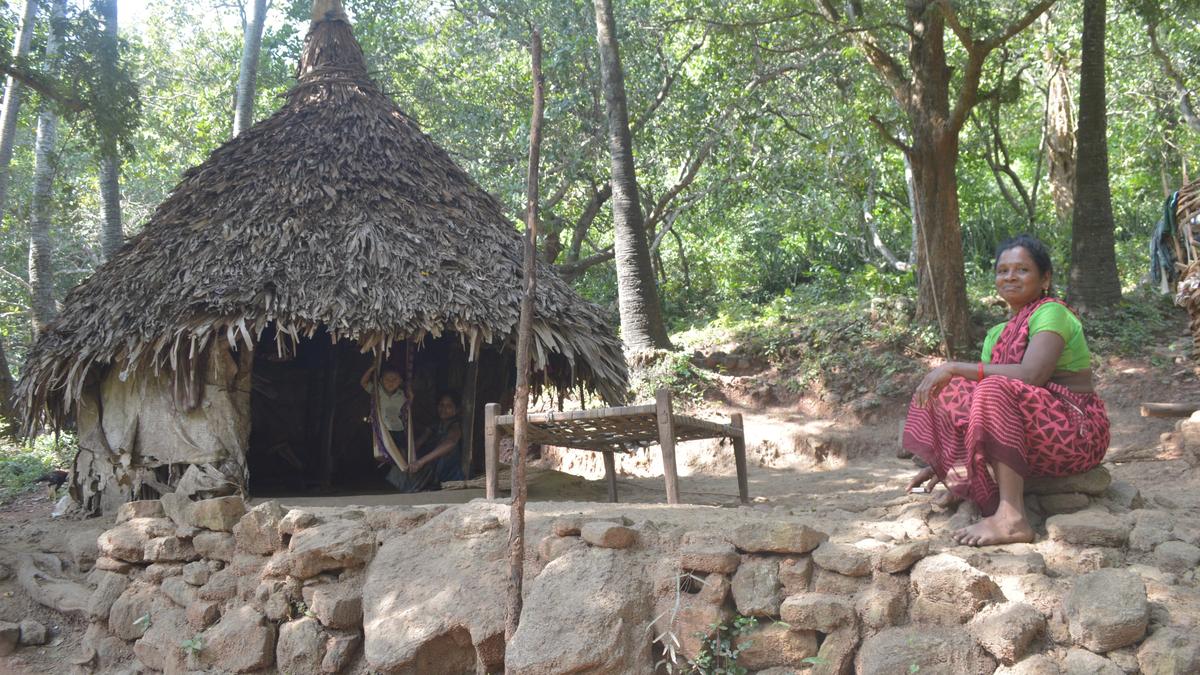
Hidden in the rugged hills of Jaladam Valley in Andhra Pradesh’s Kakinada district lies Gillaram village, home to the Konda Reddi tribe, a Particularly Vulnerable Tribal Group (PVTG). Isolated from the modern world, the Konda Reddis rely on age-old traditions to sustain their livelihoods. Their survival strategies reflect a vanishing way of life.
The Konda Reddi tribe’s way of life largely revolves around the cow, which is a source of sustenance for them. The traditional houses of the Konda Reddis have retained their unique architectural look over the centuries.
Reaching Gillaram is an arduous journey, involving a four-km trek over weather-beaten trails and crossing two hills. Located 15 km from the temple town of Annavaram, the village’s remoteness leaves its 30 families — around 130 people — dependent on makeshift solutions for emergencies, such as being carried on ‘dolis’ during health crises.
In Gillaram village, the cow is central to survival. Every family owns a yoke and at least one pair of oxen for agriculture, as well as cows to augment their income.
“Our family owns 30 cents of land, and we use oxen to plow it,” says Gomu Venkata Lakshmi, a mother of two. “The dung serves as manure for our crops and keeps our farming costs low. It is used as an alternative to fertilizer for all our crops,” she says.
In the village, every family maintains a ‘dung bank’ by storing the dung in a designated place to be used for agricultural purposes. “Our dependence on pesticides and fertilizers is minimal due to the availability of cow dung manure,” says Ms. Venkata Lakshmi.
The cow dung manure improves soil fertility. In the rural pockets of Andhra Pradesh, use of cow dung manure is rare except for organic farmers.


First-level randomisation of EVMs completed in Nagapattinam for upcoming elections, ensuring transparency and security.

A district-level committee in Krishnagiri has been formed to assess and verify seizure claims of goods and cash.

Minister Anam Ramanarayana Reddy pledges government support for local fishermen and farmers facing challenges in Andhra Pradesh.

MP M. Sribharat urges collective efforts to revive Visakhapatnam Steel Plant, highlighting key reforms for crucial recovery and growth.

141 candidates have filed nominations for Kozhikode's Assembly elections, with scrutiny on March 24 and campaigning intensifying.

BJP's Vijayendra accuses Congress of using money to influence Bagalkot bypolls, urging voters to reject their tactics.

First randomization of electronic voting machines completed in Tirunelveli and Tenkasi districts for upcoming Assembly elections.

RPF seizes 10.12 kg of unclaimed cannabis worth ₹5.06 lakh from a train in Mangaluru.

Kolar's groundwater levels rise to 50-100 ft due to the K.C. Valley project, ensuring clean water and improved health outcomes.

Three smugglers arrested in Sangareddy with 574 kg of ganja valued at ₹2.87 crore during a police operation.

Mysuru MP urges a 'flex-free Mysuru' by discouraging birthday banners, promoting responsible celebrations to preserve the city's heritage.

Farmers of Kalakudi demand payment for paddy bags procured at DPC

BJP's seal on a 2019 Election Commission letter ignites controversy in Kerala, prompting claims of careless handling by CPI(M).