Israel’s Netanyahu halts bill against Christian proselytizing
The Hindu
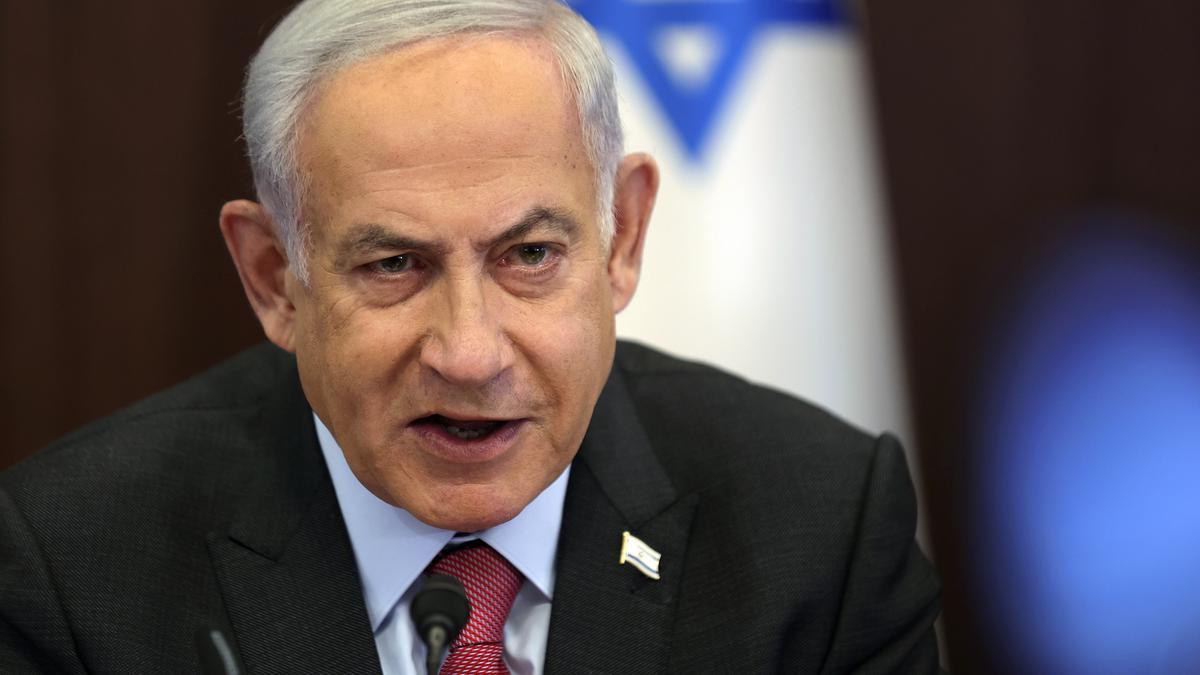
Israeli Prime Minister Benjamin Netanyahu on March 22, 2023, said he would prevent the passage of a proposal by a powerful ally in his governing coalition to punish Christian proselytizing with jail time.
Israeli Prime Minister Benjamin Netanyahu on Wednesday said he would prevent the passage of a proposal by a powerful ally in his governing coalition to punish Christian proselytizing with jail time.
The proposal had raised an uproar with evangelical Christians— one of Israel’s strongest and most influential supporters in the United States.
The bill was introduced in January by a pair of ultra-Orthodox Jewish lawmakers, including Moshe Gafni, who heads the parliament’s Finance Committee. It says soliciting someone to convert their faith should be punishable by one year in prison and solicitation to convert a minor would be punishable with a two-year sentence.
“Recently, the attempts of missionary groups, mainly Christians, to solicit conversion of religion have increased,” it said.
The bill was never advanced, but it drew widespread attention in the American evangelical world this week after All Israel News, an evangelical news site, reported on it.
On Wednesday, Mr. Netanyahu announced on Twitter: “We will not advance any law against the Christian community.”
Mr. Gafni said he had introduced the bill as a procedural matter, as he has done in the past, and there were no plans to advance it.


Vietnam accelerates its shift to ethanol fuel as rising energy prices from the Iran war impact its economy.

Teenagers sue Musk's xAI, alleging its image-generator created explicit images of them as minors, sparking concerns over AI safety.

Shorts News:Watch: Netanyahu: Israel ‘acted alone’ in Iranian gas field attack

Indonesian billionaire Michael Bambang Hartono, co-founder of Djarum Group, has died at 86, leaving a significant legacy.

European nations, Japan, and Canada unite to ensure safe passage through the Strait of Hormuz and stabilize energy markets.

Some of the estimated 20 billion yuan ($2.9 billion) worth of equipment, including screen-printing production lines, will require export approval from Chinese regulators, according to the people. It wasn't immediately clear how much of the equipment would require approval or how long it would take.

Three men, including a Super Micro VP, charged with smuggling U.S. AI technology to China, threatening national security.

Trump compares U.S. strikes on Iran to Pearl Harbor in meeting with Japan's PM, highlighting the element of surprise.

Iran-Israel war: Follow the latest updates from The Hindu on the West Asia conflict on March 20, 2026

The closure of the Strait of Hormuz disrupts a vital artery of the global economy, triggering price increases and turmoil in energy markets; as supply shocks reshape the geopolitics of energy, countries like India, the U.S., and Russia recalibrate strategies amid shifting oil flows and rising dependence

EU lawmakers advance U.S. trade deal legislation, overcoming delays and adding safeguards amid concerns over compliance from the Trump administration.

Pro-Iran Iraqi group pauses U.S. embassy attacks for five days, imposing conditions amid ongoing regional tensions and strikes.

Russia condemns the Israeli airstrike injuring RT journalists in Lebanon, calling it deliberate amid ongoing regional conflict.