Israel’s initial dismissal of US’ ‘breakthrough’ Lebanon ceasefire deal creates confusion
CNN
Senior US officials were practically triumphant Wednesday night: The United States and a large number of its allies had nailed down a proposal after days of feverish talks that would put in place a ceasefire across the Israel-Lebanon border.
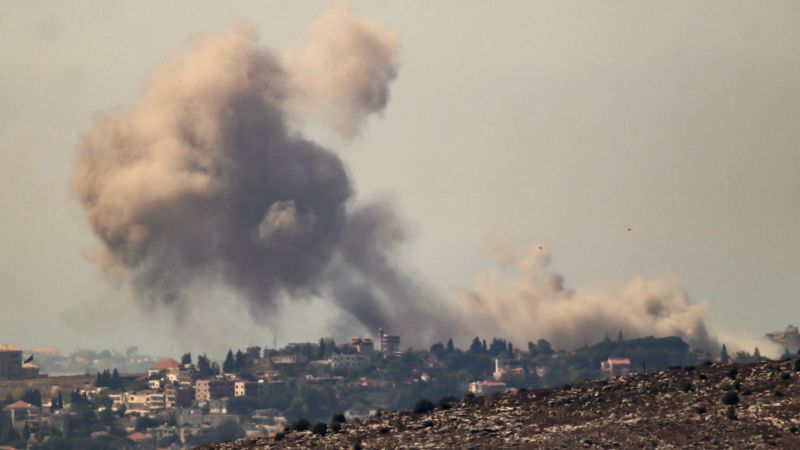
Senior US officials were practically triumphant Wednesday night: The United States and a large number of its allies had nailed down a proposal after days of feverish talks that would put in place a ceasefire across the Israel-Lebanon border. In a hastily arranged call with reporters just moments after the release of a joint statement, top administration officials hailed the framework as “an important breakthrough.” The 21-day pause in fighting that the nations were proposing would give time for diplomacy and could prevent a full-fledged war from breaking out between Israel and Hezbollah. Those officials were clear: The question was not if Israel and Hezbollah would accept the ceasefire proposal, but precisely when. Both Israel and Hezbollah were “familiar with the text,” one official said, and the US felt comfortable going public with the framework, with the understanding that both sides were ready to sign on. But only hours later, Israeli Prime Minister Benjamin Netanyahu would throw cold water on the multi-national proposal. First, the prime minister’s office released a statement saying any reports of an imminent ceasefire was “incorrect” and that the IDF would continue fighting with “full force.” Then, the prime minister himself told the press as he got off his plane in New York City: “My policy, our policy, is clear: We continue to hit Hezbollah with all our might. We will not stop until we achieve all our goals.” Some 24 hours after the White House’s announcement of the ceasefire proposal, there has still been no indication that Israel and Hezbollah are ready to agree to it. Israel’s initial response was clearly not the reaction the White House had anticipated, and it raised immediate question of why, if Israel was on board with the proposal, its leader appeared so eager to dismiss it.


President Donald Trump has said ICE agents will head to US airports tomorrow amid a partial government shutdown. Follow for live updates

President Donald Trump said Sunday border czar Tom Homan will be in charge of deploying Immigration and Customs Enforcement agents to airports on Monday, with Homan telling CNN the agents will assist with security at entrances and exits to ease TSA workload amid a partial government shutdown.

Janet Mills and her allies are counting on a gender gap to narrow Platner’s wide lead ahead of the June 9 primary to decide who will face incumbent Republican Sen. Susan Collins. They are betting that the unfiltered style that has brought Platner widespread attention as someone who could help Democrats reach young men will backfire with women.

Why do people “pledge allegiance” to a “state” that is no longer a state? And what spurs someone to not just attack innocent people, but to then make a statement of loyalty while doing so?

A Supreme Court case examining state deadlines for election ballots sent in the mail is just the tip of the spear in President Donald Trump’s war on mail-in voting.

As a shrinking number of Transportation Security Administration agents work to keep hourslong security lines moving despite not being paid, President Donald Trump stepped into the fray Saturday, announcing he will send Immigration and Customs Enforcement officers to airports by Monday if Congress doesn’t agree to a plan to end the partial government shutdown.

Donald Trump wants us to believe that a deal with Cuba is close at hand. After this past week, I am not so sure.

The search for missing 84-year-old Nancy Guthrie, mother of “Today” show host Savannah Guthrie, has stretched into another anguished week, with mounting pressure on investigators and a family grappling with uncertainty.

Cuba’s Ministry of Energy announced Saturday evening that entire island has suffered another electrical blackout, leaving more than 10 million people without power.

Iran’s attempt to strike a US-UK base over 2,000 miles (over 3,000 kilometers) off its coast has renewed questions about Tehran’s military capabilities and how far its missiles can reach.

For years, President Donald Trump has offered crass and insensitive comments about people who died – especially his foes. That reached a new level on Saturday.

Robert Mueller, the former FBI director who led the historic probe into alleged collusion between Donald Trump’s 2016 campaign and the Russian government, has died. He was 81.

Marlon Batres is not OK. The assistant principal says he is in constant fear for his students, staff and even himself after federal agents swarmed the streets.