Is your vote for health?
The Hindu
This week in health: all about the new surrogacy rules, the role and resistance of ASHAs and how the Neuralink brain chip works.
This week in health: all about the new surrogacy rules, the role and resistance of ASHAs and how the Neuralink brain chip works.
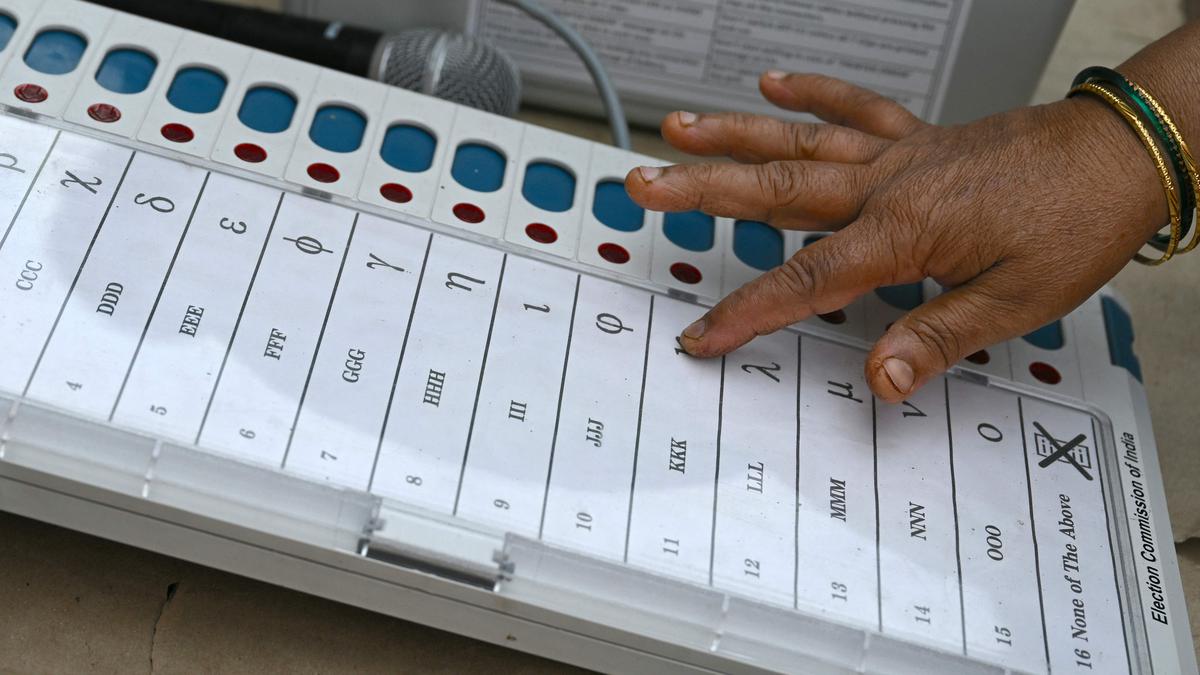
There are no two ways about this thing, election fever is in the air and with advancing summer, the earth has begun to sizzle not just with the heat, but also early election preparedness. In an election year, in the run-up, particularly, it would be criminal to let go of opportunities to insist on future course of actions for political parties, as far a policy goes. In the health sector, all political parties would do well to hone their understanding of health care policy and what the country actually needs at the moment. A more robust fund allocation, for sure, but there are several sectors that former Union Health Secretary Sujatha Rao has brought to our attention, and hopefully, that of the political parties with this article: Electoral season and restructuring the health system. Manifestos are doubtless useful documents as they reflect the thinking and priorities of the political parties, besides enabling people to hold the elected party accountable, she writes, and goes on to examine the manifestos of political parties in the past to see their commitments in the health sector. Given the high stakes and the trend towards current competitive welfarism, the manifestos for 2024 are expected to contain wild promises. The health section in the 2014 and 2019 manifestos of the Bharatiya Janata Party (BJP) and the Indian National Congress showed commonalities and differentials. Both mentioned revamping the primary health system, ensuring universal health care, expanding human resources, increasing use of technology and so on. The differential was with the Congress underscoring health as a public good that citizens are entitled to as a right and the States’ obligation to provide, while the BJP saw health as a commodity, provided through public-private partnerships with market-based pricing moderated by social health insurance. After years of stagnation, the United Progressive Alliance (UPA) and the National Democratic Alliance (NDA), have pushed the needle forward.
She writes that under the UPA, the National Rural Health Mission, with three times increased funding, aimed to strengthen the delivery capacity in rural India. Five thousand technical personnel and a million community health workers were deployed and the first large-scale pay-for-performance was introduced alongside the first social health insurance programme covering 80% of the population in Andhra Pradesh rapidly expanding to another 13 States. The NDA ensured continuity of policy by scrapping the Medical Council of India (MCI) and establishing the National Medical Commission (NMC), further strengthened the rural health infrastructure with capital investment, expanded social health insurance and established the National Health Authority to undertake strategic purchasing of services from the public and private sector. The NDA also set up an additional 317 medical colleges and doubled medical seats to 1,09,948. While in gross amounts Budgets increased, in terms of proportion to GDP, public spending under the UPA and NPA hovered around an average of 1.2%.
However, what is moot is that the measures, though impressive, were incremental and did not address the serious issues of reforming the very architecture of the health system that had over years become distorted and dysfunctional. Twenty years is a long time. Other countries of similar economic strength achieved significant outcomes within half the time span, she writes. Clearly, the time is upon us, to step up on the gas as far as public health care is concerned. A Health-for-all policy should be more than a pipedream.
In this context, let’s take a look at what Bindu Shajan Perappadan brings to us: Parliamentary panel seeks timely availability of quality medicines, expansion of CGHS network. Providing timely and quality medicines to all, through a state-funded set-up is absolutely key. The Central Government Health Scheme which provides medical care to Central Government employees and pensioners enrolled under the scheme, is central to health delivery in India, given the sheer quantum of people it caters to. The Parliamentary Standing Committee on Health and Welfare in its report recently presented in Parliament called for ensuring the timely availability of medicines, especially antibiotics, and keeping a strict watch on the quality of medicines being disbursed at pharmacies. It also urged a time-bound expansion of the CGHS network, especially in States and Union Territories where facilities available under the scheme are sparse.
Keeping the gender lens clear, this week’s stories include insights into cervical cancer, the new amendments to the surrogacy rules, and the role of ASHAs in the health care network.
In a welcome move, the Centre recently amended surrogacy rules, and allowed couples with medical conditions to use donor gametes, setting the score right. The Central government has modified the Surrogacy (Regulation) Rules, 2022 and notified that both gametes need not come from a married couple in case they are certified as suffering from a medical condition that would make. Earlier, the Union Health Ministry had rules that stated that couples undergoing surrogacy must provide both gametes, completely ignoring the medical reason why some couples go in for surrogacy.


Telangana integrates with the 'Vahan' platform and eliminates 2% tax on second vehicles, enhancing transport services and transparency.

Delhi CM Rekha Gupta presents the Economic Survey 2025-26, highlighting growth in income and fiscal deficit details.

Ready for IPL 2026? The Chennai Super Kings’ 'Roar 26' event delivered several Dhoni moments, fan frenzy and an energetic AR Rahman concert.

An alleged dating app scam in Hyderabad's Jubilee Hills has reportedly swindled a man of ₹28,000 at a pub.

T.N. Chief Secretary and DGP visit Governor at Lok Bhavan, presenting flowers in courtesy call.

Eight TSPC Maoists arrested in Hazaribag, Jharkhand, with weapons and ammunition seized during a police operation.

Four ambulances of a Jewish community service in London were set ablaze in a suspected antisemitic hate crime.

Gautham Manohar hopes his photographs serve as reminders of the Earth’s delicate beauty

Thousand Lights faces parking chaos and traffic congestion despite its political significance and ongoing development efforts.

Generic semaglutide increases accessibility, but doctors caution against misuse and quality concerns

Haryana Police removes 857 links to Badshah's 'Tateeree' for objectionable content, ensuring a safer digital environment.

Congress criticises Modi for not leveraging the upcoming BRICS+ Summit to address the West Asia crisis amid U.S. tensions.

Nagapattinam faces underdevelopment and resource challenges, impacting its rich heritage and the livelihoods of its fishing community.